

10.5 Extraction of Proteins from Algae and Aquatic Plants
219
Cell disruption
Centrifugation
Ultrafiltration
Diafiltration
Biomass
Solid residue
Supernatant
Concentrate
Filtrate
Protein
Filtrate
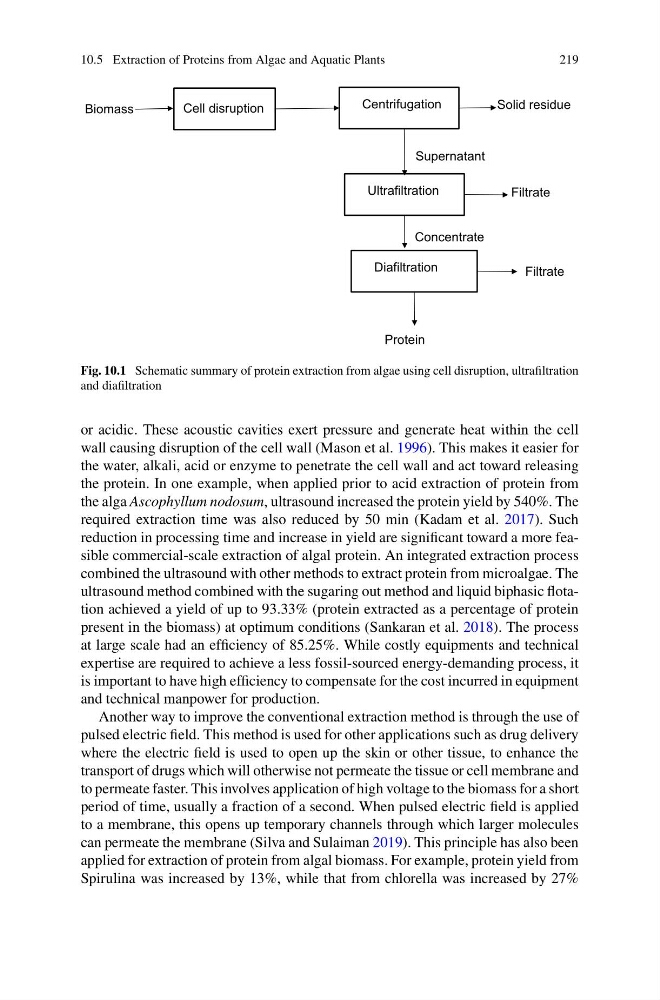
Fig. 10.1 Schematic summary of protein extraction from algae using cell disruption, ultrafiltration
and diafiltration
or acidic. These acoustic cavities exert pressure and generate heat within the cell
wall causing disruption of the cell wall (Mason et al. 1996). This makes it easier for
the water, alkali, acid or enzyme to penetrate the cell wall and act toward releasing
the protein. In one example, when applied prior to acid extraction of protein from
the alga Ascophyllum nodosum, ultrasound increased the protein yield by 540%. The
required extraction time was also reduced by 50 min (Kadam et al. 2017). Such
reduction in processing time and increase in yield are significant toward a more feasible commercial-scale extraction of algal protein. An integrated extraction process
combined the ultrasound with other methods to extract protein from microalgae. The
ultrasound method combined with the sugaring out method and liquid biphasic flotation achieved a yield of up to 93.33% (protein extracted as a percentage of protein
present in the biomass) at optimum conditions (Sankaran et al. 2018). The process
at large scale had an efficiency of 85.25%. While costly equipments and technical
expertise are required to achieve a less fossil-sourced energy-demanding process, it
is important to have high efficiency to compensate for the cost incurred in equipment
and technical manpower for production.
Another way to improve the conventional extraction method is through the use of
pulsed electric field. This method is used for other applications such as drug delivery
where the electric field is used to open up the skin or other tissue, to enhance the
transport of drugs which will otherwise not permeate the tissue or cell membrane and
to permeate faster. This involves application of high voltage to the biomass for a short
period of time, usually a fraction of a second. When pulsed electric field is applied
to a membrane, this opens up temporary channels through which larger molecules
can permeate the membrane (Silva and Sulaiman 2019). This principle has also been
applied for extraction of protein from algal biomass. For example, protein yield from
Spirulina was increased by 13%, while that from chlorella was increased by 27%
219
Cell disruption
Centrifugation
Ultrafiltration
Diafiltration
Biomass
Solid residue
Supernatant
Concentrate
Filtrate
Protein
Filtrate
Fig. 10.1 Schematic summary of protein extraction from algae using cell disruption, ultrafiltration
and diafiltration
or acidic. These acoustic cavities exert pressure and generate heat within the cell
wall causing disruption of the cell wall (Mason et al. 1996). This makes it easier for
the water, alkali, acid or enzyme to penetrate the cell wall and act toward releasing
the protein. In one example, when applied prior to acid extraction of protein from
the alga Ascophyllum nodosum, ultrasound increased the protein yield by 540%. The
required extraction time was also reduced by 50 min (Kadam et al. 2017). Such
reduction in processing time and increase in yield are significant toward a more feasible commercial-scale extraction of algal protein. An integrated extraction process
combined the ultrasound with other methods to extract protein from microalgae. The
ultrasound method combined with the sugaring out method and liquid biphasic flotation achieved a yield of up to 93.33% (protein extracted as a percentage of protein
present in the biomass) at optimum conditions (Sankaran et al. 2018). The process
at large scale had an efficiency of 85.25%. While costly equipments and technical
expertise are required to achieve a less fossil-sourced energy-demanding process, it
is important to have high efficiency to compensate for the cost incurred in equipment
and technical manpower for production.
Another way to improve the conventional extraction method is through the use of
pulsed electric field. This method is used for other applications such as drug delivery
where the electric field is used to open up the skin or other tissue, to enhance the
transport of drugs which will otherwise not permeate the tissue or cell membrane and
to permeate faster. This involves application of high voltage to the biomass for a short
period of time, usually a fraction of a second. When pulsed electric field is applied
to a membrane, this opens up temporary channels through which larger molecules
can permeate the membrane (Silva and Sulaiman 2019). This principle has also been
applied for extraction of protein from algal biomass. For example, protein yield from
Spirulina was increased by 13%, while that from chlorella was increased by 27%