

9.5 Extraction of Laminarin
197
Cultivation
Washing of
biomass
Pulverization
2% CaCl
Extraction
in Water
Precipitation &
Separation
Ultrafiltration /
dialysis
Ion
exchange
Lyophilization
Packaging
<1mm particle
diameter
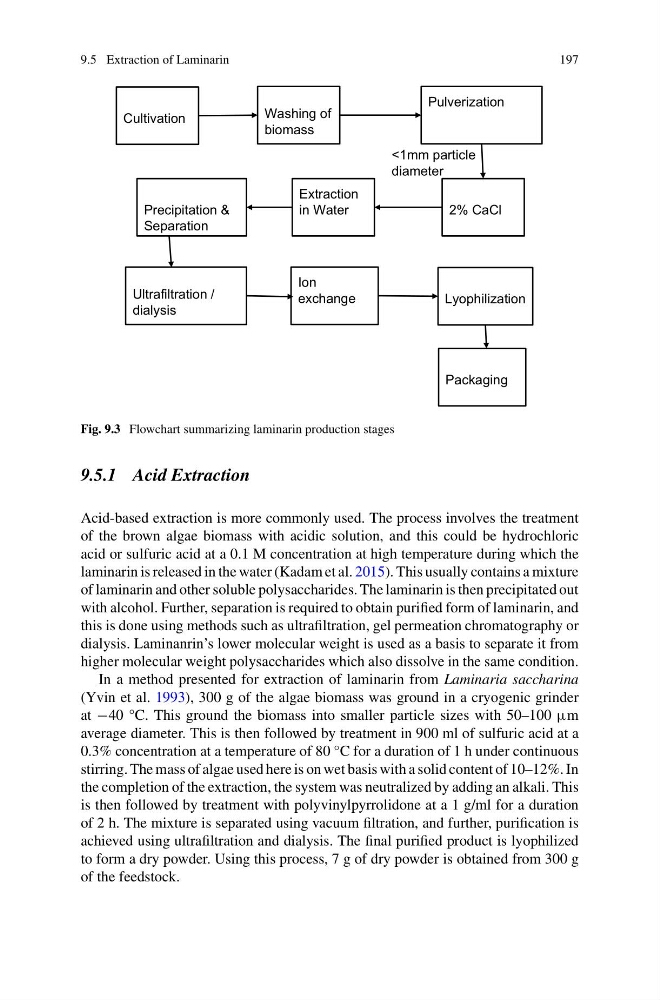
Fig. 9.3 Flowchart summarizing laminarin production stages
9.5.1 Acid Extraction
Acid-based extraction is more commonly used. The process involves the treatment
of the brown algae biomass with acidic solution, and this could be hydrochloric
acid or sulfuric acid at a 0.1 M concentration at high temperature during which the
laminarin is released in the water (Kadam et al. 2015). This usually contains a mixture
of laminarin and other soluble polysaccharides. The laminarin is then precipitated out
with alcohol. Further, separation is required to obtain purified form of laminarin, and
this is done using methods such as ultrafiltration, gel permeation chromatography or
dialysis. Laminanrin’s lower molecular weight is used as a basis to separate it from
higher molecular weight polysaccharides which also dissolve in the same condition.
In a method presented for extraction of laminarin from Laminaria saccharina
(Yvin et al. 1993), 300 g of the algae biomass was ground in a cryogenic grinder
at −40 °C. This ground the biomass into smaller particle sizes with 50–100 μm
average diameter. This is then followed by treatment in 900 ml of sulfuric acid at a
0.3% concentration at a temperature of 80 °C for a duration of 1 h under continuous
stirring. The mass of algae used here is on wet basis with a solid content of 10–12%. In
the completion of the extraction, the system was neutralized by adding an alkali. This
is then followed by treatment with polyvinylpyrrolidone at a 1 g/ml for a duration
of 2 h. The mixture is separated using vacuum filtration, and further, purification is
achieved using ultrafiltration and dialysis. The final purified product is lyophilized
to form a dry powder. Using this process, 7 g of dry powder is obtained from 300 g
of the feedstock.
197
Cultivation
Washing of
biomass
Pulverization
2% CaCl
Extraction
in Water
Precipitation &
Separation
Ultrafiltration /
dialysis
Ion
exchange
Lyophilization
Packaging
<1mm particle
diameter
Fig. 9.3 Flowchart summarizing laminarin production stages
9.5.1 Acid Extraction
Acid-based extraction is more commonly used. The process involves the treatment
of the brown algae biomass with acidic solution, and this could be hydrochloric
acid or sulfuric acid at a 0.1 M concentration at high temperature during which the
laminarin is released in the water (Kadam et al. 2015). This usually contains a mixture
of laminarin and other soluble polysaccharides. The laminarin is then precipitated out
with alcohol. Further, separation is required to obtain purified form of laminarin, and
this is done using methods such as ultrafiltration, gel permeation chromatography or
dialysis. Laminanrin’s lower molecular weight is used as a basis to separate it from
higher molecular weight polysaccharides which also dissolve in the same condition.
In a method presented for extraction of laminarin from Laminaria saccharina
(Yvin et al. 1993), 300 g of the algae biomass was ground in a cryogenic grinder
at −40 °C. This ground the biomass into smaller particle sizes with 50–100 μm
average diameter. This is then followed by treatment in 900 ml of sulfuric acid at a
0.3% concentration at a temperature of 80 °C for a duration of 1 h under continuous
stirring. The mass of algae used here is on wet basis with a solid content of 10–12%. In
the completion of the extraction, the system was neutralized by adding an alkali. This
is then followed by treatment with polyvinylpyrrolidone at a 1 g/ml for a duration
of 2 h. The mixture is separated using vacuum filtration, and further, purification is
achieved using ultrafiltration and dialysis. The final purified product is lyophilized
to form a dry powder. Using this process, 7 g of dry powder is obtained from 300 g
of the feedstock.