

7.3 Chemistry of Agar
151
Agarose
Neo agarose
Neoagarobiose
D- anhydrogalactose
L- galactose
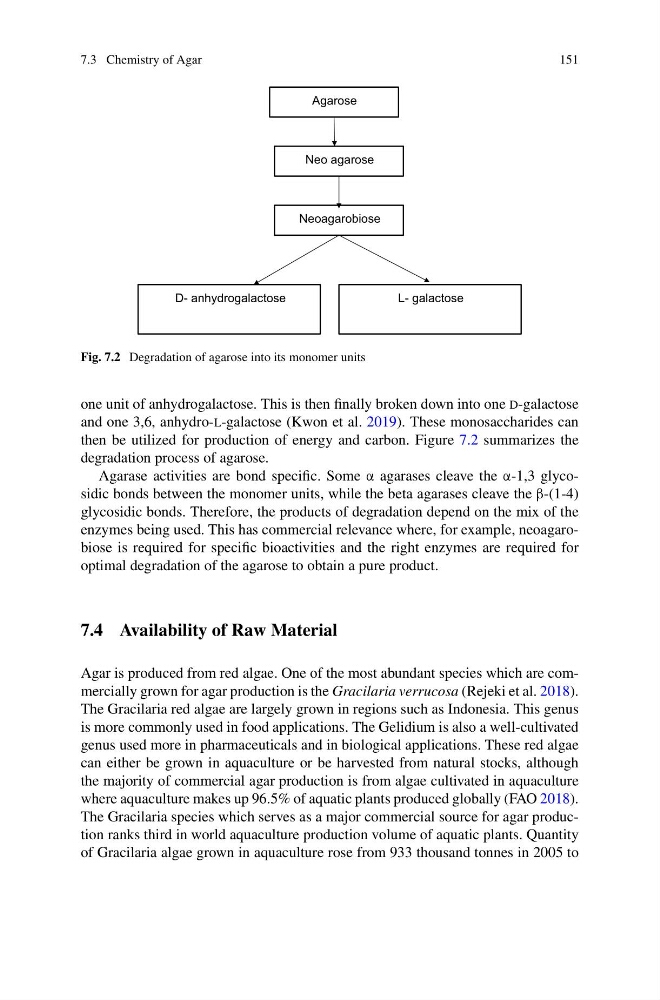
Fig. 7.2 Degradation of agarose into its monomer units
one unit of anhydrogalactose. This is then finally broken down into one d-galactose
and one 3,6, anhydro-l-galactose (Kwon et al. 2019). These monosaccharides can
then be utilized for production of energy and carbon. Figure 7.2 summarizes the
degradation process of agarose.
Agarase activities are bond specific. Some α agarases cleave the α-1,3 glycosidic bonds between the monomer units, while the beta agarases cleave the β-(1-4)
glycosidic bonds. Therefore, the products of degradation depend on the mix of the
enzymes being used. This has commercial relevance where, for example, neoagarobiose is required for specific bioactivities and the right enzymes are required for
optimal degradation of the agarose to obtain a pure product.
7.4 Availability of Raw Material
Agar is produced from red algae. One of the most abundant species which are commercially grown for agar production is the Gracilaria verrucosa (Rejeki et al. 2018).
The Gracilaria red algae are largely grown in regions such as Indonesia. This genus
is more commonly used in food applications. The Gelidium is also a well-cultivated
genus used more in pharmaceuticals and in biological applications. These red algae
can either be grown in aquaculture or be harvested from natural stocks, although
the majority of commercial agar production is from algae cultivated in aquaculture
where aquaculture makes up 96.5% of aquatic plants produced globally (FAO 2018).
The Gracilaria species which serves as a major commercial source for agar production ranks third in world aquaculture production volume of aquatic plants. Quantity
of Gracilaria algae grown in aquaculture rose from 933 thousand tonnes in 2005 to
151
Agarose
Neo agarose
Neoagarobiose
D- anhydrogalactose
L- galactose
Fig. 7.2 Degradation of agarose into its monomer units
one unit of anhydrogalactose. This is then finally broken down into one d-galactose
and one 3,6, anhydro-l-galactose (Kwon et al. 2019). These monosaccharides can
then be utilized for production of energy and carbon. Figure 7.2 summarizes the
degradation process of agarose.
Agarase activities are bond specific. Some α agarases cleave the α-1,3 glycosidic bonds between the monomer units, while the beta agarases cleave the β-(1-4)
glycosidic bonds. Therefore, the products of degradation depend on the mix of the
enzymes being used. This has commercial relevance where, for example, neoagarobiose is required for specific bioactivities and the right enzymes are required for
optimal degradation of the agarose to obtain a pure product.
7.4 Availability of Raw Material
Agar is produced from red algae. One of the most abundant species which are commercially grown for agar production is the Gracilaria verrucosa (Rejeki et al. 2018).
The Gracilaria red algae are largely grown in regions such as Indonesia. This genus
is more commonly used in food applications. The Gelidium is also a well-cultivated
genus used more in pharmaceuticals and in biological applications. These red algae
can either be grown in aquaculture or be harvested from natural stocks, although
the majority of commercial agar production is from algae cultivated in aquaculture
where aquaculture makes up 96.5% of aquatic plants produced globally (FAO 2018).
The Gracilaria species which serves as a major commercial source for agar production ranks third in world aquaculture production volume of aquatic plants. Quantity
of Gracilaria algae grown in aquaculture rose from 933 thousand tonnes in 2005 to