

6.3 Chemistry of Carrageenan
125
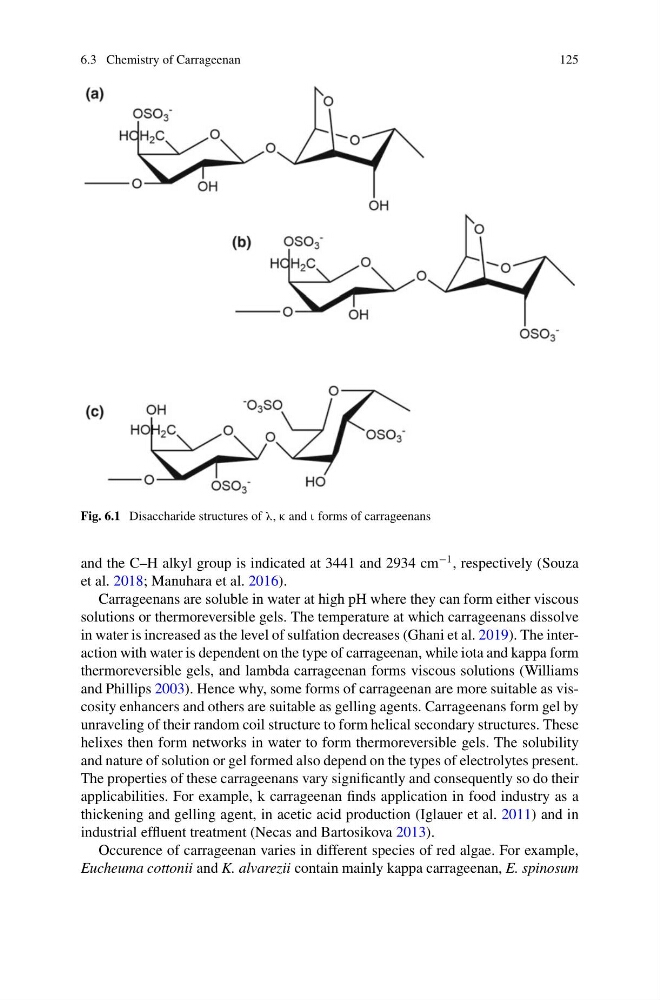
Fig. 6.1 Disaccharide structures of λ, κ and ι forms of carrageenans
and the C–H alkyl group is indicated at 3441 and 2934 cm
−1 , respectively (Souza
et al. 2018; Manuhara et al. 2016).
Carrageenans are soluble in water at high pH where they can form either viscous
solutions or thermoreversible gels. The temperature at which carrageenans dissolve
in water is increased as the level of sulfation decreases (Ghani et al. 2019). The interaction with water is dependent on the type of carrageenan, while iota and kappa form
thermoreversible gels, and lambda carrageenan forms viscous solutions (Williams
and Phillips 2003). Hence why, some forms of carrageenan are more suitable as viscosity enhancers and others are suitable as gelling agents. Carrageenans form gel by
unraveling of their random coil structure to form helical secondary structures. These
helixes then form networks in water to form thermoreversible gels. The solubility
and nature of solution or gel formed also depend on the types of electrolytes present.
The properties of these carrageenans vary significantly and consequently so do their
applicabilities. For example, k carrageenan finds application in food industry as a
thickening and gelling agent, in acetic acid production (Iglauer et al. 2011) and in
industrial effluent treatment (Necas and Bartosikova 2013).
Occurence of carrageenan varies in different species of red algae. For example,
Eucheuma cottonii and K. alvarezii contain mainly kappa carrageenan, E. spinosum
125
Fig. 6.1 Disaccharide structures of λ, κ and ι forms of carrageenans
and the C–H alkyl group is indicated at 3441 and 2934 cm
−1 , respectively (Souza
et al. 2018; Manuhara et al. 2016).
Carrageenans are soluble in water at high pH where they can form either viscous
solutions or thermoreversible gels. The temperature at which carrageenans dissolve
in water is increased as the level of sulfation decreases (Ghani et al. 2019). The interaction with water is dependent on the type of carrageenan, while iota and kappa form
thermoreversible gels, and lambda carrageenan forms viscous solutions (Williams
and Phillips 2003). Hence why, some forms of carrageenan are more suitable as viscosity enhancers and others are suitable as gelling agents. Carrageenans form gel by
unraveling of their random coil structure to form helical secondary structures. These
helixes then form networks in water to form thermoreversible gels. The solubility
and nature of solution or gel formed also depend on the types of electrolytes present.
The properties of these carrageenans vary significantly and consequently so do their
applicabilities. For example, k carrageenan finds application in food industry as a
thickening and gelling agent, in acetic acid production (Iglauer et al. 2011) and in
industrial effluent treatment (Necas and Bartosikova 2013).
Occurence of carrageenan varies in different species of red algae. For example,
Eucheuma cottonii and K. alvarezii contain mainly kappa carrageenan, E. spinosum