

114
5 Fucoidan
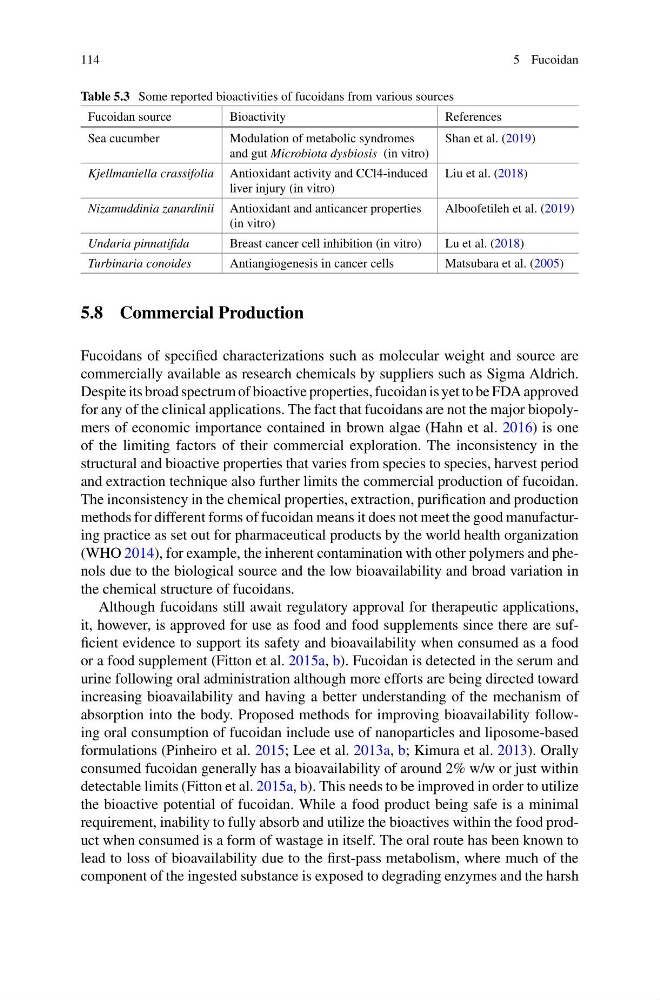
Table 5.3 Some reported bioactivities of fucoidans from various sources
Fucoidan source
Bioactivity
References
Sea cucumber
Modulation of metabolic syndromes
and gut Microbiota dysbiosis (in vitro)
Shan et al. (2019)
Kjellmaniella crassifolia Antioxidant activity and CCl4-induced
liver injury (in vitro)
Liu et al. (2018)
Nizamuddinia zanardinii Antioxidant and anticancer properties
(in vitro)
Alboofetileh et al. (2019)
Undaria pinnatifida
Breast cancer cell inhibition (in vitro)
Lu et al. (2018)
Turbinaria conoides
Antiangiogenesis in cancer cells
Matsubara et al. (2005)
5.8 Commercial Production
Fucoidans of specified characterizations such as molecular weight and source are
commercially available as research chemicals by suppliers such as Sigma Aldrich.
Despite its broad spectrum of bioactive properties, fucoidan is yet to be FDA approved
for any of the clinical applications. The fact that fucoidans are not the major biopolymers of economic importance contained in brown algae (Hahn et al. 2016) is one
of the limiting factors of their commercial exploration. The inconsistency in the
structural and bioactive properties that varies from species to species, harvest period
and extraction technique also further limits the commercial production of fucoidan.
The inconsistency in the chemical properties, extraction, purification and production
methods for different forms of fucoidan means it does not meet the good manufacturing practice as set out for pharmaceutical products by the world health organization
(WHO 2014), for example, the inherent contamination with other polymers and phenols due to the biological source and the low bioavailability and broad variation in
the chemical structure of fucoidans.
Although fucoidans still await regulatory approval for therapeutic applications,
it, however, is approved for use as food and food supplements since there are sufficient evidence to support its safety and bioavailability when consumed as a food
or a food supplement (Fitton et al. 2015a, b). Fucoidan is detected in the serum and
urine following oral administration although more efforts are being directed toward
increasing bioavailability and having a better understanding of the mechanism of
absorption into the body. Proposed methods for improving bioavailability following oral consumption of fucoidan include use of nanoparticles and liposome-based
formulations (Pinheiro et al. 2015; Lee et al. 2013a, b; Kimura et al. 2013). Orally
consumed fucoidan generally has a bioavailability of around 2% w/w or just within
detectable limits (Fitton et al. 2015a, b). This needs to be improved in order to utilize
the bioactive potential of fucoidan. While a food product being safe is a minimal
requirement, inability to fully absorb and utilize the bioactives within the food product when consumed is a form of wastage in itself. The oral route has been known to
lead to loss of bioavailability due to the first-pass metabolism, where much of the
component of the ingested substance is exposed to degrading enzymes and the harsh
5 Fucoidan
Table 5.3 Some reported bioactivities of fucoidans from various sources
Fucoidan source
Bioactivity
References
Sea cucumber
Modulation of metabolic syndromes
and gut Microbiota dysbiosis (in vitro)
Shan et al. (2019)
Kjellmaniella crassifolia Antioxidant activity and CCl4-induced
liver injury (in vitro)
Liu et al. (2018)
Nizamuddinia zanardinii Antioxidant and anticancer properties
(in vitro)
Alboofetileh et al. (2019)
Undaria pinnatifida
Breast cancer cell inhibition (in vitro)
Lu et al. (2018)
Turbinaria conoides
Antiangiogenesis in cancer cells
Matsubara et al. (2005)
5.8 Commercial Production
Fucoidans of specified characterizations such as molecular weight and source are
commercially available as research chemicals by suppliers such as Sigma Aldrich.
Despite its broad spectrum of bioactive properties, fucoidan is yet to be FDA approved
for any of the clinical applications. The fact that fucoidans are not the major biopolymers of economic importance contained in brown algae (Hahn et al. 2016) is one
of the limiting factors of their commercial exploration. The inconsistency in the
structural and bioactive properties that varies from species to species, harvest period
and extraction technique also further limits the commercial production of fucoidan.
The inconsistency in the chemical properties, extraction, purification and production
methods for different forms of fucoidan means it does not meet the good manufacturing practice as set out for pharmaceutical products by the world health organization
(WHO 2014), for example, the inherent contamination with other polymers and phenols due to the biological source and the low bioavailability and broad variation in
the chemical structure of fucoidans.
Although fucoidans still await regulatory approval for therapeutic applications,
it, however, is approved for use as food and food supplements since there are sufficient evidence to support its safety and bioavailability when consumed as a food
or a food supplement (Fitton et al. 2015a, b). Fucoidan is detected in the serum and
urine following oral administration although more efforts are being directed toward
increasing bioavailability and having a better understanding of the mechanism of
absorption into the body. Proposed methods for improving bioavailability following oral consumption of fucoidan include use of nanoparticles and liposome-based
formulations (Pinheiro et al. 2015; Lee et al. 2013a, b; Kimura et al. 2013). Orally
consumed fucoidan generally has a bioavailability of around 2% w/w or just within
detectable limits (Fitton et al. 2015a, b). This needs to be improved in order to utilize
the bioactive potential of fucoidan. While a food product being safe is a minimal
requirement, inability to fully absorb and utilize the bioactives within the food product when consumed is a form of wastage in itself. The oral route has been known to
lead to loss of bioavailability due to the first-pass metabolism, where much of the
component of the ingested substance is exposed to degrading enzymes and the harsh