

various chemical units via hydrogen bonding (Chakrabarty and Teramoto 2018),
electrostatic interactions (Lombardo and Thielemans 2018), as well as coordination
complexation (Janicki et al. 2017). The APS method has been used to generate
CNCs with a crystallinity index of 93.5% using cotton linters (Oun and Rhim 2017).
Additionally, the method has also been shown to be effective with other cellulosic
raw materials, including microcrystalline cellulose and straw, for the production of
CNCs (Oun and Rhim 2017, 2018). The strategy can also be combined with other
NC extractions approaches in order to increase its efficiency, since the NC yield is
considered to be less satisfactory compared to other methods, such as 2,2,6,6tetramethylpiperidine-1-oxyl radical (TEMPO)-mediated oxidation and periodatechlorite oxidation. Liu et al. (2020) developed a modified APS method that was used
to produce CNCs from cotton pulp. It was faster and resulted in higher yield due to
the generation of more than two free radicals compared to the conventional APS
oxidation, which generates only a single type of free radical. The researchers used
N, N, N´, N´-tetramethylethylenediamine (TMEDA or TEMED), which formed a
redox-initiating system with APS and served as an electron donor to catalyze the
decomposition of S 2 O 8
2À , generating free radicals and hydrogen peroxide within a
relatively short time. The developed process was projected suitable for the production of CNCs on a commercial scale. Amoroso et al. (2020) reported an alternative
microwave-assisted ammonium persulfate process for the production of cellulose
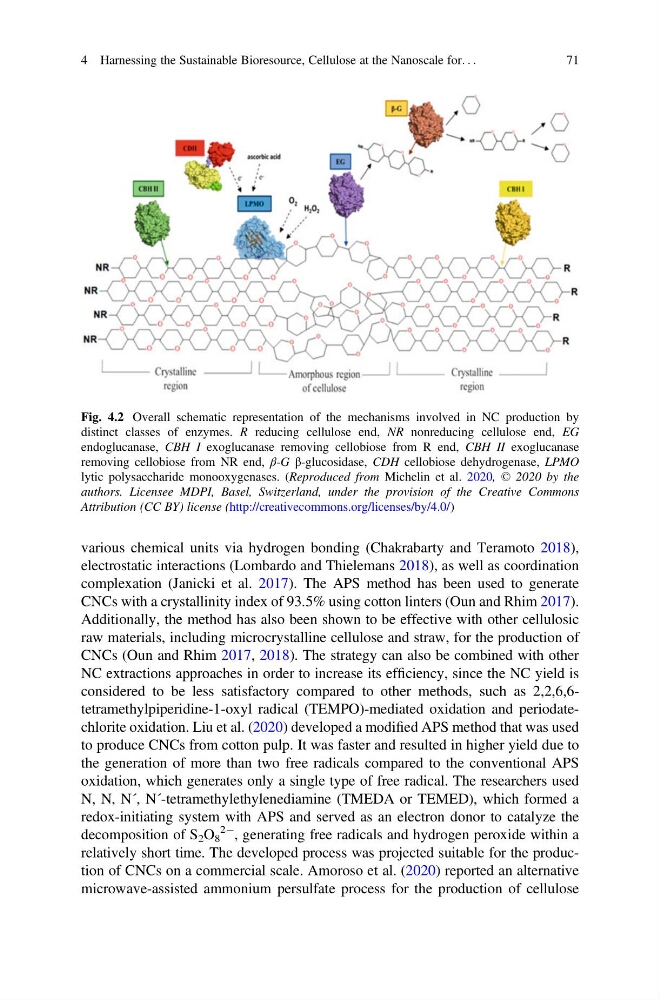
Fig. 4.2 Overall schematic representation of the mechanisms involved in NC production by
distinct classes of enzymes. R reducing cellulose end, NR nonreducing cellulose end, EG
endoglucanase, CBH I exoglucanase removing cellobiose from R end, CBH II exoglucanase
removing cellobiose from NR end, β-G β-glucosidase, CDH cellobiose dehydrogenase, LPMO
lytic polysaccharide monooxygenases. (Reproduced from Michelin et al. 2020, © 2020 by the
authors. Licensee MDPI, Basel, Switzerland, under the provision of the Creative Commons
Attribution (CC BY) license (http://creativecommons.org/licenses/by/4.0/)
4 Harnessing the Sustainable Bioresource, Cellulose at the Nanoscale for. . .
71
electrostatic interactions (Lombardo and Thielemans 2018), as well as coordination
complexation (Janicki et al. 2017). The APS method has been used to generate
CNCs with a crystallinity index of 93.5% using cotton linters (Oun and Rhim 2017).
Additionally, the method has also been shown to be effective with other cellulosic
raw materials, including microcrystalline cellulose and straw, for the production of
CNCs (Oun and Rhim 2017, 2018). The strategy can also be combined with other
NC extractions approaches in order to increase its efficiency, since the NC yield is
considered to be less satisfactory compared to other methods, such as 2,2,6,6tetramethylpiperidine-1-oxyl radical (TEMPO)-mediated oxidation and periodatechlorite oxidation. Liu et al. (2020) developed a modified APS method that was used
to produce CNCs from cotton pulp. It was faster and resulted in higher yield due to
the generation of more than two free radicals compared to the conventional APS
oxidation, which generates only a single type of free radical. The researchers used
N, N, N´, N´-tetramethylethylenediamine (TMEDA or TEMED), which formed a
redox-initiating system with APS and served as an electron donor to catalyze the
decomposition of S 2 O 8
2À , generating free radicals and hydrogen peroxide within a
relatively short time. The developed process was projected suitable for the production of CNCs on a commercial scale. Amoroso et al. (2020) reported an alternative
microwave-assisted ammonium persulfate process for the production of cellulose
Fig. 4.2 Overall schematic representation of the mechanisms involved in NC production by
distinct classes of enzymes. R reducing cellulose end, NR nonreducing cellulose end, EG
endoglucanase, CBH I exoglucanase removing cellobiose from R end, CBH II exoglucanase
removing cellobiose from NR end, β-G β-glucosidase, CDH cellobiose dehydrogenase, LPMO
lytic polysaccharide monooxygenases. (Reproduced from Michelin et al. 2020, © 2020 by the
authors. Licensee MDPI, Basel, Switzerland, under the provision of the Creative Commons
Attribution (CC BY) license (http://creativecommons.org/licenses/by/4.0/)
4 Harnessing the Sustainable Bioresource, Cellulose at the Nanoscale for. . .
71