

liquid due to the absence of a reactive side group, and they react with the cellodextrin
reducing end groups (Liebert 2010). Ionic liquids are well-known for their minimal
air emissions, as they are stable up to 300
C and have low volatility and fluidity
(Dadi et al. 2007). Along with the rising attention in lignocellulosic biomass, the
function of ionic liquids was expanded to the conversion and characterization of
biomass (da Costa Lopes and Bogel-Łukasik 2015). ILs can efficiently eliminate
lignin and hemicellulose under mild conditions in various biomass-related applications, including pretreatment and characterization (Yoo et al. 2017).
4 Ionic Liquids (ILs)
Ionic liquids are salts with melting temperatures below 100
C, characterized by
particularly low vapor pressure, high thermal stability, and low flammability (Galbe
and Wallberg 2019). IL anions play an important function in the dissolution of
cellulose and lignocellulosic biomass (Ghandi 2014). These are being widely
presented as “green solvents” for numerous industrial applications, mostly in the
area of the catalyst, chemical production, and taking apart of cellulose-based biomass (Article 2015). The chance of recovering almost 100% of the used ILs to their
original state makes ionic liquids smart (Heinze et al. 2005). The most common
forms of ILs contain the imidazolium cation, which can pair with anions, for
example, acetate, sulfate, nitrate, chloride, bromide, and triflate. ILs are prepared
and developed to pretreat definite biomass under the most favorable situation, by
combining anions and cations, which can result in an estimated formulation of 10
9
ILs (Menon and Rao 2012). The major obstacle in lignocellulosic biomass enzymatic hydrolysis of cellulose is lignin. This is because lignin prevents access for the
enzymes to degrade the lignocellulosic biomass. However, this lignin was very well
removed by the ionic liquid pretreatment and also maximized the accessibility for the
enzymes to the lignocellulosic biomass. The pretreatment also helped in depleting
the crystallinity of the cellulose present in the biomass. Thus, efficient enzymatic
hydrolysis was conducted as a result of ionic liquid pretreatment (Fu and Mazza
2011).
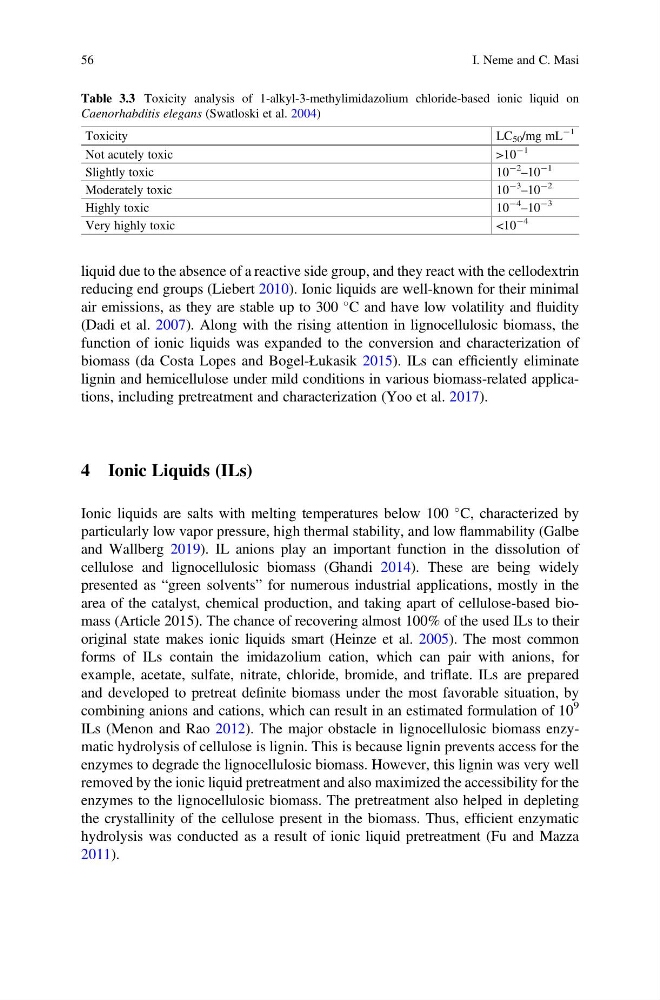
Table 3.3 Toxicity analysis of 1-alkyl-3-methylimidazolium chloride-based ionic liquid on
Caenorhabditis elegans (Swatloski et al. 2004)
Toxicity
LC 50 /mg mL
À1
Not acutely toxic
>10
À1
Slightly toxic
10
À2
–10
À1
Moderately toxic
10
À3
–10
À2
Highly toxic
10
À4
–10
À3
Very highly toxic
<10
À4
56
I. Neme and C. Masi
reducing end groups (Liebert 2010). Ionic liquids are well-known for their minimal
air emissions, as they are stable up to 300
C and have low volatility and fluidity
(Dadi et al. 2007). Along with the rising attention in lignocellulosic biomass, the
function of ionic liquids was expanded to the conversion and characterization of
biomass (da Costa Lopes and Bogel-Łukasik 2015). ILs can efficiently eliminate
lignin and hemicellulose under mild conditions in various biomass-related applications, including pretreatment and characterization (Yoo et al. 2017).
4 Ionic Liquids (ILs)
Ionic liquids are salts with melting temperatures below 100
C, characterized by
particularly low vapor pressure, high thermal stability, and low flammability (Galbe
and Wallberg 2019). IL anions play an important function in the dissolution of
cellulose and lignocellulosic biomass (Ghandi 2014). These are being widely
presented as “green solvents” for numerous industrial applications, mostly in the
area of the catalyst, chemical production, and taking apart of cellulose-based biomass (Article 2015). The chance of recovering almost 100% of the used ILs to their
original state makes ionic liquids smart (Heinze et al. 2005). The most common
forms of ILs contain the imidazolium cation, which can pair with anions, for
example, acetate, sulfate, nitrate, chloride, bromide, and triflate. ILs are prepared
and developed to pretreat definite biomass under the most favorable situation, by
combining anions and cations, which can result in an estimated formulation of 10
9
ILs (Menon and Rao 2012). The major obstacle in lignocellulosic biomass enzymatic hydrolysis of cellulose is lignin. This is because lignin prevents access for the
enzymes to degrade the lignocellulosic biomass. However, this lignin was very well
removed by the ionic liquid pretreatment and also maximized the accessibility for the
enzymes to the lignocellulosic biomass. The pretreatment also helped in depleting
the crystallinity of the cellulose present in the biomass. Thus, efficient enzymatic
hydrolysis was conducted as a result of ionic liquid pretreatment (Fu and Mazza
2011).
Table 3.3 Toxicity analysis of 1-alkyl-3-methylimidazolium chloride-based ionic liquid on
Caenorhabditis elegans (Swatloski et al. 2004)
Toxicity
LC 50 /mg mL
À1
Not acutely toxic
>10
À1
Slightly toxic
10
À2
–10
À1
Moderately toxic
10
À3
–10
À2
Highly toxic
10
À4
–10
À3
Very highly toxic
<10
À4
56
I. Neme and C. Masi