

such as unden and lindene when used at 125 and 156 gha
À1 concentration inhibited
vegetable crop production and microbial activities (Glover-Amengor and Tetteh
2008). Likewise, nitrification has been inhibited at 20 kg ha
À1 of hexazinone
1 butat
5 and 10 kgha
À1 concentration of this pesticide enhanced decay of cellulose as well
as the rate of ammonification in soddy podzolic soil (Bliev et al. 1985). Additionally,
when hexazinone used at the concentration of 5 kgha
À1 it’s residual in the soil
reached to zero stage within 450 days but due to 10 kgha
À1 application zero level
residual detected after 750 days. Approximately, 2 million tons of pesticides are used
yearly while by the year 2020, the world pesticide demand has been expected to rise
to 3.5 million tons (Sharma et al. 2019). Therefore, it can be decided when pesticides
are applied in high concentration, they influence soil microbial functions and
population, soil parameters, nutrient balance, and availability in soil.
For the last 20 years, numerous research groups were aggressively involved in
studying the variations in soil parameters and also shift in the micro-biome structure
of cultivated soils because of continued pesticide application. The response of soil
micro-biome to numerous types of synthetic pesticides varies and depends on
different factors like the nature of pesticides, kinds of microorganisms within the
soil, and soil properties. For instance, for the same concentration of pesticide, the
number of resistant communities will increase and at the same time, the sizes of
sensitive microorganisms decrease because of low competition (Chen et al. 2001). In
other cases, a consistent decrease in microbial diversity was reported after the
subsequent application of pesticides (Lupwayi et al. 2009). When soil becomes
controlled by only a few functional microorganisms because of the influence of
used chemical pesticide this may affect the overall and several biological activities of
soil. For instance, some herbicide like butachlor temporarily varied the rhizospheric
microbial population (Kalyanasundaram and Kavitha 2012). Therefore, it can be
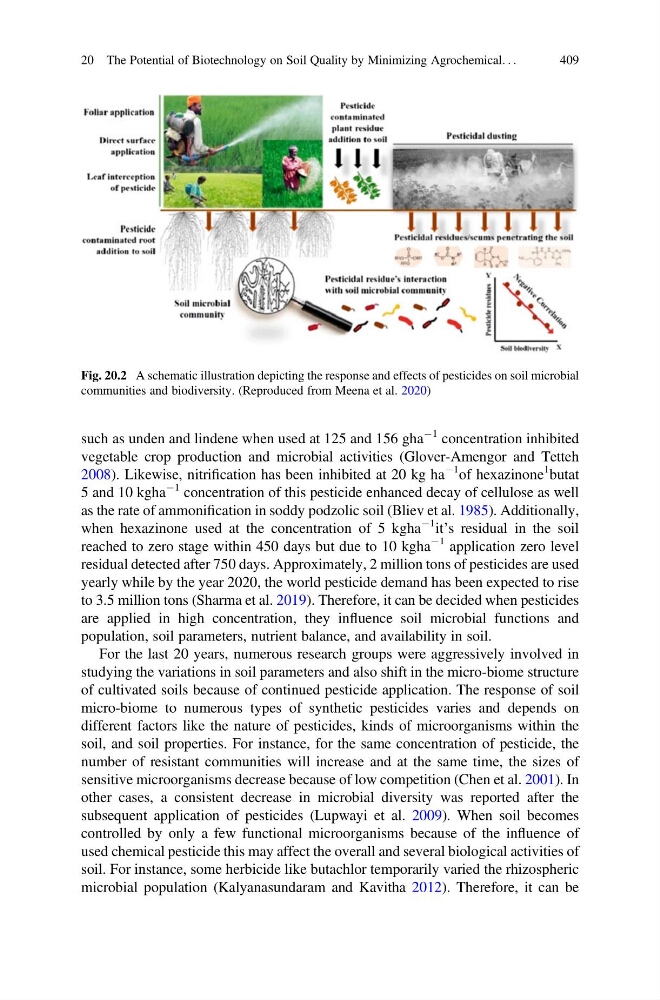
Fig. 20.2 A schematic illustration depicting the response and effects of pesticides on soil microbial
communities and biodiversity. (Reproduced from Meena et al. 2020)
20 The Potential of Biotechnology on Soil Quality by Minimizing Agrochemical. . .
409
À1 concentration inhibited
vegetable crop production and microbial activities (Glover-Amengor and Tetteh
2008). Likewise, nitrification has been inhibited at 20 kg ha
À1 of hexazinone
1 butat
5 and 10 kgha
À1 concentration of this pesticide enhanced decay of cellulose as well
as the rate of ammonification in soddy podzolic soil (Bliev et al. 1985). Additionally,
when hexazinone used at the concentration of 5 kgha
À1 it’s residual in the soil
reached to zero stage within 450 days but due to 10 kgha
À1 application zero level
residual detected after 750 days. Approximately, 2 million tons of pesticides are used
yearly while by the year 2020, the world pesticide demand has been expected to rise
to 3.5 million tons (Sharma et al. 2019). Therefore, it can be decided when pesticides
are applied in high concentration, they influence soil microbial functions and
population, soil parameters, nutrient balance, and availability in soil.
For the last 20 years, numerous research groups were aggressively involved in
studying the variations in soil parameters and also shift in the micro-biome structure
of cultivated soils because of continued pesticide application. The response of soil
micro-biome to numerous types of synthetic pesticides varies and depends on
different factors like the nature of pesticides, kinds of microorganisms within the
soil, and soil properties. For instance, for the same concentration of pesticide, the
number of resistant communities will increase and at the same time, the sizes of
sensitive microorganisms decrease because of low competition (Chen et al. 2001). In
other cases, a consistent decrease in microbial diversity was reported after the
subsequent application of pesticides (Lupwayi et al. 2009). When soil becomes
controlled by only a few functional microorganisms because of the influence of
used chemical pesticide this may affect the overall and several biological activities of
soil. For instance, some herbicide like butachlor temporarily varied the rhizospheric
microbial population (Kalyanasundaram and Kavitha 2012). Therefore, it can be
Fig. 20.2 A schematic illustration depicting the response and effects of pesticides on soil microbial
communities and biodiversity. (Reproduced from Meena et al. 2020)
20 The Potential of Biotechnology on Soil Quality by Minimizing Agrochemical. . .
409