

et al. 2017). The sequestering or binding of metal using fungal biomass is a great
extent due to the cell wall containing different polysaccharides, proteins and lipids
with varying functional moieties such as hydroxyl, amine, carboxyl, and phosphates
(Ahemad and Kibret 2013).
4.1 Extracellular (Chelation and Cell-Wall Binding)
Sequestration
The fungal cell wall surfaces thus have important protective properties and so may
act as a barrier, controlling the uptake of solutes into the cell including potentially
toxic metal species (Gadd 1993). The rigid cell wall of the fungi consists of chitin,
inorganic ions, lipids, nitrogen-containing polysaccharides, polyphosphates, and
proteins. There are two ways in which these cell wall components help to sorb
heavy metals. (i) The first barrier can excrete substances such as organic acids and
proteins capable of immobilizing heavy metals. (ii) The second barrier responsible
for (unspecific) bonding heavy metals to the cell wall (Shakya et al. 2015;
Ayangbenro and Babalola 2017).
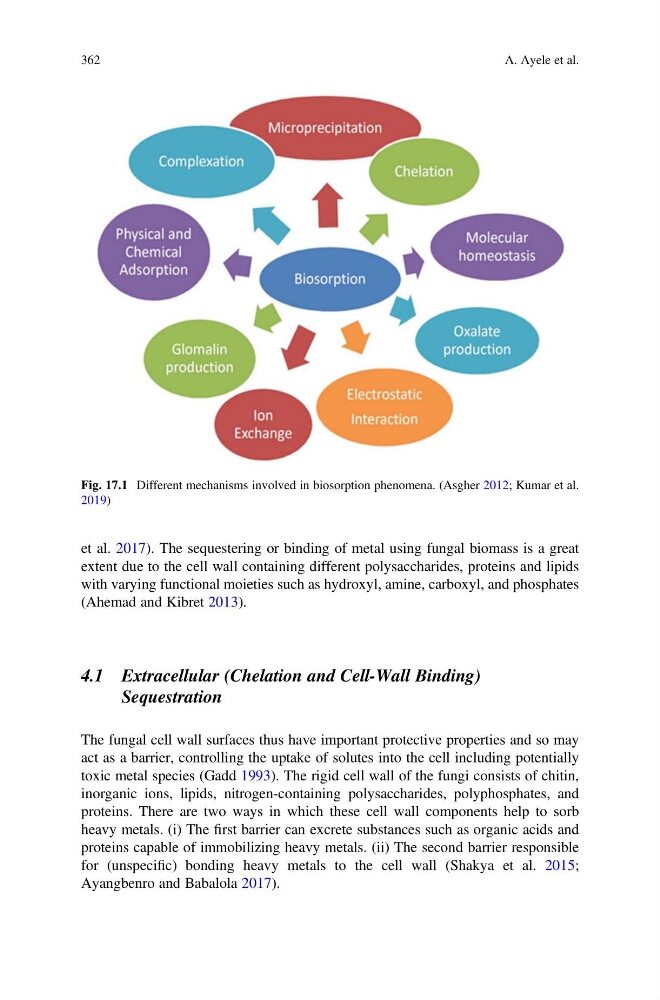
Fig. 17.1 Different mechanisms involved in biosorption phenomena. (Asgher 2012; Kumar et al.
2019)
362
A. Ayele et al.
extent due to the cell wall containing different polysaccharides, proteins and lipids
with varying functional moieties such as hydroxyl, amine, carboxyl, and phosphates
(Ahemad and Kibret 2013).
4.1 Extracellular (Chelation and Cell-Wall Binding)
Sequestration
The fungal cell wall surfaces thus have important protective properties and so may
act as a barrier, controlling the uptake of solutes into the cell including potentially
toxic metal species (Gadd 1993). The rigid cell wall of the fungi consists of chitin,
inorganic ions, lipids, nitrogen-containing polysaccharides, polyphosphates, and
proteins. There are two ways in which these cell wall components help to sorb
heavy metals. (i) The first barrier can excrete substances such as organic acids and
proteins capable of immobilizing heavy metals. (ii) The second barrier responsible
for (unspecific) bonding heavy metals to the cell wall (Shakya et al. 2015;
Ayangbenro and Babalola 2017).
Fig. 17.1 Different mechanisms involved in biosorption phenomena. (Asgher 2012; Kumar et al.
2019)
362
A. Ayele et al.