

One classic example is phosphorous regulation by phytoremediation. Phosphorus
is used as a macronutrient by plants. Phosphorous major constituent in ADP and
ATP which is very important for energy storage and in the process of photosynthesis
and respiration. It is also needed in building their biochemical structural component
like nucleic acids during their growth (Tisdale et al. 1993). Hence during their
growth period, these plants need a high amount of phosphorus. Therefore, the
required amount of phosphate or orthophosphate is taken up by the wastewater.
Therefore, the phytoremediation system helps to regulate the phosphate concentration in the water body.
S. molesta presents enzymatic antioxidant defense mechanisms to reduce toxicity
and is more effective in the floating leaves. To prevent oxidative damage produced
by toxic metals S. molesta has many defense mechanisms such as antioxidant
enzymes (superoxide dismutase (SOD), catalase (CAT), and peroxidases) that eliminate Reactive Oxygen Species in subcellular compartments. These enzymes play an
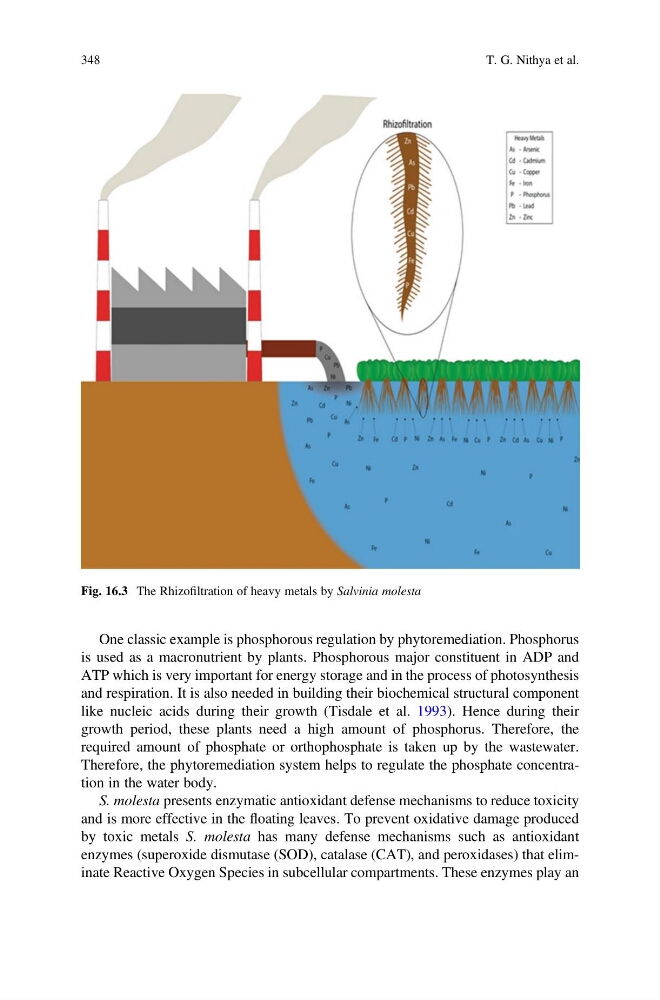
Fig. 16.3 The Rhizofiltration of heavy metals by Salvinia molesta
348
T. G. Nithya et al.
is used as a macronutrient by plants. Phosphorous major constituent in ADP and
ATP which is very important for energy storage and in the process of photosynthesis
and respiration. It is also needed in building their biochemical structural component
like nucleic acids during their growth (Tisdale et al. 1993). Hence during their
growth period, these plants need a high amount of phosphorus. Therefore, the
required amount of phosphate or orthophosphate is taken up by the wastewater.
Therefore, the phytoremediation system helps to regulate the phosphate concentration in the water body.
S. molesta presents enzymatic antioxidant defense mechanisms to reduce toxicity
and is more effective in the floating leaves. To prevent oxidative damage produced
by toxic metals S. molesta has many defense mechanisms such as antioxidant
enzymes (superoxide dismutase (SOD), catalase (CAT), and peroxidases) that eliminate Reactive Oxygen Species in subcellular compartments. These enzymes play an
Fig. 16.3 The Rhizofiltration of heavy metals by Salvinia molesta
348
T. G. Nithya et al.