

(1 μm, Nannochloropsis) to a few hundred micrometers (400 μm, (Oscillatoria). In
terms of biomass, the world’s largest primary producers, responsible for at least 32%
of global photosynthesis, and oxygen production as well as the best-known CO 2
sequestration (Kumar et al. 2015). Microalgae have unique character by being able
to distinguish between the essential heavy metals needed by the organisms from their
other counterparts and an important role in the removal of toxic heavy metals
(Table 13.1).
6 Macroalgae
Seaweed is another name for macroalgae that are multi-cellular and macroscopic
(Example, Ulva lattuca, Sargassum). Unlike microalgae, they have defined tissues containing specialized cells similar to terrestrial vascular plants. In general,
macroalgae is preferred than microalgae for a removal for pollutant purposes
(Table 13.1) because it can be easily harvested than microalgae from the water,
but efficiency is less than the microalgae due to its less surface are and
growth rate.
250
150
Algae and Heavy Metal
Phycoremediation
Year
50
0
2 0 0 0
2 0 0 1
2 0 0 2
2 0 0 3
2 0 0 4
2 0 0 5
2 0 0 6
2 0 0 7
2 0 0 8
2 0 0 9
2 0 1 0
2 0 1 1
2 0 1 2
2 0 1 3
2 0 1 4
2 0 1 5
2 0 1 6
2 0 1 7
2 0 1 8
2 0 1 9
J a n
2 0 2 0
Number of article published
100
200
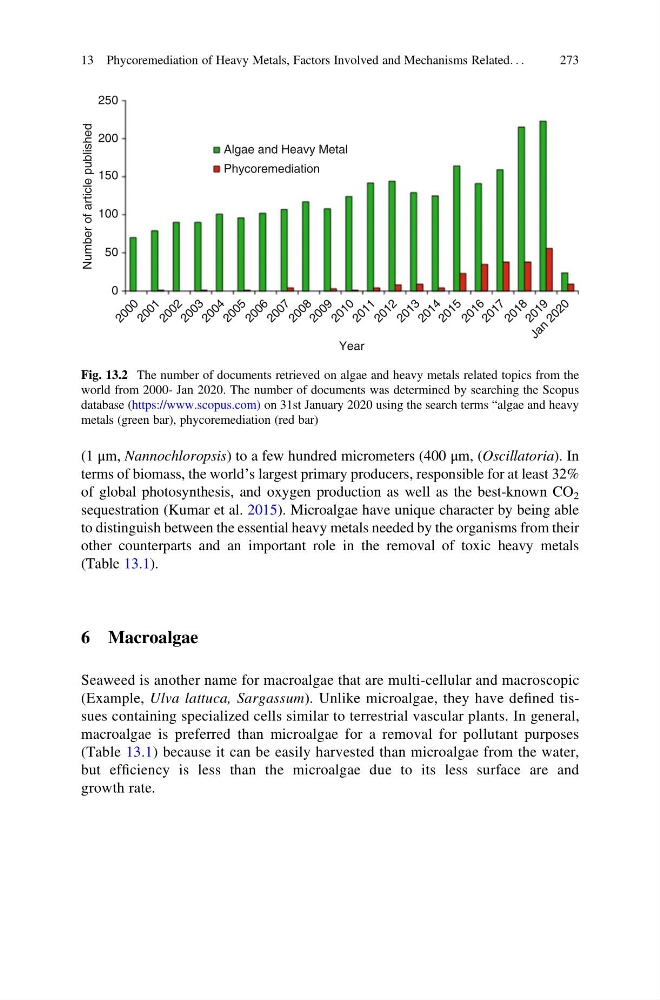
Fig. 13.2 The number of documents retrieved on algae and heavy metals related topics from the
world from 2000- Jan 2020. The number of documents was determined by searching the Scopus
database (https://www.scopus.com) on 31st January 2020 using the search terms “algae and heavy
metals (green bar), phycoremediation (red bar)
13 Phycoremediation of Heavy Metals, Factors Involved and Mechanisms Related. . .
273
terms of biomass, the world’s largest primary producers, responsible for at least 32%
of global photosynthesis, and oxygen production as well as the best-known CO 2
sequestration (Kumar et al. 2015). Microalgae have unique character by being able
to distinguish between the essential heavy metals needed by the organisms from their
other counterparts and an important role in the removal of toxic heavy metals
(Table 13.1).
6 Macroalgae
Seaweed is another name for macroalgae that are multi-cellular and macroscopic
(Example, Ulva lattuca, Sargassum). Unlike microalgae, they have defined tissues containing specialized cells similar to terrestrial vascular plants. In general,
macroalgae is preferred than microalgae for a removal for pollutant purposes
(Table 13.1) because it can be easily harvested than microalgae from the water,
but efficiency is less than the microalgae due to its less surface are and
growth rate.
250
150
Algae and Heavy Metal
Phycoremediation
Year
50
0
2 0 0 0
2 0 0 1
2 0 0 2
2 0 0 3
2 0 0 4
2 0 0 5
2 0 0 6
2 0 0 7
2 0 0 8
2 0 0 9
2 0 1 0
2 0 1 1
2 0 1 2
2 0 1 3
2 0 1 4
2 0 1 5
2 0 1 6
2 0 1 7
2 0 1 8
2 0 1 9
J a n
2 0 2 0
Number of article published
100
200
Fig. 13.2 The number of documents retrieved on algae and heavy metals related topics from the
world from 2000- Jan 2020. The number of documents was determined by searching the Scopus
database (https://www.scopus.com) on 31st January 2020 using the search terms “algae and heavy
metals (green bar), phycoremediation (red bar)
13 Phycoremediation of Heavy Metals, Factors Involved and Mechanisms Related. . .
273