

2 Heavy Metals and Its Toxicity
Heavy metals belong to high atomic weight chemicals that have a density (5 g per
cubic centimeter) approximately, five times greater than water (Duffus 2002).
Accumulation of metals into organisms poses a dangerous health risk via
bioconcentration, and biomagnifications mainly through the food chain (Mann
et al. 2011). However, living organisms require different amounts of specific
heavy metals for the regulation process in the living body. Namely, Cu, Fe, Co,
Mn, Mo, and Zn are required in small amounts for growth and effective regulation. In other words, all metals are toxic and harm both terrestrial and aquatic
ecosystems at some concentrations, and it comes from different industries
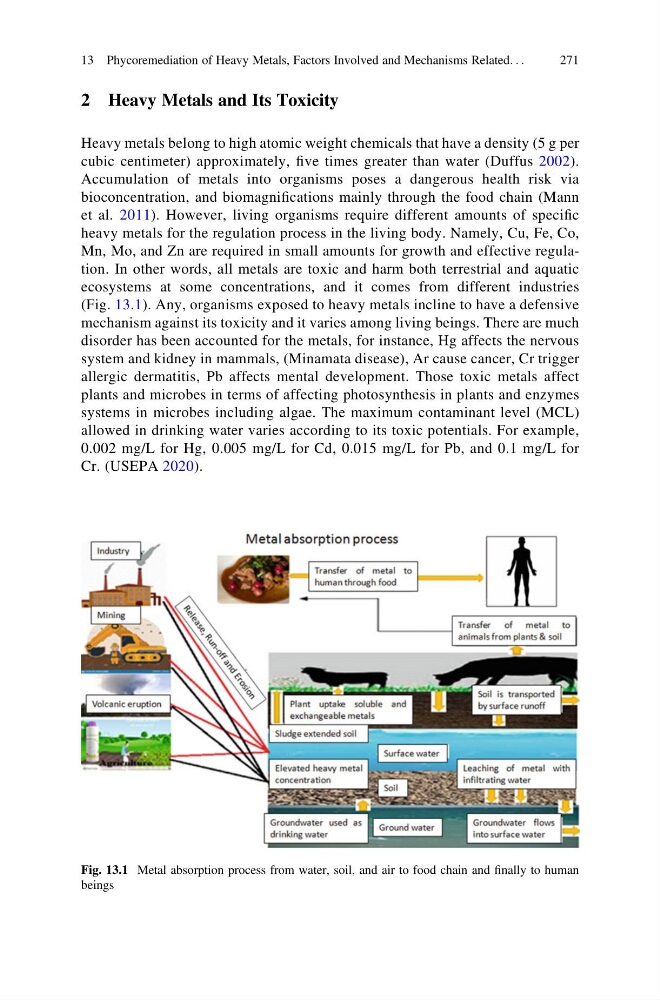
(Fig. 13.1). Any, organisms exposed to heavy metals incline to have a defensive
mechanism against its toxicity and it varies among living beings. There are much
disorder has been accounted for the metals, for instance, Hg affects the nervous
system and kidney in mammals, (Minamata disease), Ar cause cancer, Cr trigger
allergic dermatitis, Pb affects mental development. Those toxic metals affect
plants and microbes in terms of affecting photosynthesis in plants and enzymes
systems in microbes including algae. The maximum contaminant level (MCL)
allowed in drinking water varies according to its toxic potentials. For example,
0.002 mg/L for Hg, 0.005 mg/L for Cd, 0.015 mg/L for Pb, and 0.1 mg/L for
Cr. (USEPA 2020).
Fig. 13.1 Metal absorption process from water, soil, and air to food chain and finally to human
beings
13 Phycoremediation of Heavy Metals, Factors Involved and Mechanisms Related. . .
271
Heavy metals belong to high atomic weight chemicals that have a density (5 g per
cubic centimeter) approximately, five times greater than water (Duffus 2002).
Accumulation of metals into organisms poses a dangerous health risk via
bioconcentration, and biomagnifications mainly through the food chain (Mann
et al. 2011). However, living organisms require different amounts of specific
heavy metals for the regulation process in the living body. Namely, Cu, Fe, Co,
Mn, Mo, and Zn are required in small amounts for growth and effective regulation. In other words, all metals are toxic and harm both terrestrial and aquatic
ecosystems at some concentrations, and it comes from different industries
(Fig. 13.1). Any, organisms exposed to heavy metals incline to have a defensive
mechanism against its toxicity and it varies among living beings. There are much
disorder has been accounted for the metals, for instance, Hg affects the nervous
system and kidney in mammals, (Minamata disease), Ar cause cancer, Cr trigger
allergic dermatitis, Pb affects mental development. Those toxic metals affect
plants and microbes in terms of affecting photosynthesis in plants and enzymes
systems in microbes including algae. The maximum contaminant level (MCL)
allowed in drinking water varies according to its toxic potentials. For example,
0.002 mg/L for Hg, 0.005 mg/L for Cd, 0.015 mg/L for Pb, and 0.1 mg/L for
Cr. (USEPA 2020).
Fig. 13.1 Metal absorption process from water, soil, and air to food chain and finally to human
beings
13 Phycoremediation of Heavy Metals, Factors Involved and Mechanisms Related. . .
271