

50
Algae
a carbohydrate coat and surface blebs and vesicles, which may serve to trap bacteria and other particles that are subsequently engulfed as food. The properties of the membrane or its domains may
change from one stage in the life cycle to the next.
Type 2—Cell Surface with Additional Extracellular Material
Extracellular matrices occur in various forms and include mucilage and sheaths, scales, frustule,
cell walls, loricas, and skeleta.
The terminology used to describe this membrane-associated material is quite confusing, and
unrelated structures such as the frustule of diatoms, the fused scaled covering of some prasynophyceae, and the amphiesma of dinoflagellates have been given the same name, that is, theca. Our
attempt has been to organize the matter in a less confusing way (at least in our opinion).
Mucilages and Sheaths
These are general terms for some sort of outer gelatinous covering present in both prokaryotic
and eukaryotic algae. Mucilages are always present and we can observe a degree of development
of a sheath that is associated with the type of the substrate the cells contact (Figure 2.2). All cyanobacteria secrete a gelatinous material, which, in most species, tends to accumulate around the
cells or trichome in the form of an envelope or sheath. Coccoid species are thus held together to
form colonies; in some filamentous species, the sheath may function in a similar manner, as in
the formation of Nostoc balls, or in development of the firm, gelatinous hemispherical domes of
the marine Phormidium crosbyanum. Most commonly, the sheath material in filamentous species
forms a thick coating or a tube through which motile trichomes move readily. Sheath production
is a continuous process in cyanobacteria, and variation in this investment may reflect different
physiological stages or levels of adaptation to the environment. Under some environmental conditions, the sheath may become pigmented, although it is normally colorless and transparent. Ferric
hydroxide or other iron or metallic salts as well as pigments originating within the cell may accumulate in the sheath. Only a few cyanobacterial exopolysaccharides have been defined structurally; the sheath of Nostoc commune contains cellulose-like glucan fibrils cross-linked with minor
monosaccharides and that of Mycrocystis flos-aquae consists mainly of galacturonic acid, with a
composition similar to that of pectin. Cyanobacterial sheaths appear as a major component of soil
crusts found throughout the world, from hot desert to polar regions, protecting soil from erosion,
favoring water retention and nutrient bio-mobilization, and affecting chemical weathering of the
environment they colonize.
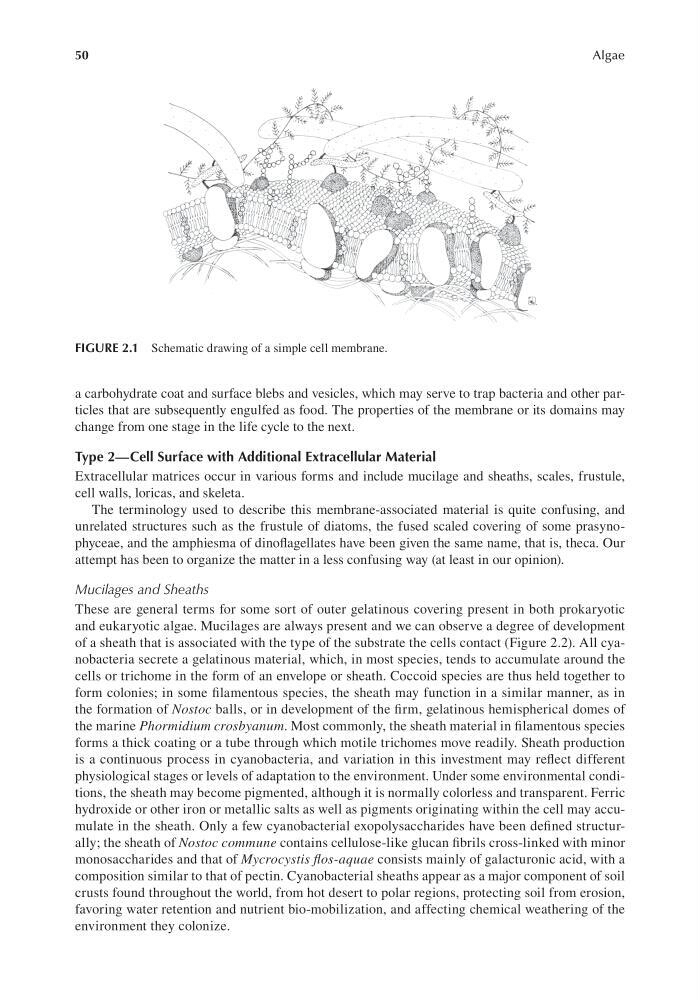
FIGURE 2.1 Schematic drawing of a simple cell membrane.
Algae
a carbohydrate coat and surface blebs and vesicles, which may serve to trap bacteria and other particles that are subsequently engulfed as food. The properties of the membrane or its domains may
change from one stage in the life cycle to the next.
Type 2—Cell Surface with Additional Extracellular Material
Extracellular matrices occur in various forms and include mucilage and sheaths, scales, frustule,
cell walls, loricas, and skeleta.
The terminology used to describe this membrane-associated material is quite confusing, and
unrelated structures such as the frustule of diatoms, the fused scaled covering of some prasynophyceae, and the amphiesma of dinoflagellates have been given the same name, that is, theca. Our
attempt has been to organize the matter in a less confusing way (at least in our opinion).
Mucilages and Sheaths
These are general terms for some sort of outer gelatinous covering present in both prokaryotic
and eukaryotic algae. Mucilages are always present and we can observe a degree of development
of a sheath that is associated with the type of the substrate the cells contact (Figure 2.2). All cyanobacteria secrete a gelatinous material, which, in most species, tends to accumulate around the
cells or trichome in the form of an envelope or sheath. Coccoid species are thus held together to
form colonies; in some filamentous species, the sheath may function in a similar manner, as in
the formation of Nostoc balls, or in development of the firm, gelatinous hemispherical domes of
the marine Phormidium crosbyanum. Most commonly, the sheath material in filamentous species
forms a thick coating or a tube through which motile trichomes move readily. Sheath production
is a continuous process in cyanobacteria, and variation in this investment may reflect different
physiological stages or levels of adaptation to the environment. Under some environmental conditions, the sheath may become pigmented, although it is normally colorless and transparent. Ferric
hydroxide or other iron or metallic salts as well as pigments originating within the cell may accumulate in the sheath. Only a few cyanobacterial exopolysaccharides have been defined structurally; the sheath of Nostoc commune contains cellulose-like glucan fibrils cross-linked with minor
monosaccharides and that of Mycrocystis flos-aquae consists mainly of galacturonic acid, with a
composition similar to that of pectin. Cyanobacterial sheaths appear as a major component of soil
crusts found throughout the world, from hot desert to polar regions, protecting soil from erosion,
favoring water retention and nutrient bio-mobilization, and affecting chemical weathering of the
environment they colonize.
FIGURE 2.1 Schematic drawing of a simple cell membrane.