

31
General Overview
the class possess a CCW basal body orientation. The class Trebouxiophyceae (Figures 1.1s and
1.43) encompasses motile and nonmotile unicells, colonies, and multicellular filaments or blades
from freshwater or terrestrial habitats, with some species present also in brackish or marine water.
Several species are either symbiotic with fungi to form lichens or endosymbiotic with freshwater
and marine protists, invertebrates, and plants. Swimming cells can have one or two pair of flagella
without mastigonemes. All the algae of the class possess a CCW basal body orientation. The class
Dasycladophyceae (Figures 1.1t and 1.19) contains algae characterized by a siphounous organization of the thallus, with numerous chloroplasts. This class is entirely marine.
As already stated, Palmophyllales (Figure 1.1u) are an early-diverging chlorophytic lineage;
these algae are restricted to dimly lit habitats and deep water. They possess a unique type of multicellularity, forming well-defined macroscopic bodies composed of small spherical cells embedded
in a firm gelatinous matrix.
Chlorophyta possess chlorophylls a and b, β- and γ-carotene, and several xantophylls as accessory pigments. Chloroplasts are surrounded by a two-membrane envelope without any ER membrane. Within the chloroplasts, thylakoids are stacked to form grana. Pyrenoids, where present,
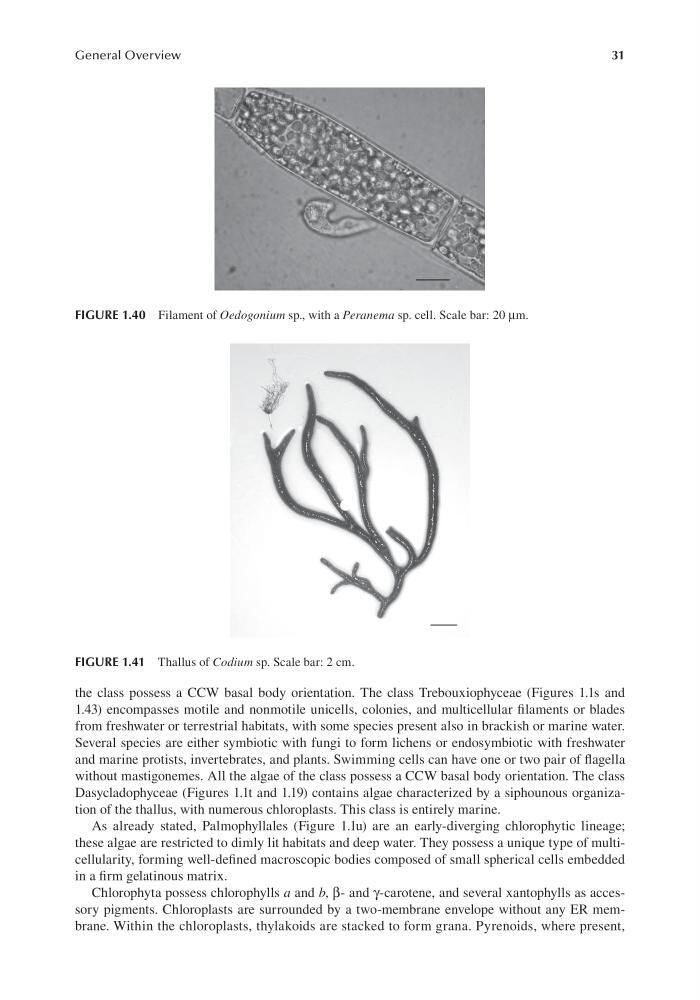
FIGURE 1.40 Filament of Oedogonium sp., with a Peranema sp. cell. Scale bar: 20 μm.
FIGURE 1.41 Thallus of Codium sp. Scale bar: 2 cm.
General Overview
the class possess a CCW basal body orientation. The class Trebouxiophyceae (Figures 1.1s and
1.43) encompasses motile and nonmotile unicells, colonies, and multicellular filaments or blades
from freshwater or terrestrial habitats, with some species present also in brackish or marine water.
Several species are either symbiotic with fungi to form lichens or endosymbiotic with freshwater
and marine protists, invertebrates, and plants. Swimming cells can have one or two pair of flagella
without mastigonemes. All the algae of the class possess a CCW basal body orientation. The class
Dasycladophyceae (Figures 1.1t and 1.19) contains algae characterized by a siphounous organization of the thallus, with numerous chloroplasts. This class is entirely marine.
As already stated, Palmophyllales (Figure 1.1u) are an early-diverging chlorophytic lineage;
these algae are restricted to dimly lit habitats and deep water. They possess a unique type of multicellularity, forming well-defined macroscopic bodies composed of small spherical cells embedded
in a firm gelatinous matrix.
Chlorophyta possess chlorophylls a and b, β- and γ-carotene, and several xantophylls as accessory pigments. Chloroplasts are surrounded by a two-membrane envelope without any ER membrane. Within the chloroplasts, thylakoids are stacked to form grana. Pyrenoids, where present,
FIGURE 1.40 Filament of Oedogonium sp., with a Peranema sp. cell. Scale bar: 20 μm.
FIGURE 1.41 Thallus of Codium sp. Scale bar: 2 cm.