

6
Algae
energy into chemical energy. For this reason, the green of their chlorophylls is masked and they look
dark purple. In contrast, algae that live in high-irradiance habitats typically have pigments that protect them against the photo-damages caused by the presence of singlet oxygen. It is the composition
and amount of accessory and protective pigments that give algae their wide variety of colors and,
for several algal groups, their common names such as brown algae, red algae, golden, and green
algae. Internal freshwater environment displays a wide diversity of form of microalgae, although not
exhibiting the phenomenal size range of their marine relatives. Freshwater phytoplankton and the
benthonic algae form the base of the aquatic food chain.
A considerable number of subaerial algae have adapted to life on land. They can occur in surprising places such as tree trunks, animal fur, snow banks, hot springs, or even embedded within desert
rocks. The activities of land algae are thought to convert rock into soil, to minimize soil erosion as
well as to increase water retention and nutrient availability for plants growing nearby.
Algae also form mutually beneficial partnership with other organisms. They live with fungi to
form lichens, or inside the cells of reef-building corals, in both cases providing oxygen and complex
nutrients to their partner, and in return receiving protection and simple nutrients. This arrangement
enables both partners to survive in conditions that they could not endure alone.
Chapter 8 will describe in detail some of the many and unusual interaction algae establish with
different and distant environmental settings and other organisms, to highlight the extreme physiological variability and plasticity of this heterogeneous assemblage.
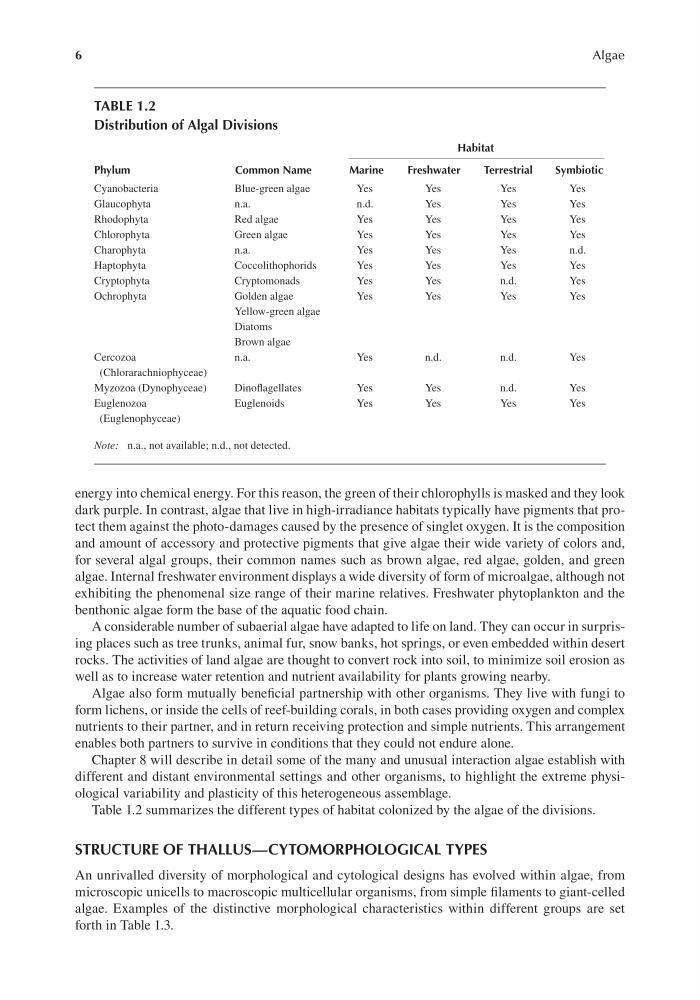
Table 1.2 summarizes the different types of habitat colonized by the algae of the divisions.
STRUCTURE OF THALLUS—CYTOMORPHOLOGICAL TYPES
An unrivalled diversity of morphological and cytological designs has evolved within algae, from
microscopic unicells to macroscopic multicellular organisms, from simple filaments to giant-celled
algae. Examples of the distinctive morphological characteristics within different groups are set
forth in Table 1.3.
TABLE 1.2
Distribution of Algal Divisions
Phylum
Common Name
Habitat
Marine
Freshwater
Terrestrial
Symbiotic
Cyanobacteria
Blue-green algae
Yes
Yes
Yes
Yes
Glaucophyta
n.a.
n.d.
Yes
Yes
Yes
Rhodophyta
Red algae
Yes
Yes
Yes
Yes
Chlorophyta
Green algae
Yes
Yes
Yes
Yes
Charophyta
n.a.
Yes
Yes
Yes
n.d.
Haptophyta
Coccolithophorids
Yes
Yes
Yes
Yes
Cryptophyta
Cryptomonads
Yes
Yes
n.d.
Yes
Ochrophyta
Golden algae
Yellow-green algae
Diatoms
Brown algae
Yes
Yes
Yes
Yes
Cercozoa
(Chlorarachniophyceae)
n.a.
Yes
n.d.
n.d.
Yes
Myzozoa (Dynophyceae)
Dinoflagellates
Yes
Yes
n.d.
Yes
Euglenozoa
(Euglenophyceae)
Euglenoids
Yes
Yes
Yes
Yes
Note: n.a., not available; n.d., not detected.
Algae
energy into chemical energy. For this reason, the green of their chlorophylls is masked and they look
dark purple. In contrast, algae that live in high-irradiance habitats typically have pigments that protect them against the photo-damages caused by the presence of singlet oxygen. It is the composition
and amount of accessory and protective pigments that give algae their wide variety of colors and,
for several algal groups, their common names such as brown algae, red algae, golden, and green
algae. Internal freshwater environment displays a wide diversity of form of microalgae, although not
exhibiting the phenomenal size range of their marine relatives. Freshwater phytoplankton and the
benthonic algae form the base of the aquatic food chain.
A considerable number of subaerial algae have adapted to life on land. They can occur in surprising places such as tree trunks, animal fur, snow banks, hot springs, or even embedded within desert
rocks. The activities of land algae are thought to convert rock into soil, to minimize soil erosion as
well as to increase water retention and nutrient availability for plants growing nearby.
Algae also form mutually beneficial partnership with other organisms. They live with fungi to
form lichens, or inside the cells of reef-building corals, in both cases providing oxygen and complex
nutrients to their partner, and in return receiving protection and simple nutrients. This arrangement
enables both partners to survive in conditions that they could not endure alone.
Chapter 8 will describe in detail some of the many and unusual interaction algae establish with
different and distant environmental settings and other organisms, to highlight the extreme physiological variability and plasticity of this heterogeneous assemblage.
Table 1.2 summarizes the different types of habitat colonized by the algae of the divisions.
STRUCTURE OF THALLUS—CYTOMORPHOLOGICAL TYPES
An unrivalled diversity of morphological and cytological designs has evolved within algae, from
microscopic unicells to macroscopic multicellular organisms, from simple filaments to giant-celled
algae. Examples of the distinctive morphological characteristics within different groups are set
forth in Table 1.3.
TABLE 1.2
Distribution of Algal Divisions
Phylum
Common Name
Habitat
Marine
Freshwater
Terrestrial
Symbiotic
Cyanobacteria
Blue-green algae
Yes
Yes
Yes
Yes
Glaucophyta
n.a.
n.d.
Yes
Yes
Yes
Rhodophyta
Red algae
Yes
Yes
Yes
Yes
Chlorophyta
Green algae
Yes
Yes
Yes
Yes
Charophyta
n.a.
Yes
Yes
Yes
n.d.
Haptophyta
Coccolithophorids
Yes
Yes
Yes
Yes
Cryptophyta
Cryptomonads
Yes
Yes
n.d.
Yes
Ochrophyta
Golden algae
Yellow-green algae
Diatoms
Brown algae
Yes
Yes
Yes
Yes
Cercozoa
(Chlorarachniophyceae)
n.a.
Yes
n.d.
n.d.
Yes
Myzozoa (Dynophyceae)
Dinoflagellates
Yes
Yes
n.d.
Yes
Euglenozoa
(Euglenophyceae)
Euglenoids
Yes
Yes
Yes
Yes
Note: n.a., not available; n.d., not detected.