

In tandem with economic globalization and diversification of trade, industrial
transfer from developed to developing countries has been promoted, contributing to
international development. The flow of these products is called arterial flow. International arterial flow has steadily occurred based on rules from the World Trade
Organization (WTO) and other bodies regarding trade, contributing to development
of the global economy. When products created by resource-consuming manufacturing industries reach the end of their life and become waste, some are recycled, but
residues are often landfilled and pollutants leech from landfill residues into the soil.
As a result, environmental and health problems occur due to drainage of pollutants
into rivers, overcrowded landfill sites, and limited exhaustible resources; countermeasures are essential. In order to solve these problems, the OECD has advocated an
extended producer responsibility (EPR) policy, and OECD countries, such as Europe
and Japan, have implemented various recycling laws. The GRS must evaluate
whether waste should be treated in small, medium, or general cycles. In the general
cycle, there are many advantages and disadvantages for both exporting and
importing countries, and waste trade may or may not be appropriate.
In order to judge suitability, the environmental, economic, social, and legal
interests of both countries must be considered and a stakeholder analysis conducted.
A qualitative evaluation has been attempted considering waste electrical appliances
and waste PET bottles between Japan and China (Koizumi et al. 2004). There are
many advantages for both countries; if there are few disadvantages, it will be a
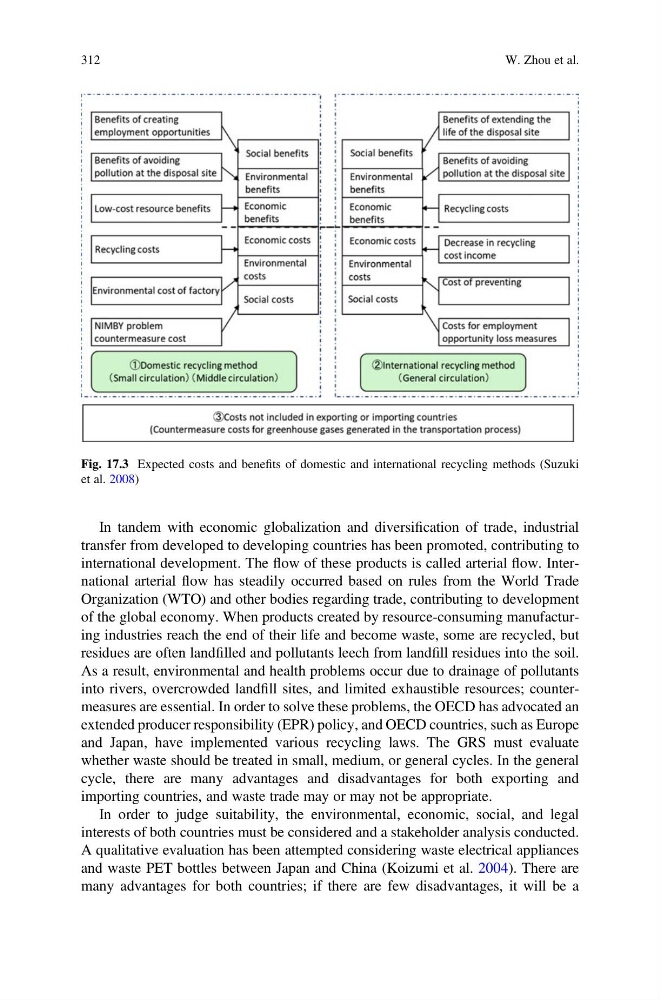
Fig. 17.3 Expected costs and benefits of domestic and international recycling methods (Suzuki
et al. 2008)
312
W. Zhou et al.
transfer from developed to developing countries has been promoted, contributing to
international development. The flow of these products is called arterial flow. International arterial flow has steadily occurred based on rules from the World Trade
Organization (WTO) and other bodies regarding trade, contributing to development
of the global economy. When products created by resource-consuming manufacturing industries reach the end of their life and become waste, some are recycled, but
residues are often landfilled and pollutants leech from landfill residues into the soil.
As a result, environmental and health problems occur due to drainage of pollutants
into rivers, overcrowded landfill sites, and limited exhaustible resources; countermeasures are essential. In order to solve these problems, the OECD has advocated an
extended producer responsibility (EPR) policy, and OECD countries, such as Europe
and Japan, have implemented various recycling laws. The GRS must evaluate
whether waste should be treated in small, medium, or general cycles. In the general
cycle, there are many advantages and disadvantages for both exporting and
importing countries, and waste trade may or may not be appropriate.
In order to judge suitability, the environmental, economic, social, and legal
interests of both countries must be considered and a stakeholder analysis conducted.
A qualitative evaluation has been attempted considering waste electrical appliances
and waste PET bottles between Japan and China (Koizumi et al. 2004). There are
many advantages for both countries; if there are few disadvantages, it will be a
Fig. 17.3 Expected costs and benefits of domestic and international recycling methods (Suzuki
et al. 2008)
312
W. Zhou et al.