

Substituting observed values into Eqs. (12.3) and (12.4), mean wind velocity, and
wind power density are calculated as V m ¼ 1.40 m/s and PD ¼ 4.09 W/m
3 . Here,
considering the distribution characteristics of wind velocity in Fig. 12.4, a high
efficiency windmill can be developed working within the wide range of 0–6 m/s
wind velocity. Variation in meteorological conditions affecting wind direction and
velocity should be observed throughout an entire year before installation of power
generation facilities based on the common type of windmill. This is particularly
important in Japan, where the wind direction tends to vary very frequently, regardless of the season.
12.3.2 Development of a New Type of Windmill
If wind direction and velocity remain constant, the popular three-bladed windmill
has the highest efficiency in generating electric power (Matsumiya et al. 2005).
However, meteorological wind features are complicated in some countries; wind
direction and velocity should be simultaneously evaluated when designing high
efficiency windmills, as discussed in the previous section. Here, we present a new
type of windmill that works well regardless of variations in wind direction (Kawai
et al. 2010) and retains its ability to generate power across a wide range of wind
velocities.
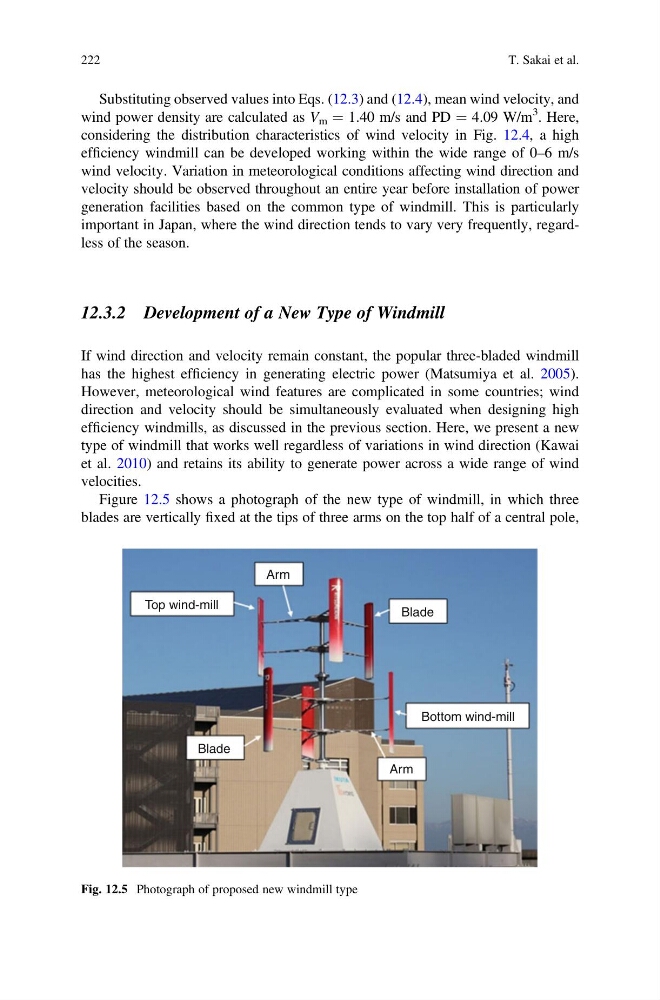
Figure 12.5 shows a photograph of the new type of windmill, in which three
blades are vertically fixed at the tips of three arms on the top half of a central pole,
Top wind-mill
Arm
Blade
Bottom wind-mill
Arm
Blade
Fig. 12.5 Photograph of proposed new windmill type
222
T. Sakai et al.
wind power density are calculated as V m ¼ 1.40 m/s and PD ¼ 4.09 W/m
3 . Here,
considering the distribution characteristics of wind velocity in Fig. 12.4, a high
efficiency windmill can be developed working within the wide range of 0–6 m/s
wind velocity. Variation in meteorological conditions affecting wind direction and
velocity should be observed throughout an entire year before installation of power
generation facilities based on the common type of windmill. This is particularly
important in Japan, where the wind direction tends to vary very frequently, regardless of the season.
12.3.2 Development of a New Type of Windmill
If wind direction and velocity remain constant, the popular three-bladed windmill
has the highest efficiency in generating electric power (Matsumiya et al. 2005).
However, meteorological wind features are complicated in some countries; wind
direction and velocity should be simultaneously evaluated when designing high
efficiency windmills, as discussed in the previous section. Here, we present a new
type of windmill that works well regardless of variations in wind direction (Kawai
et al. 2010) and retains its ability to generate power across a wide range of wind
velocities.
Figure 12.5 shows a photograph of the new type of windmill, in which three
blades are vertically fixed at the tips of three arms on the top half of a central pole,
Top wind-mill
Arm
Blade
Bottom wind-mill
Arm
Blade
Fig. 12.5 Photograph of proposed new windmill type
222
T. Sakai et al.