

7.5 Optimal System Combination
Optimal system combination is an important part of designing a local energy system.
For all three scenarios, the option with the lowest CO 2 emissions has greater total
power generation capacity and smaller heat generation capacity than the option with
lowest total cost (Fig. 7.9). This is because CO 2 emissions are minimized with
widely used CHP technology, which leads to reduced thermal requirements from
additional heat sources. In addition, when economic objectives are considered, most
electricity requirements can be served by the utility grid, and thermal load is mainly
supplied by solar heating supplemented by natural gas or biomass boilers. When
environmental objectives are optimized, different scenarios have different optimal
system combinations. For Scenario 1, a fuel cell system (PA) and natural gas power
plant (NP) are the main options, with capacities of 1.9 GW and 0.7 GW, respectively. In Scenario 2, solar photovoltaic (PV) becomes dominant, followed by some
biomass power generation. When urban and rural areas are coupled in a bilateral way
(Scenario 3), all electrical and thermal demands can be satisfied by local generation,
Power plant
Gas boiler
CHP
Power plant
Boiler
CHP
Water heater
PV
Wind turbine
Rural
Utility grid
Urban
Natural gas
Solar
Wind
Biomass
Water
Hydro-power
Heat pump
Electricity
Heat
Urban
Rural
Electricity
Heat
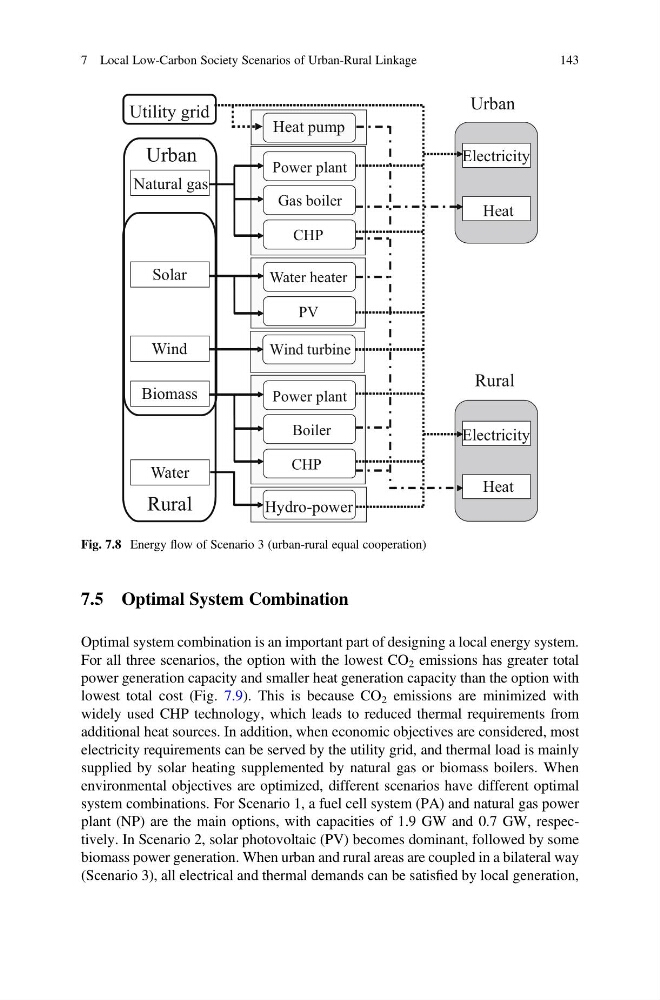
Fig. 7.8 Energy flow of Scenario 3 (urban-rural equal cooperation)
7 Local Low-Carbon Society Scenarios of Urban-Rural Linkage
143
Optimal system combination is an important part of designing a local energy system.
For all three scenarios, the option with the lowest CO 2 emissions has greater total
power generation capacity and smaller heat generation capacity than the option with
lowest total cost (Fig. 7.9). This is because CO 2 emissions are minimized with
widely used CHP technology, which leads to reduced thermal requirements from
additional heat sources. In addition, when economic objectives are considered, most
electricity requirements can be served by the utility grid, and thermal load is mainly
supplied by solar heating supplemented by natural gas or biomass boilers. When
environmental objectives are optimized, different scenarios have different optimal
system combinations. For Scenario 1, a fuel cell system (PA) and natural gas power
plant (NP) are the main options, with capacities of 1.9 GW and 0.7 GW, respectively. In Scenario 2, solar photovoltaic (PV) becomes dominant, followed by some
biomass power generation. When urban and rural areas are coupled in a bilateral way
(Scenario 3), all electrical and thermal demands can be satisfied by local generation,
Power plant
Gas boiler
CHP
Power plant
Boiler
CHP
Water heater
PV
Wind turbine
Rural
Utility grid
Urban
Natural gas
Solar
Wind
Biomass
Water
Hydro-power
Heat pump
Electricity
Heat
Urban
Rural
Electricity
Heat
Fig. 7.8 Energy flow of Scenario 3 (urban-rural equal cooperation)
7 Local Low-Carbon Society Scenarios of Urban-Rural Linkage
143