

28
1 Molecules and Intermolecular Interactions
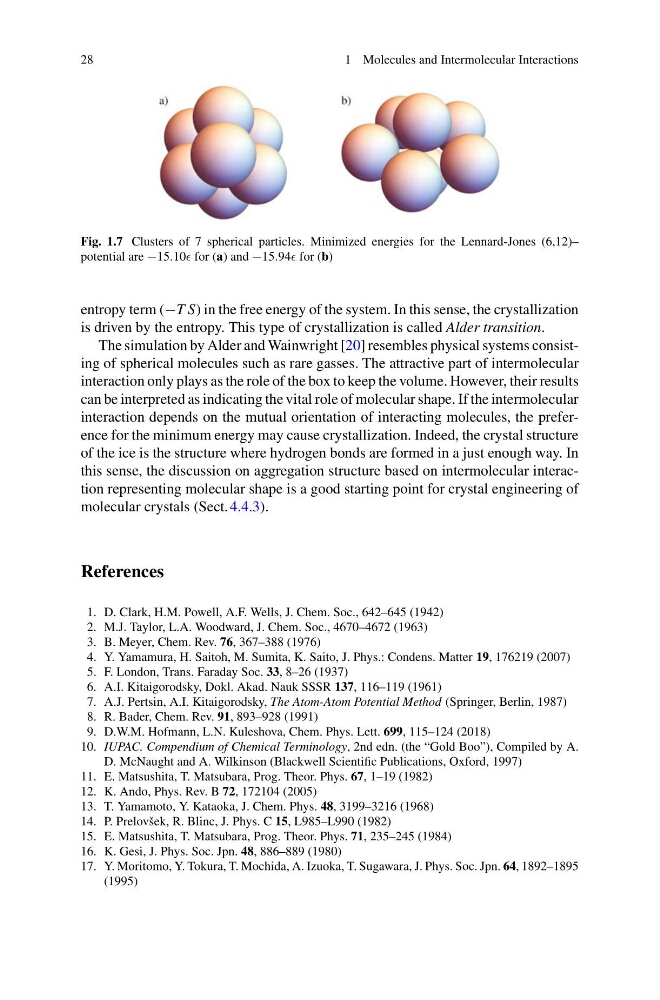
Fig. 1.7 Clusters of 7 spherical particles. Minimized energies for the Lennard-Jones (6,12)–
potential are −15.10 for (a) and −15.94 for (b)
entropy term (−T S) in the free energy of the system. In this sense, the crystallization
is driven by the entropy. This type of crystallization is called Alder transition.
The simulation by Alder and Wainwright [20] resembles physical systems consisting of spherical molecules such as rare gasses. The attractive part of intermolecular
interaction only plays as the role of the box to keep the volume. However, their results
can be interpreted as indicating the vital role of molecular shape. If the intermolecular
interaction depends on the mutual orientation of interacting molecules, the preference for the minimum energy may cause crystallization. Indeed, the crystal structure
of the ice is the structure where hydrogen bonds are formed in a just enough way. In
this sense, the discussion on aggregation structure based on intermolecular interaction representing molecular shape is a good starting point for crystal engineering of
molecular crystals (Sect. 4.4.3).
References
1. D. Clark, H.M. Powell, A.F. Wells, J. Chem. Soc., 642–645 (1942)
2. M.J. Taylor, L.A. Woodward, J. Chem. Soc., 4670–4672 (1963)
3. B. Meyer, Chem. Rev. 76, 367–388 (1976)
4. Y. Yamamura, H. Saitoh, M. Sumita, K. Saito, J. Phys.: Condens. Matter 19, 176219 (2007)
5. F. London, Trans. Faraday Soc. 33, 8–26 (1937)
6. A.I. Kitaigorodsky, Dokl. Akad. Nauk SSSR 137, 116–119 (1961)
7. A.J. Pertsin, A.I. Kitaigorodsky, The Atom-Atom Potential Method (Springer, Berlin, 1987)
8. R. Bader, Chem. Rev. 91, 893–928 (1991)
9. D.W.M. Hofmann, L.N. Kuleshova, Chem. Phys. Lett. 699, 115–124 (2018)
10. IUPAC. Compendium of Chemical Terminology, 2nd edn. (the “Gold Boo”), Compiled by A.
D. McNaught and A. Wilkinson (Blackwell Scientific Publications, Oxford, 1997)
11. E. Matsushita, T. Matsubara, Prog. Theor. Phys. 67, 1–19 (1982)
12. K. Ando, Phys. Rev. B 72, 172104 (2005)
13. T. Yamamoto, Y. Kataoka, J. Chem. Phys. 48, 3199–3216 (1968)
14. P. Prelovšek, R. Blinc, J. Phys. C 15, L985–L990 (1982)
15. E. Matsushita, T. Matsubara, Prog. Theor. Phys. 71, 235–245 (1984)
16. K. Gesi, J. Phys. Soc. Jpn. 48, 886–889 (1980)
17. Y. Moritomo, Y. Tokura, T. Mochida, A. Izuoka, T. Sugawara, J. Phys. Soc. Jpn. 64, 1892–1895
(1995)
1 Molecules and Intermolecular Interactions
Fig. 1.7 Clusters of 7 spherical particles. Minimized energies for the Lennard-Jones (6,12)–
potential are −15.10 for (a) and −15.94 for (b)
entropy term (−T S) in the free energy of the system. In this sense, the crystallization
is driven by the entropy. This type of crystallization is called Alder transition.
The simulation by Alder and Wainwright [20] resembles physical systems consisting of spherical molecules such as rare gasses. The attractive part of intermolecular
interaction only plays as the role of the box to keep the volume. However, their results
can be interpreted as indicating the vital role of molecular shape. If the intermolecular
interaction depends on the mutual orientation of interacting molecules, the preference for the minimum energy may cause crystallization. Indeed, the crystal structure
of the ice is the structure where hydrogen bonds are formed in a just enough way. In
this sense, the discussion on aggregation structure based on intermolecular interaction representing molecular shape is a good starting point for crystal engineering of
molecular crystals (Sect. 4.4.3).
References
1. D. Clark, H.M. Powell, A.F. Wells, J. Chem. Soc., 642–645 (1942)
2. M.J. Taylor, L.A. Woodward, J. Chem. Soc., 4670–4672 (1963)
3. B. Meyer, Chem. Rev. 76, 367–388 (1976)
4. Y. Yamamura, H. Saitoh, M. Sumita, K. Saito, J. Phys.: Condens. Matter 19, 176219 (2007)
5. F. London, Trans. Faraday Soc. 33, 8–26 (1937)
6. A.I. Kitaigorodsky, Dokl. Akad. Nauk SSSR 137, 116–119 (1961)
7. A.J. Pertsin, A.I. Kitaigorodsky, The Atom-Atom Potential Method (Springer, Berlin, 1987)
8. R. Bader, Chem. Rev. 91, 893–928 (1991)
9. D.W.M. Hofmann, L.N. Kuleshova, Chem. Phys. Lett. 699, 115–124 (2018)
10. IUPAC. Compendium of Chemical Terminology, 2nd edn. (the “Gold Boo”), Compiled by A.
D. McNaught and A. Wilkinson (Blackwell Scientific Publications, Oxford, 1997)
11. E. Matsushita, T. Matsubara, Prog. Theor. Phys. 67, 1–19 (1982)
12. K. Ando, Phys. Rev. B 72, 172104 (2005)
13. T. Yamamoto, Y. Kataoka, J. Chem. Phys. 48, 3199–3216 (1968)
14. P. Prelovšek, R. Blinc, J. Phys. C 15, L985–L990 (1982)
15. E. Matsushita, T. Matsubara, Prog. Theor. Phys. 71, 235–245 (1984)
16. K. Gesi, J. Phys. Soc. Jpn. 48, 886–889 (1980)
17. Y. Moritomo, Y. Tokura, T. Mochida, A. Izuoka, T. Sugawara, J. Phys. Soc. Jpn. 64, 1892–1895
(1995)