

10.1 Motional Correlation
201
left
right
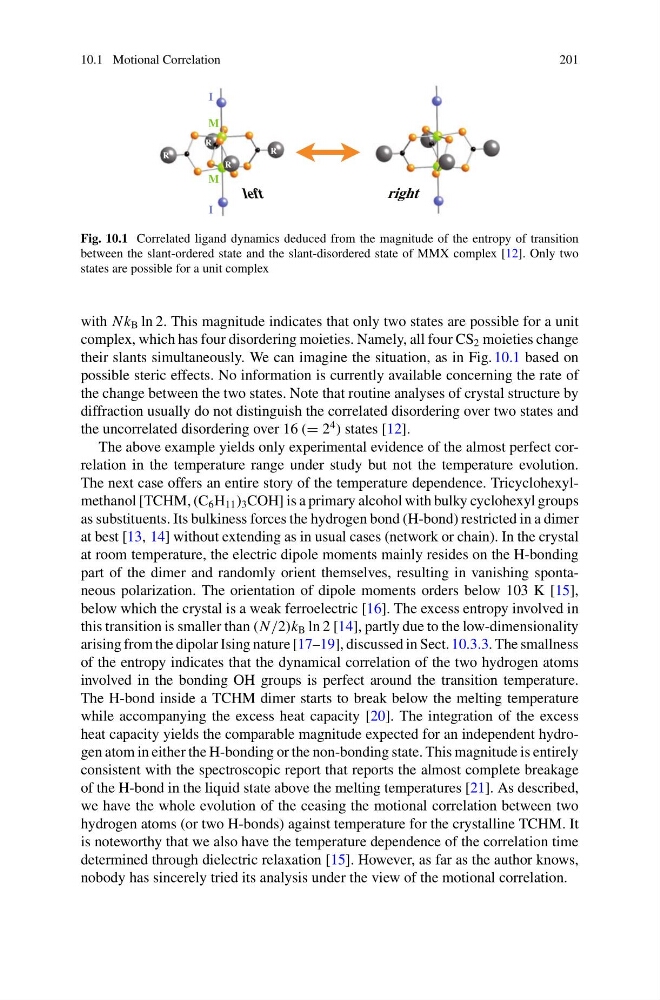
Fig. 10.1 Correlated ligand dynamics deduced from the magnitude of the entropy of transition
between the slant-ordered state and the slant-disordered state of MMX complex [12]. Only two
states are possible for a unit complex
with N k B ln 2. This magnitude indicates that only two states are possible for a unit
complex, which has four disordering moieties. Namely, all four CS 2 moieties change
their slants simultaneously. We can imagine the situation, as in Fig. 10.1 based on
possible steric effects. No information is currently available concerning the rate of
the change between the two states. Note that routine analyses of crystal structure by
diffraction usually do not distinguish the correlated disordering over two states and
the uncorrelated disordering over 16 (= 2
4 ) states [12].
The above example yields only experimental evidence of the almost perfect correlation in the temperature range under study but not the temperature evolution.
The next case offers an entire story of the temperature dependence. Tricyclohexylmethanol [TCHM, (C 6 H 11 ) 3 COH] is a primary alcohol with bulky cyclohexyl groups
as substituents. Its bulkiness forces the hydrogen bond (H-bond) restricted in a dimer
at best [13, 14] without extending as in usual cases (network or chain). In the crystal
at room temperature, the electric dipole moments mainly resides on the H-bonding
part of the dimer and randomly orient themselves, resulting in vanishing spontaneous polarization. The orientation of dipole moments orders below 103 K [15],
below which the crystal is a weak ferroelectric [16]. The excess entropy involved in
this transition is smaller than (N /2)k B ln 2 [14], partly due to the low-dimensionality
arising from the dipolar Ising nature [17–19], discussed in Sect. 10.3.3. The smallness
of the entropy indicates that the dynamical correlation of the two hydrogen atoms
involved in the bonding OH groups is perfect around the transition temperature.
The H-bond inside a TCHM dimer starts to break below the melting temperature
while accompanying the excess heat capacity [20]. The integration of the excess
heat capacity yields the comparable magnitude expected for an independent hydrogen atom in either the H-bonding or the non-bonding state. This magnitude is entirely
consistent with the spectroscopic report that reports the almost complete breakage
of the H-bond in the liquid state above the melting temperatures [21]. As described,
we have the whole evolution of the ceasing the motional correlation between two
hydrogen atoms (or two H-bonds) against temperature for the crystalline TCHM. It
is noteworthy that we also have the temperature dependence of the correlation time
determined through dielectric relaxation [15]. However, as far as the author knows,
nobody has sincerely tried its analysis under the view of the motional correlation.
201
left
right
Fig. 10.1 Correlated ligand dynamics deduced from the magnitude of the entropy of transition
between the slant-ordered state and the slant-disordered state of MMX complex [12]. Only two
states are possible for a unit complex
with N k B ln 2. This magnitude indicates that only two states are possible for a unit
complex, which has four disordering moieties. Namely, all four CS 2 moieties change
their slants simultaneously. We can imagine the situation, as in Fig. 10.1 based on
possible steric effects. No information is currently available concerning the rate of
the change between the two states. Note that routine analyses of crystal structure by
diffraction usually do not distinguish the correlated disordering over two states and
the uncorrelated disordering over 16 (= 2
4 ) states [12].
The above example yields only experimental evidence of the almost perfect correlation in the temperature range under study but not the temperature evolution.
The next case offers an entire story of the temperature dependence. Tricyclohexylmethanol [TCHM, (C 6 H 11 ) 3 COH] is a primary alcohol with bulky cyclohexyl groups
as substituents. Its bulkiness forces the hydrogen bond (H-bond) restricted in a dimer
at best [13, 14] without extending as in usual cases (network or chain). In the crystal
at room temperature, the electric dipole moments mainly resides on the H-bonding
part of the dimer and randomly orient themselves, resulting in vanishing spontaneous polarization. The orientation of dipole moments orders below 103 K [15],
below which the crystal is a weak ferroelectric [16]. The excess entropy involved in
this transition is smaller than (N /2)k B ln 2 [14], partly due to the low-dimensionality
arising from the dipolar Ising nature [17–19], discussed in Sect. 10.3.3. The smallness
of the entropy indicates that the dynamical correlation of the two hydrogen atoms
involved in the bonding OH groups is perfect around the transition temperature.
The H-bond inside a TCHM dimer starts to break below the melting temperature
while accompanying the excess heat capacity [20]. The integration of the excess
heat capacity yields the comparable magnitude expected for an independent hydrogen atom in either the H-bonding or the non-bonding state. This magnitude is entirely
consistent with the spectroscopic report that reports the almost complete breakage
of the H-bond in the liquid state above the melting temperatures [21]. As described,
we have the whole evolution of the ceasing the motional correlation between two
hydrogen atoms (or two H-bonds) against temperature for the crystalline TCHM. It
is noteworthy that we also have the temperature dependence of the correlation time
determined through dielectric relaxation [15]. However, as far as the author knows,
nobody has sincerely tried its analysis under the view of the motional correlation.