

the volume in the hypolimnion. Thus, it was considered that the water removed by
the pilot study had minimal impact on the available water in the hypolimnion.
An estimate was made of the relative costs of the coagulants studied. Based on the
2015 US cost and the concentration needed, the following comparison was made:
Coagulant
Cost, cents per 1,000 gal (or 3,785 L)
Aluminum sulfate
0.98
Aluminum chlorohydrate 3.63
Ferric chloride
20.75
Appendix G is a US Army Corps of Engineers Civil Works Construction Yearly
Average Cost Index for utilities, which has been used for the above cost estimation.
An advantage of using A/C is that it does not result in any aluminum residual.
Fig. 7.7 Results of DAF pilot plant study for removal of phosphorus from the hypolimnion of
Devils Lake using ferric chloride
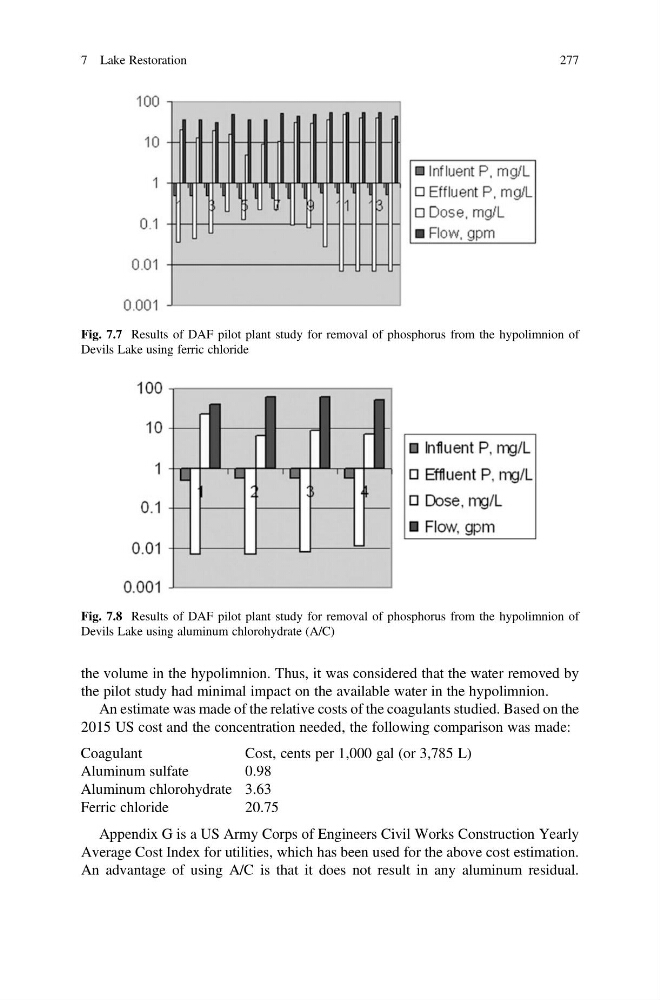
Fig. 7.8 Results of DAF pilot plant study for removal of phosphorus from the hypolimnion of
Devils Lake using aluminum chlorohydrate (A/C)
7 Lake Restoration
277
the pilot study had minimal impact on the available water in the hypolimnion.
An estimate was made of the relative costs of the coagulants studied. Based on the
2015 US cost and the concentration needed, the following comparison was made:
Coagulant
Cost, cents per 1,000 gal (or 3,785 L)
Aluminum sulfate
0.98
Aluminum chlorohydrate 3.63
Ferric chloride
20.75
Appendix G is a US Army Corps of Engineers Civil Works Construction Yearly
Average Cost Index for utilities, which has been used for the above cost estimation.
An advantage of using A/C is that it does not result in any aluminum residual.
Fig. 7.7 Results of DAF pilot plant study for removal of phosphorus from the hypolimnion of
Devils Lake using ferric chloride
Fig. 7.8 Results of DAF pilot plant study for removal of phosphorus from the hypolimnion of
Devils Lake using aluminum chlorohydrate (A/C)
7 Lake Restoration
277