

3.1 Effect of Physical Characteristics of Water on Dissolved
Oxygen
Oxygen is typically a limiting factor in aquatic ecosystems. Dissolved oxygen
(DO) concentrations are expressed as milligrams of oxygen per liter of water
(mg/L). DO also regulates the availability of certain nutrients in the water. Many
physical factors affect the amount of dissolved oxygen in a stream. The physical
factors that influence DO are temperature, altitude, salinity, and stream structure.
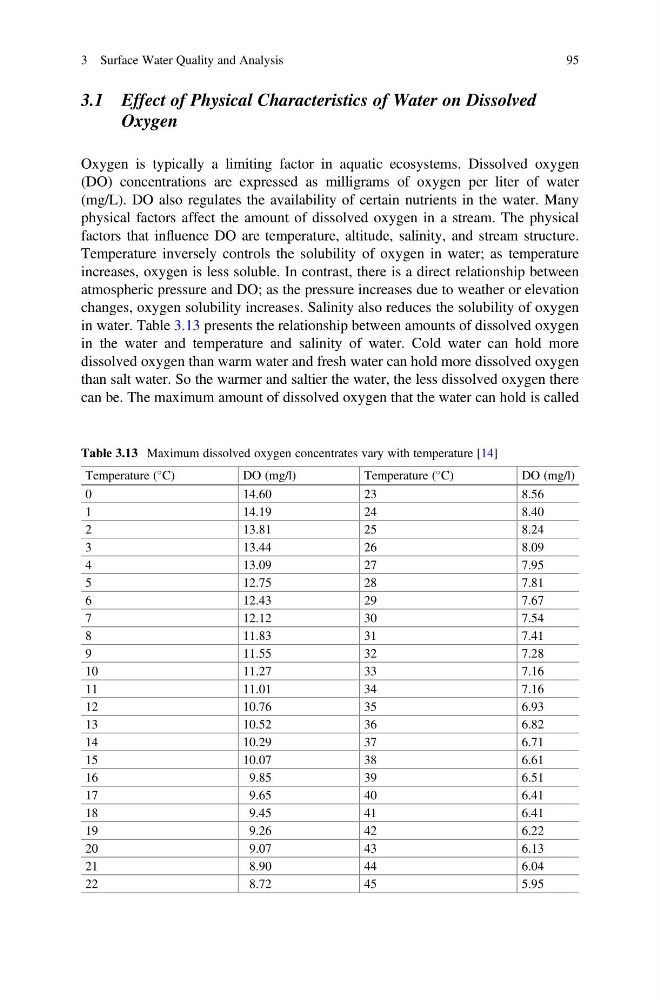
Temperature inversely controls the solubility of oxygen in water; as temperature
increases, oxygen is less soluble. In contrast, there is a direct relationship between
atmospheric pressure and DO; as the pressure increases due to weather or elevation
changes, oxygen solubility increases. Salinity also reduces the solubility of oxygen
in water. Table 3.13 presents the relationship between amounts of dissolved oxygen
in the water and temperature and salinity of water. Cold water can hold more
dissolved oxygen than warm water and fresh water can hold more dissolved oxygen
than salt water. So the warmer and saltier the water, the less dissolved oxygen there
can be. The maximum amount of dissolved oxygen that the water can hold is called
Table 3.13 Maximum dissolved oxygen concentrates vary with temperature [14]
Temperature (
C)
DO (mg/l)
Temperature (
C)
DO (mg/l)
0
14.60
23
8.56
1
14.19
24
8.40
2
13.81
25
8.24
3
13.44
26
8.09
4
13.09
27
7.95
5
12.75
28
7.81
6
12.43
29
7.67
7
12.12
30
7.54
8
11.83
31
7.41
9
11.55
32
7.28
10
11.27
33
7.16
11
11.01
34
7.16
12
10.76
35
6.93
13
10.52
36
6.82
14
10.29
37
6.71
15
10.07
38
6.61
16
9.85
39
6.51
17
9.65
40
6.41
18
9.45
41
6.41
19
9.26
42
6.22
20
9.07
43
6.13
21
8.90
44
6.04
22
8.72
45
5.95
3 Surface Water Quality and Analysis
95
Oxygen
Oxygen is typically a limiting factor in aquatic ecosystems. Dissolved oxygen
(DO) concentrations are expressed as milligrams of oxygen per liter of water
(mg/L). DO also regulates the availability of certain nutrients in the water. Many
physical factors affect the amount of dissolved oxygen in a stream. The physical
factors that influence DO are temperature, altitude, salinity, and stream structure.
Temperature inversely controls the solubility of oxygen in water; as temperature
increases, oxygen is less soluble. In contrast, there is a direct relationship between
atmospheric pressure and DO; as the pressure increases due to weather or elevation
changes, oxygen solubility increases. Salinity also reduces the solubility of oxygen
in water. Table 3.13 presents the relationship between amounts of dissolved oxygen
in the water and temperature and salinity of water. Cold water can hold more
dissolved oxygen than warm water and fresh water can hold more dissolved oxygen
than salt water. So the warmer and saltier the water, the less dissolved oxygen there
can be. The maximum amount of dissolved oxygen that the water can hold is called
Table 3.13 Maximum dissolved oxygen concentrates vary with temperature [14]
Temperature (
C)
DO (mg/l)
Temperature (
C)
DO (mg/l)
0
14.60
23
8.56
1
14.19
24
8.40
2
13.81
25
8.24
3
13.44
26
8.09
4
13.09
27
7.95
5
12.75
28
7.81
6
12.43
29
7.67
7
12.12
30
7.54
8
11.83
31
7.41
9
11.55
32
7.28
10
11.27
33
7.16
11
11.01
34
7.16
12
10.76
35
6.93
13
10.52
36
6.82
14
10.29
37
6.71
15
10.07
38
6.61
16
9.85
39
6.51
17
9.65
40
6.41
18
9.45
41
6.41
19
9.26
42
6.22
20
9.07
43
6.13
21
8.90
44
6.04
22
8.72
45
5.95
3 Surface Water Quality and Analysis
95