

356
S. Kalita and H. Talukdar
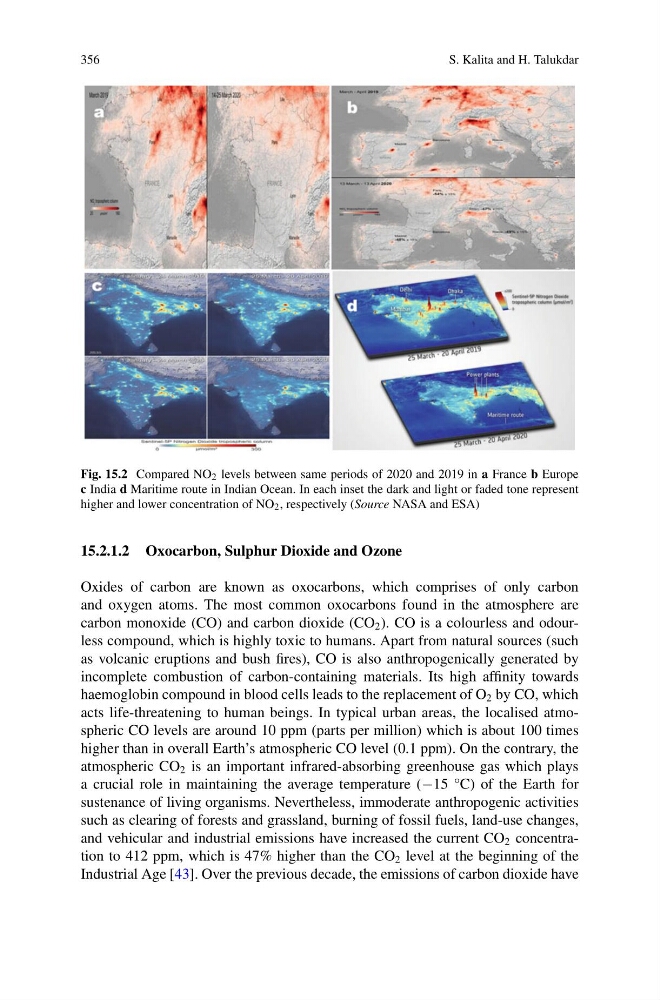
Fig. 15.2 Compared NO 2 levels between same periods of 2020 and 2019 in a France b Europe
c India d Maritime route in Indian Ocean. In each inset the dark and light or faded tone represent
higher and lower concentration of NO 2 , respectively (Source NASA and ESA)
15.2.1.2 Oxocarbon, Sulphur Dioxide and Ozone
Oxides of carbon are known as oxocarbons, which comprises of only carbon
and oxygen atoms. The most common oxocarbons found in the atmosphere are
carbon monoxide (CO) and carbon dioxide (CO 2 ). CO is a colourless and odourless compound, which is highly toxic to humans. Apart from natural sources (such
as volcanic eruptions and bush fires), CO is also anthropogenically generated by
incomplete combustion of carbon-containing materials. Its high affinity towards
haemoglobin compound in blood cells leads to the replacement of O 2 by CO, which
acts life-threatening to human beings. In typical urban areas, the localised atmospheric CO levels are around 10 ppm (parts per million) which is about 100 times
higher than in overall Earth’s atmospheric CO level (0.1 ppm). On the contrary, the
atmospheric CO 2 is an important infrared-absorbing greenhouse gas which plays
a crucial role in maintaining the average temperature (−15 °C) of the Earth for
sustenance of living organisms. Nevertheless, immoderate anthropogenic activities
such as clearing of forests and grassland, burning of fossil fuels, land-use changes,
and vehicular and industrial emissions have increased the current CO 2 concentration to 412 ppm, which is 47% higher than the CO 2 level at the beginning of the
Industrial Age [43]. Over the previous decade, the emissions of carbon dioxide have
S. Kalita and H. Talukdar
Fig. 15.2 Compared NO 2 levels between same periods of 2020 and 2019 in a France b Europe
c India d Maritime route in Indian Ocean. In each inset the dark and light or faded tone represent
higher and lower concentration of NO 2 , respectively (Source NASA and ESA)
15.2.1.2 Oxocarbon, Sulphur Dioxide and Ozone
Oxides of carbon are known as oxocarbons, which comprises of only carbon
and oxygen atoms. The most common oxocarbons found in the atmosphere are
carbon monoxide (CO) and carbon dioxide (CO 2 ). CO is a colourless and odourless compound, which is highly toxic to humans. Apart from natural sources (such
as volcanic eruptions and bush fires), CO is also anthropogenically generated by
incomplete combustion of carbon-containing materials. Its high affinity towards
haemoglobin compound in blood cells leads to the replacement of O 2 by CO, which
acts life-threatening to human beings. In typical urban areas, the localised atmospheric CO levels are around 10 ppm (parts per million) which is about 100 times
higher than in overall Earth’s atmospheric CO level (0.1 ppm). On the contrary, the
atmospheric CO 2 is an important infrared-absorbing greenhouse gas which plays
a crucial role in maintaining the average temperature (−15 °C) of the Earth for
sustenance of living organisms. Nevertheless, immoderate anthropogenic activities
such as clearing of forests and grassland, burning of fossil fuels, land-use changes,
and vehicular and industrial emissions have increased the current CO 2 concentration to 412 ppm, which is 47% higher than the CO 2 level at the beginning of the
Industrial Age [43]. Over the previous decade, the emissions of carbon dioxide have