

278
R. Majumdar
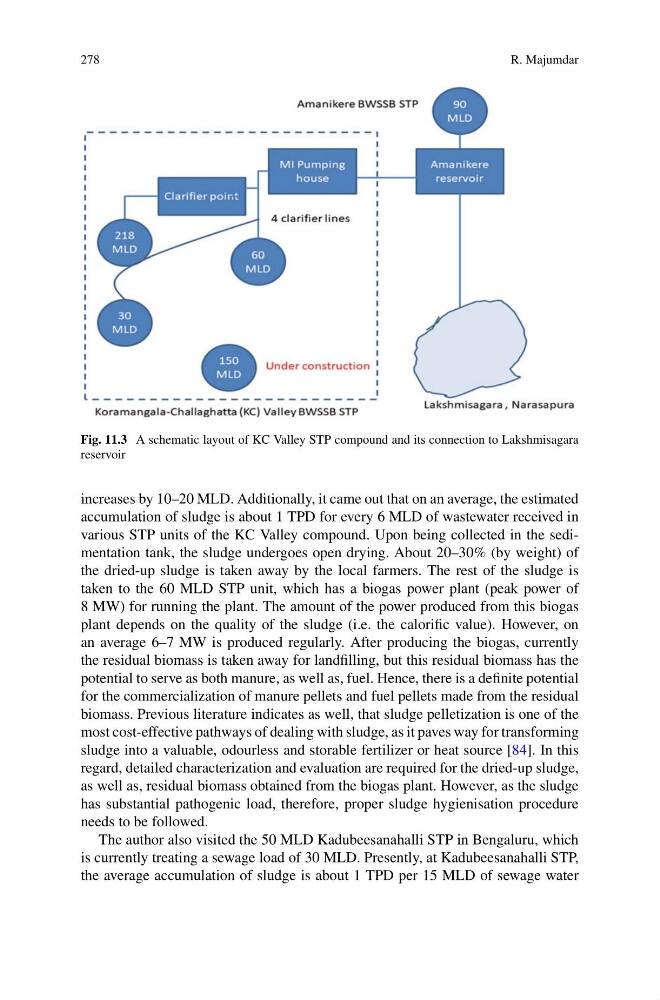
Fig. 11.3 A schematic layout of KC Valley STP compound and its connection to Lakshmisagara
reservoir
increases by 10–20 MLD. Additionally, it came out that on an average, the estimated
accumulation of sludge is about 1 TPD for every 6 MLD of wastewater received in
various STP units of the KC Valley compound. Upon being collected in the sedimentation tank, the sludge undergoes open drying. About 20–30% (by weight) of
the dried-up sludge is taken away by the local farmers. The rest of the sludge is
taken to the 60 MLD STP unit, which has a biogas power plant (peak power of
8 MW) for running the plant. The amount of the power produced from this biogas
plant depends on the quality of the sludge (i.e. the calorific value). However, on
an average 6–7 MW is produced regularly. After producing the biogas, currently
the residual biomass is taken away for landfilling, but this residual biomass has the
potential to serve as both manure, as well as, fuel. Hence, there is a definite potential
for the commercialization of manure pellets and fuel pellets made from the residual
biomass. Previous literature indicates as well, that sludge pelletization is one of the
most cost-effective pathways of dealing with sludge, as it paves way for transforming
sludge into a valuable, odourless and storable fertilizer or heat source [84]. In this
regard, detailed characterization and evaluation are required for the dried-up sludge,
as well as, residual biomass obtained from the biogas plant. However, as the sludge
has substantial pathogenic load, therefore, proper sludge hygienisation procedure
needs to be followed.
The author also visited the 50 MLD Kadubeesanahalli STP in Bengaluru, which
is currently treating a sewage load of 30 MLD. Presently, at Kadubeesanahalli STP,
the average accumulation of sludge is about 1 TPD per 15 MLD of sewage water
R. Majumdar
Fig. 11.3 A schematic layout of KC Valley STP compound and its connection to Lakshmisagara
reservoir
increases by 10–20 MLD. Additionally, it came out that on an average, the estimated
accumulation of sludge is about 1 TPD for every 6 MLD of wastewater received in
various STP units of the KC Valley compound. Upon being collected in the sedimentation tank, the sludge undergoes open drying. About 20–30% (by weight) of
the dried-up sludge is taken away by the local farmers. The rest of the sludge is
taken to the 60 MLD STP unit, which has a biogas power plant (peak power of
8 MW) for running the plant. The amount of the power produced from this biogas
plant depends on the quality of the sludge (i.e. the calorific value). However, on
an average 6–7 MW is produced regularly. After producing the biogas, currently
the residual biomass is taken away for landfilling, but this residual biomass has the
potential to serve as both manure, as well as, fuel. Hence, there is a definite potential
for the commercialization of manure pellets and fuel pellets made from the residual
biomass. Previous literature indicates as well, that sludge pelletization is one of the
most cost-effective pathways of dealing with sludge, as it paves way for transforming
sludge into a valuable, odourless and storable fertilizer or heat source [84]. In this
regard, detailed characterization and evaluation are required for the dried-up sludge,
as well as, residual biomass obtained from the biogas plant. However, as the sludge
has substantial pathogenic load, therefore, proper sludge hygienisation procedure
needs to be followed.
The author also visited the 50 MLD Kadubeesanahalli STP in Bengaluru, which
is currently treating a sewage load of 30 MLD. Presently, at Kadubeesanahalli STP,
the average accumulation of sludge is about 1 TPD per 15 MLD of sewage water