

10 Impact of Biomedical Waste Management System …
251
and affordability, which have made this material a best choice of usage in all healthcare units. Almost 40% of all hospitals use this PVC made medical devices [30].
Even though it has many beneficial properties, when it is incinerated or burned during
disposal process it liberates toxic gases. PVC produces carbon monoxide, dioxins,
water, hydrogen chloride, metal chlorides and chlorinated furans on combustion
process which threatens human health habits. Even the lower concentration of
Dioxins and furans products can cause diseases such as, cancer and birth defects. In
addition, the hazardous chemical additives exist in PVC such as phthalates, lead,
cadmium, and/or organotins, can be toxic and affect child’s health. When PVC
containing medical devices are incinerated, HCl gas emission from incinerators has
to be removed from the emission products by continuous monitoring and filtration
with suitable scrubbers. Due to the emission of toxic gases into the environment,
the usage of PVC in making medical devices is taken into concern to have efficient
waste management system. In recent years, many non-PVC materials are also available commercially for a wide variety of medical applications. PVC products softened
with plasticizers other than Di (2-Ethylhexyl) Phthalate (DEHP) are also available
on the markets such as citrates, adipates and trimellitates. Furthermore, since the
alternative products of PVC are free from PVC, they can be more easily recycled or
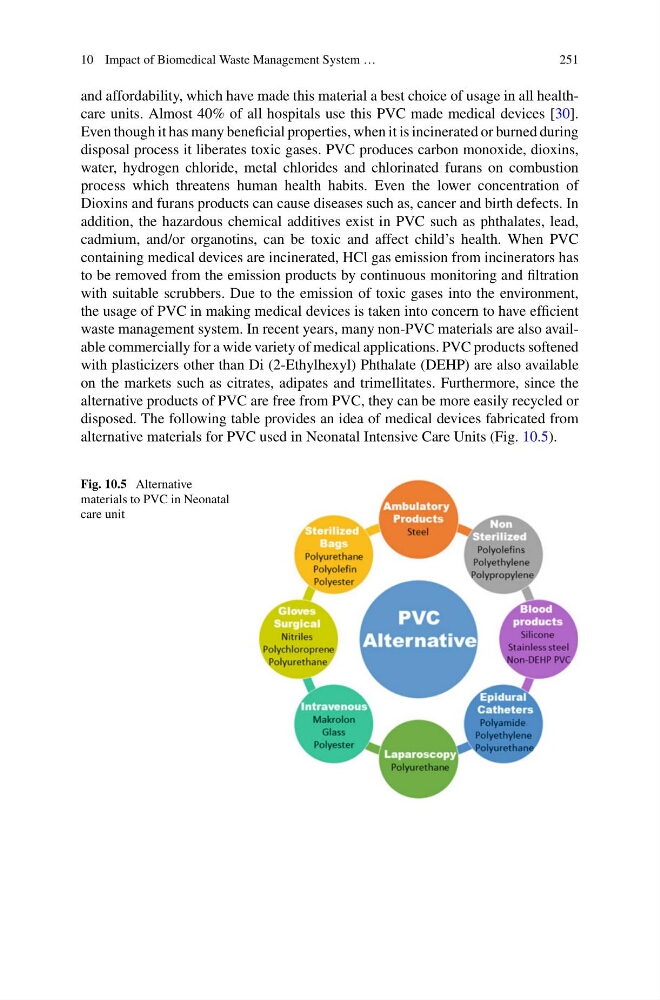
disposed. The following table provides an idea of medical devices fabricated from
alternative materials for PVC used in Neonatal Intensive Care Units (Fig. 10.5).
Fig. 10.5 Alternative
materials to PVC in Neonatal
care unit
251
and affordability, which have made this material a best choice of usage in all healthcare units. Almost 40% of all hospitals use this PVC made medical devices [30].
Even though it has many beneficial properties, when it is incinerated or burned during
disposal process it liberates toxic gases. PVC produces carbon monoxide, dioxins,
water, hydrogen chloride, metal chlorides and chlorinated furans on combustion
process which threatens human health habits. Even the lower concentration of
Dioxins and furans products can cause diseases such as, cancer and birth defects. In
addition, the hazardous chemical additives exist in PVC such as phthalates, lead,
cadmium, and/or organotins, can be toxic and affect child’s health. When PVC
containing medical devices are incinerated, HCl gas emission from incinerators has
to be removed from the emission products by continuous monitoring and filtration
with suitable scrubbers. Due to the emission of toxic gases into the environment,
the usage of PVC in making medical devices is taken into concern to have efficient
waste management system. In recent years, many non-PVC materials are also available commercially for a wide variety of medical applications. PVC products softened
with plasticizers other than Di (2-Ethylhexyl) Phthalate (DEHP) are also available
on the markets such as citrates, adipates and trimellitates. Furthermore, since the
alternative products of PVC are free from PVC, they can be more easily recycled or
disposed. The following table provides an idea of medical devices fabricated from
alternative materials for PVC used in Neonatal Intensive Care Units (Fig. 10.5).
Fig. 10.5 Alternative
materials to PVC in Neonatal
care unit