

228
N. Jariwala and J. Soni
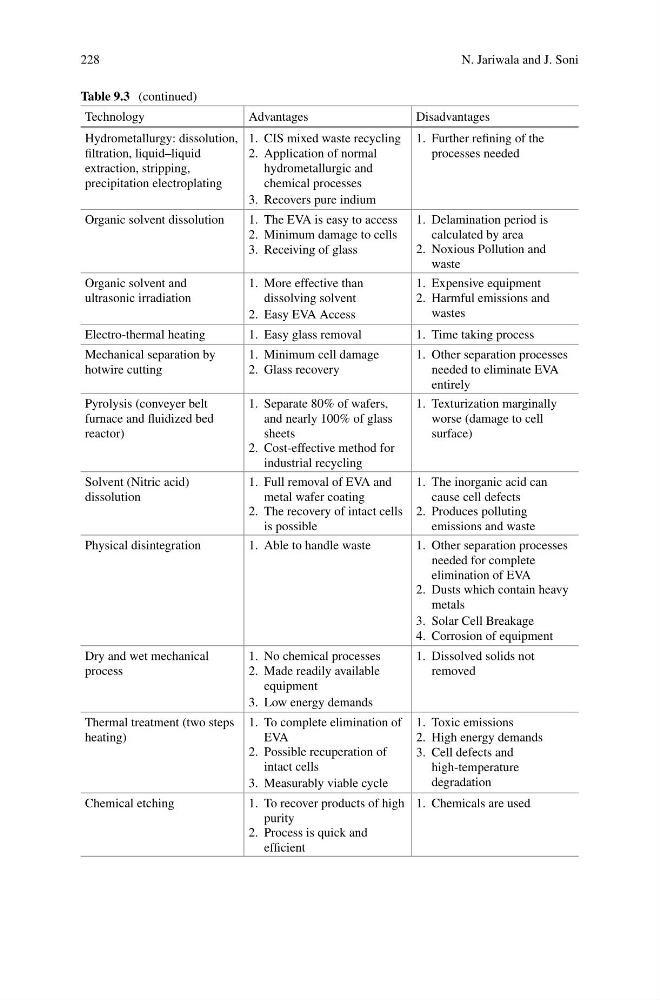
Table 9.3 (continued)
Technology
Advantages
Disadvantages
Hydrometallurgy: dissolution,
filtration, liquid–liquid
extraction, stripping,
precipitation electroplating
1. CIS mixed waste recycling
2. Application of normal
hydrometallurgic and
chemical processes
3. Recovers pure indium
1. Further refining of the
processes needed
Organic solvent dissolution
1. The EVA is easy to access
2. Minimum damage to cells
3. Receiving of glass
1. Delamination period is
calculated by area
2. Noxious Pollution and
waste
Organic solvent and
ultrasonic irradiation
1. More effective than
dissolving solvent
2. Easy EVA Access
1. Expensive equipment
2. Harmful emissions and
wastes
Electro-thermal heating
1. Easy glass removal
1. Time taking process
Mechanical separation by
hotwire cutting
1. Minimum cell damage
2. Glass recovery
1. Other separation processes
needed to eliminate EVA
entirely
Pyrolysis (conveyer belt
furnace and fluidized bed
reactor)
1. Separate 80% of wafers,
and nearly 100% of glass
sheets
2. Cost-effective method for
industrial recycling
1. Texturization marginally
worse (damage to cell
surface)
Solvent (Nitric acid)
dissolution
1. Full removal of EVA and
metal wafer coating
2. The recovery of intact cells
is possible
1. The inorganic acid can
cause cell defects
2. Produces polluting
emissions and waste
Physical disintegration
1. Able to handle waste
1. Other separation processes
needed for complete
elimination of EVA
2. Dusts which contain heavy
metals
3. Solar Cell Breakage
4. Corrosion of equipment
Dry and wet mechanical
process
1. No chemical processes
2. Made readily available
equipment
3. Low energy demands
1. Dissolved solids not
removed
Thermal treatment (two steps
heating)
1. To complete elimination of
EVA
2. Possible recuperation of
intact cells
3. Measurably viable cycle
1. Toxic emissions
2. High energy demands
3. Cell defects and
high-temperature
degradation
Chemical etching
1. To recover products of high
purity
2. Process is quick and
efficient
1. Chemicals are used
N. Jariwala and J. Soni
Table 9.3 (continued)
Technology
Advantages
Disadvantages
Hydrometallurgy: dissolution,
filtration, liquid–liquid
extraction, stripping,
precipitation electroplating
1. CIS mixed waste recycling
2. Application of normal
hydrometallurgic and
chemical processes
3. Recovers pure indium
1. Further refining of the
processes needed
Organic solvent dissolution
1. The EVA is easy to access
2. Minimum damage to cells
3. Receiving of glass
1. Delamination period is
calculated by area
2. Noxious Pollution and
waste
Organic solvent and
ultrasonic irradiation
1. More effective than
dissolving solvent
2. Easy EVA Access
1. Expensive equipment
2. Harmful emissions and
wastes
Electro-thermal heating
1. Easy glass removal
1. Time taking process
Mechanical separation by
hotwire cutting
1. Minimum cell damage
2. Glass recovery
1. Other separation processes
needed to eliminate EVA
entirely
Pyrolysis (conveyer belt
furnace and fluidized bed
reactor)
1. Separate 80% of wafers,
and nearly 100% of glass
sheets
2. Cost-effective method for
industrial recycling
1. Texturization marginally
worse (damage to cell
surface)
Solvent (Nitric acid)
dissolution
1. Full removal of EVA and
metal wafer coating
2. The recovery of intact cells
is possible
1. The inorganic acid can
cause cell defects
2. Produces polluting
emissions and waste
Physical disintegration
1. Able to handle waste
1. Other separation processes
needed for complete
elimination of EVA
2. Dusts which contain heavy
metals
3. Solar Cell Breakage
4. Corrosion of equipment
Dry and wet mechanical
process
1. No chemical processes
2. Made readily available
equipment
3. Low energy demands
1. Dissolved solids not
removed
Thermal treatment (two steps
heating)
1. To complete elimination of
EVA
2. Possible recuperation of
intact cells
3. Measurably viable cycle
1. Toxic emissions
2. High energy demands
3. Cell defects and
high-temperature
degradation
Chemical etching
1. To recover products of high
purity
2. Process is quick and
efficient
1. Chemicals are used