

206
A. Dasgotra et al.
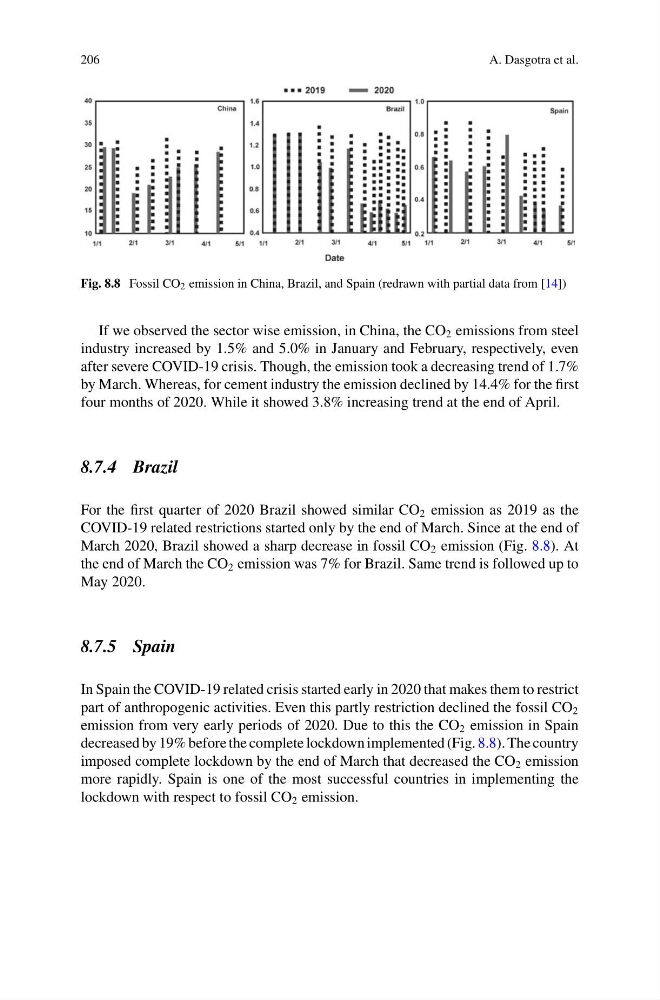
Fig. 8.8 Fossil CO 2 emission in China, Brazil, and Spain (redrawn with partial data from [14])
If we observed the sector wise emission, in China, the CO 2 emissions from steel
industry increased by 1.5% and 5.0% in January and February, respectively, even
after severe COVID-19 crisis. Though, the emission took a decreasing trend of 1.7%
by March. Whereas, for cement industry the emission declined by 14.4% for the first
four months of 2020. While it showed 3.8% increasing trend at the end of April.
8.7.4 Brazil
For the first quarter of 2020 Brazil showed similar CO 2 emission as 2019 as the
COVID-19 related restrictions started only by the end of March. Since at the end of
March 2020, Brazil showed a sharp decrease in fossil CO 2 emission (Fig. 8.8). At
the end of March the CO 2 emission was 7% for Brazil. Same trend is followed up to
May 2020.
8.7.5 Spain
In Spain the COVID-19 related crisis started early in 2020 that makes them to restrict
part of anthropogenic activities. Even this partly restriction declined the fossil CO 2
emission from very early periods of 2020. Due to this the CO 2 emission in Spain
decreased by 19% before the complete lockdown implemented (Fig. 8.8). The country
imposed complete lockdown by the end of March that decreased the CO 2 emission
more rapidly. Spain is one of the most successful countries in implementing the
lockdown with respect to fossil CO 2 emission.
A. Dasgotra et al.
Fig. 8.8 Fossil CO 2 emission in China, Brazil, and Spain (redrawn with partial data from [14])
If we observed the sector wise emission, in China, the CO 2 emissions from steel
industry increased by 1.5% and 5.0% in January and February, respectively, even
after severe COVID-19 crisis. Though, the emission took a decreasing trend of 1.7%
by March. Whereas, for cement industry the emission declined by 14.4% for the first
four months of 2020. While it showed 3.8% increasing trend at the end of April.
8.7.4 Brazil
For the first quarter of 2020 Brazil showed similar CO 2 emission as 2019 as the
COVID-19 related restrictions started only by the end of March. Since at the end of
March 2020, Brazil showed a sharp decrease in fossil CO 2 emission (Fig. 8.8). At
the end of March the CO 2 emission was 7% for Brazil. Same trend is followed up to
May 2020.
8.7.5 Spain
In Spain the COVID-19 related crisis started early in 2020 that makes them to restrict
part of anthropogenic activities. Even this partly restriction declined the fossil CO 2
emission from very early periods of 2020. Due to this the CO 2 emission in Spain
decreased by 19% before the complete lockdown implemented (Fig. 8.8). The country
imposed complete lockdown by the end of March that decreased the CO 2 emission
more rapidly. Spain is one of the most successful countries in implementing the
lockdown with respect to fossil CO 2 emission.