

6 Aftermath of Industrial Pollution, Post COVID-19 …
143
industries, new inventions, excessive chemical and pesticide uses; caused air, water,
soil, as well as noise pollution. On top of that various other problems like thinning
of the ozone layer to an alarming range were causing a serious disturbance in our
environment. Since due to lockdown most of the anthropogenic activities have been
restricted for months, it has been predicted that the pollution levels in the environment are experiencing a sharp decline [70]. Other than that, the industries are also
temporarily non-functional, so for now the production is off or minimal because of
which the resulting byproducts, generally in the form of effluents and emission has
cut down a lot, leading to a humongous decrease in water and air pollution. Minimal
traffic, lesser activities in industries or factories and also in the construction sectors
have improved the air quality by a giant stride (Fig. 6.1). According to the Environmental and Energy Study Institute (EESI) the aviation emissions, which globally
holds for 2.4% of CO 2 emissions in 2018, have now declined considerably [50].
These changes have resulted in the resurgence of nature and finally the Earth’s
ecosystem is responding positively and giving signals of improvement in context of
natural parameters of hydrosphere, biosphere and atmosphere [2]. The obvious effect
of this quarantine situation has also been noticed by the increase in sudden appearance of many indigenous birds, also vultures, especially in the cities. Abundance
in insect pollinators has appeared on crops and other plants. Consequently, all this
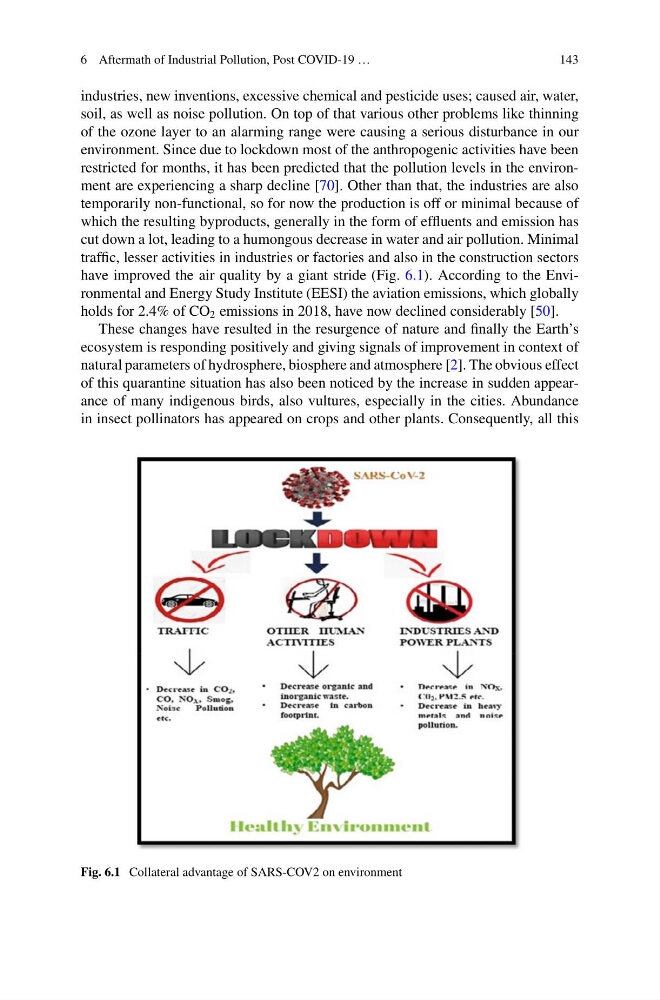
Fig. 6.1 Collateral advantage of SARS-COV2 on environment
143
industries, new inventions, excessive chemical and pesticide uses; caused air, water,
soil, as well as noise pollution. On top of that various other problems like thinning
of the ozone layer to an alarming range were causing a serious disturbance in our
environment. Since due to lockdown most of the anthropogenic activities have been
restricted for months, it has been predicted that the pollution levels in the environment are experiencing a sharp decline [70]. Other than that, the industries are also
temporarily non-functional, so for now the production is off or minimal because of
which the resulting byproducts, generally in the form of effluents and emission has
cut down a lot, leading to a humongous decrease in water and air pollution. Minimal
traffic, lesser activities in industries or factories and also in the construction sectors
have improved the air quality by a giant stride (Fig. 6.1). According to the Environmental and Energy Study Institute (EESI) the aviation emissions, which globally
holds for 2.4% of CO 2 emissions in 2018, have now declined considerably [50].
These changes have resulted in the resurgence of nature and finally the Earth’s
ecosystem is responding positively and giving signals of improvement in context of
natural parameters of hydrosphere, biosphere and atmosphere [2]. The obvious effect
of this quarantine situation has also been noticed by the increase in sudden appearance of many indigenous birds, also vultures, especially in the cities. Abundance
in insect pollinators has appeared on crops and other plants. Consequently, all this
Fig. 6.1 Collateral advantage of SARS-COV2 on environment