

108
T. S. Shwetha and A. Kaur
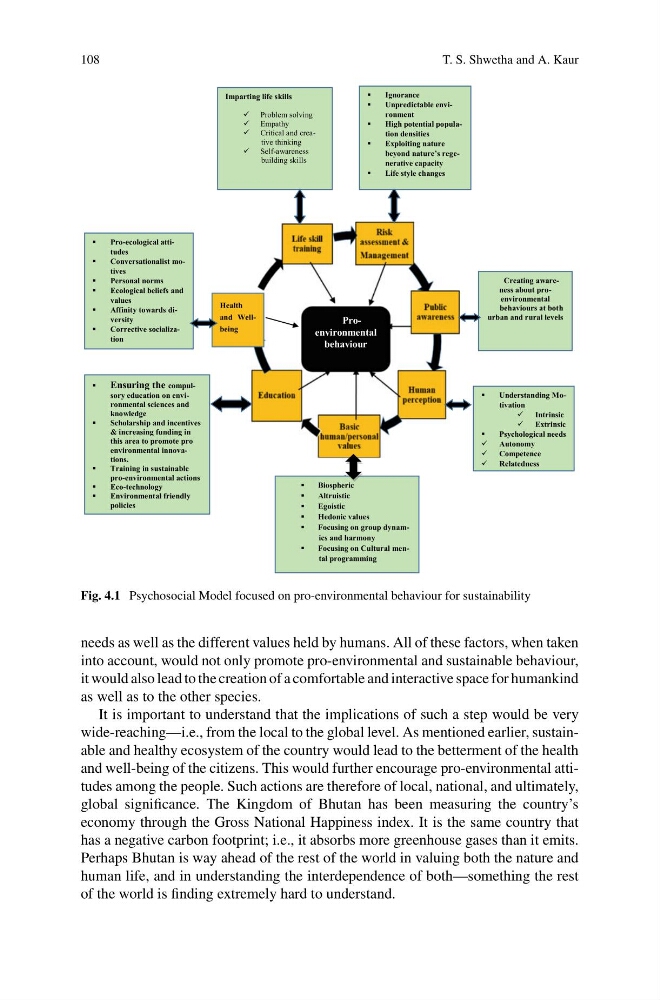
Fig. 4.1 Psychosocial Model focused on pro-environmental behaviour for sustainability
needs as well as the different values held by humans. All of these factors, when taken
into account, would not only promote pro-environmental and sustainable behaviour,
it would also lead to the creation of a comfortable and interactive space for humankind
as well as to the other species.
It is important to understand that the implications of such a step would be very
wide-reaching—i.e., from the local to the global level. As mentioned earlier, sustainable and healthy ecosystem of the country would lead to the betterment of the health
and well-being of the citizens. This would further encourage pro-environmental attitudes among the people. Such actions are therefore of local, national, and ultimately,
global significance. The Kingdom of Bhutan has been measuring the country’s
economy through the Gross National Happiness index. It is the same country that
has a negative carbon footprint; i.e., it absorbs more greenhouse gases than it emits.
Perhaps Bhutan is way ahead of the rest of the world in valuing both the nature and
human life, and in understanding the interdependence of both—something the rest
of the world is finding extremely hard to understand.
T. S. Shwetha and A. Kaur
Fig. 4.1 Psychosocial Model focused on pro-environmental behaviour for sustainability
needs as well as the different values held by humans. All of these factors, when taken
into account, would not only promote pro-environmental and sustainable behaviour,
it would also lead to the creation of a comfortable and interactive space for humankind
as well as to the other species.
It is important to understand that the implications of such a step would be very
wide-reaching—i.e., from the local to the global level. As mentioned earlier, sustainable and healthy ecosystem of the country would lead to the betterment of the health
and well-being of the citizens. This would further encourage pro-environmental attitudes among the people. Such actions are therefore of local, national, and ultimately,
global significance. The Kingdom of Bhutan has been measuring the country’s
economy through the Gross National Happiness index. It is the same country that
has a negative carbon footprint; i.e., it absorbs more greenhouse gases than it emits.
Perhaps Bhutan is way ahead of the rest of the world in valuing both the nature and
human life, and in understanding the interdependence of both—something the rest
of the world is finding extremely hard to understand.