

2.4 Electronic Properties
47
Electric field
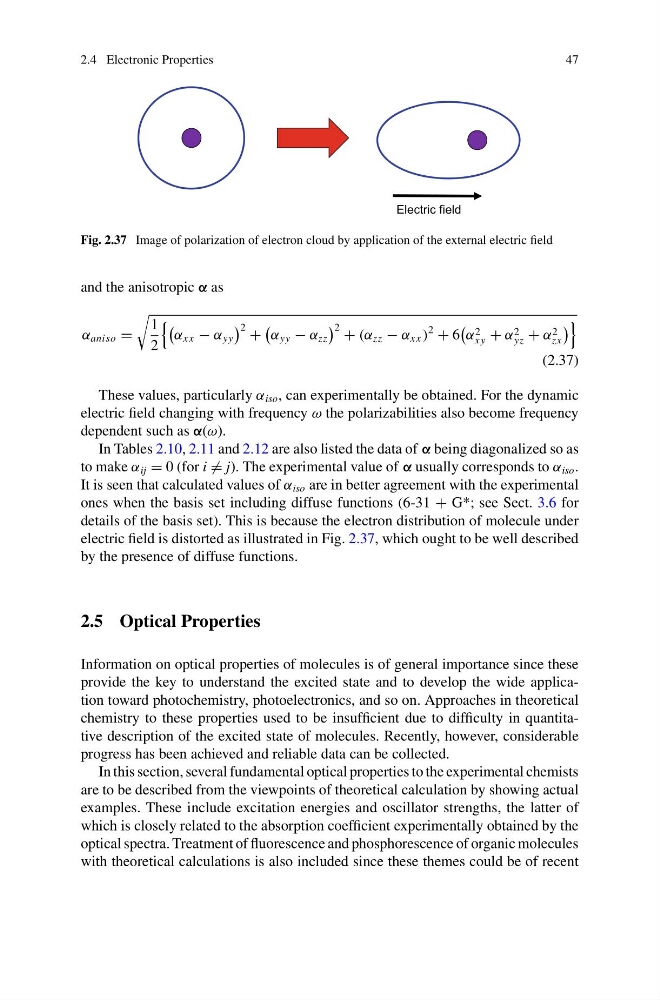
Fig. 2.37 Image of polarization of electron cloud by application of the external electric field
and the anisotropic α as
α aniso =
1
2
α xx − α yy
2 +
α yy − α zz
2 + (α zz − α xx )
2
+ 6
α 2
xy + α 2
yz + α 2
zx
(2.37)
These values, particularly α iso , can experimentally be obtained. For the dynamic
electric field changing with frequency ω the polarizabilities also become frequency
dependent such as α(ω).
In Tables 2.10, 2.11 and 2.12 are also listed the data of α being diagonalized so as
to make α ij = 0 (for i = j). The experimental value of α usually corresponds to α iso .
It is seen that calculated values of α iso are in better agreement with the experimental
ones when the basis set including diffuse functions (6-31 + G*; see Sect. 3.6 for
details of the basis set). This is because the electron distribution of molecule under
electric field is distorted as illustrated in Fig. 2.37, which ought to be well described
by the presence of diffuse functions.
2.5 Optical Properties
Information on optical properties of molecules is of general importance since these
provide the key to understand the excited state and to develop the wide application toward photochemistry, photoelectronics, and so on. Approaches in theoretical
chemistry to these properties used to be insufficient due to difficulty in quantitative description of the excited state of molecules. Recently, however, considerable
progress has been achieved and reliable data can be collected.
In this section, several fundamental optical properties to the experimental chemists
are to be described from the viewpoints of theoretical calculation by showing actual
examples. These include excitation energies and oscillator strengths, the latter of
which is closely related to the absorption coefficient experimentally obtained by the
optical spectra. Treatment of fluorescence and phosphorescence of organic molecules
with theoretical calculations is also included since these themes could be of recent
47
Electric field
Fig. 2.37 Image of polarization of electron cloud by application of the external electric field
and the anisotropic α as
α aniso =
1
2
α xx − α yy
2 +
α yy − α zz
2 + (α zz − α xx )
2
+ 6
α 2
xy + α 2
yz + α 2
zx
(2.37)
These values, particularly α iso , can experimentally be obtained. For the dynamic
electric field changing with frequency ω the polarizabilities also become frequency
dependent such as α(ω).
In Tables 2.10, 2.11 and 2.12 are also listed the data of α being diagonalized so as
to make α ij = 0 (for i = j). The experimental value of α usually corresponds to α iso .
It is seen that calculated values of α iso are in better agreement with the experimental
ones when the basis set including diffuse functions (6-31 + G*; see Sect. 3.6 for
details of the basis set). This is because the electron distribution of molecule under
electric field is distorted as illustrated in Fig. 2.37, which ought to be well described
by the presence of diffuse functions.
2.5 Optical Properties
Information on optical properties of molecules is of general importance since these
provide the key to understand the excited state and to develop the wide application toward photochemistry, photoelectronics, and so on. Approaches in theoretical
chemistry to these properties used to be insufficient due to difficulty in quantitative description of the excited state of molecules. Recently, however, considerable
progress has been achieved and reliable data can be collected.
In this section, several fundamental optical properties to the experimental chemists
are to be described from the viewpoints of theoretical calculation by showing actual
examples. These include excitation energies and oscillator strengths, the latter of
which is closely related to the absorption coefficient experimentally obtained by the
optical spectra. Treatment of fluorescence and phosphorescence of organic molecules
with theoretical calculations is also included since these themes could be of recent