

166
4 Toward More Sophisticated Problems
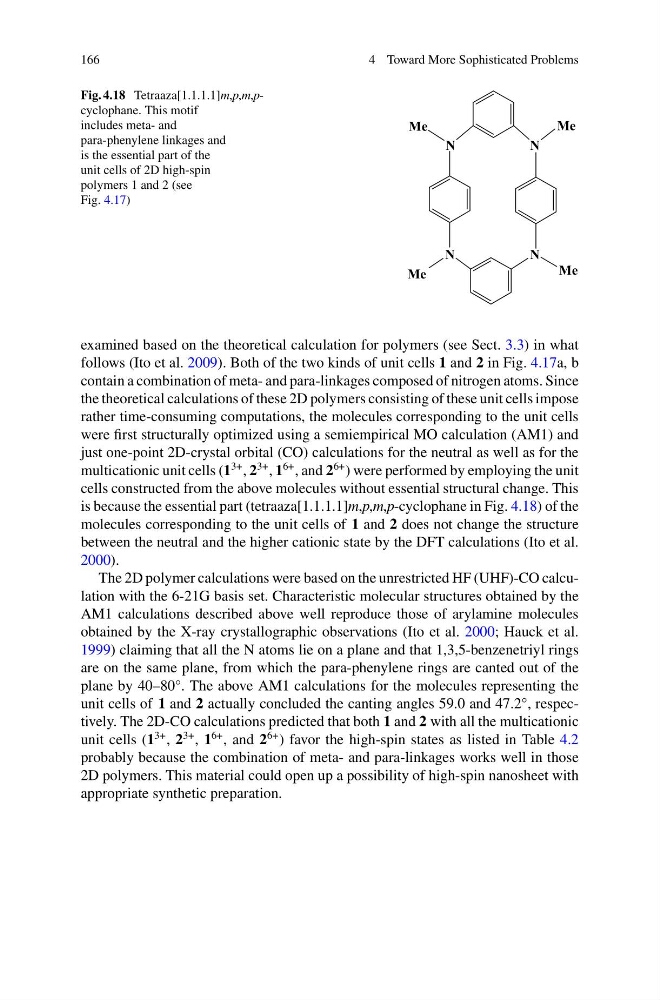
Fig. 4.18 Tetraaza[1.1.1.1]m,p,m,pcyclophane. This motif
includes meta- and
para-phenylene linkages and
is the essential part of the
unit cells of 2D high-spin
polymers 1 and 2 (see
Fig. 4.17)
N
N
N
N
Me
Me
Me
Me
examined based on the theoretical calculation for polymers (see Sect. 3.3) in what
follows (Ito et al. 2009). Both of the two kinds of unit cells 1 and 2 in Fig. 4.17a, b
contain a combination of meta- and para-linkages composed of nitrogen atoms. Since
the theoretical calculations of these 2D polymers consisting of these unit cells impose
rather time-consuming computations, the molecules corresponding to the unit cells
were first structurally optimized using a semiempirical MO calculation (AM1) and
just one-point 2D-crystal orbital (CO) calculations for the neutral as well as for the
multicationic unit cells (1
3+ , 2
3+ , 1
6+ , and 2
6+ ) were performed by employing the unit
cells constructed from the above molecules without essential structural change. This
is because the essential part (tetraaza[1.1.1.1]m,p,m,p-cyclophane in Fig. 4.18) of the
molecules corresponding to the unit cells of 1 and 2 does not change the structure
between the neutral and the higher cationic state by the DFT calculations (Ito et al.
2000).
The 2D polymer calculations were based on the unrestricted HF (UHF)-CO calculation with the 6-21G basis set. Characteristic molecular structures obtained by the
AM1 calculations described above well reproduce those of arylamine molecules
obtained by the X-ray crystallographic observations (Ito et al. 2000; Hauck et al.
1999) claiming that all the N atoms lie on a plane and that 1,3,5-benzenetriyl rings
are on the same plane, from which the para-phenylene rings are canted out of the
plane by 40–80°. The above AM1 calculations for the molecules representing the
unit cells of 1 and 2 actually concluded the canting angles 59.0 and 47.2°, respectively. The 2D-CO calculations predicted that both 1 and 2 with all the multicationic
unit cells (1
3+ , 2
3+ , 1
6+ , and 2
6+ ) favor the high-spin states as listed in Table 4.2
probably because the combination of meta- and para-linkages works well in those
2D polymers. This material could open up a possibility of high-spin nanosheet with
appropriate synthetic preparation.
4 Toward More Sophisticated Problems
Fig. 4.18 Tetraaza[1.1.1.1]m,p,m,pcyclophane. This motif
includes meta- and
para-phenylene linkages and
is the essential part of the
unit cells of 2D high-spin
polymers 1 and 2 (see
Fig. 4.17)
N
N
N
N
Me
Me
Me
Me
examined based on the theoretical calculation for polymers (see Sect. 3.3) in what
follows (Ito et al. 2009). Both of the two kinds of unit cells 1 and 2 in Fig. 4.17a, b
contain a combination of meta- and para-linkages composed of nitrogen atoms. Since
the theoretical calculations of these 2D polymers consisting of these unit cells impose
rather time-consuming computations, the molecules corresponding to the unit cells
were first structurally optimized using a semiempirical MO calculation (AM1) and
just one-point 2D-crystal orbital (CO) calculations for the neutral as well as for the
multicationic unit cells (1
3+ , 2
3+ , 1
6+ , and 2
6+ ) were performed by employing the unit
cells constructed from the above molecules without essential structural change. This
is because the essential part (tetraaza[1.1.1.1]m,p,m,p-cyclophane in Fig. 4.18) of the
molecules corresponding to the unit cells of 1 and 2 does not change the structure
between the neutral and the higher cationic state by the DFT calculations (Ito et al.
2000).
The 2D polymer calculations were based on the unrestricted HF (UHF)-CO calculation with the 6-21G basis set. Characteristic molecular structures obtained by the
AM1 calculations described above well reproduce those of arylamine molecules
obtained by the X-ray crystallographic observations (Ito et al. 2000; Hauck et al.
1999) claiming that all the N atoms lie on a plane and that 1,3,5-benzenetriyl rings
are on the same plane, from which the para-phenylene rings are canted out of the
plane by 40–80°. The above AM1 calculations for the molecules representing the
unit cells of 1 and 2 actually concluded the canting angles 59.0 and 47.2°, respectively. The 2D-CO calculations predicted that both 1 and 2 with all the multicationic
unit cells (1
3+ , 2
3+ , 1
6+ , and 2
6+ ) favor the high-spin states as listed in Table 4.2
probably because the combination of meta- and para-linkages works well in those
2D polymers. This material could open up a possibility of high-spin nanosheet with
appropriate synthetic preparation.