

Typical site
Fill
Medium coarse sand
Medium coarse sand
Clay silt
Pebble
Medium coarse sand
Silty clay
Clay silt
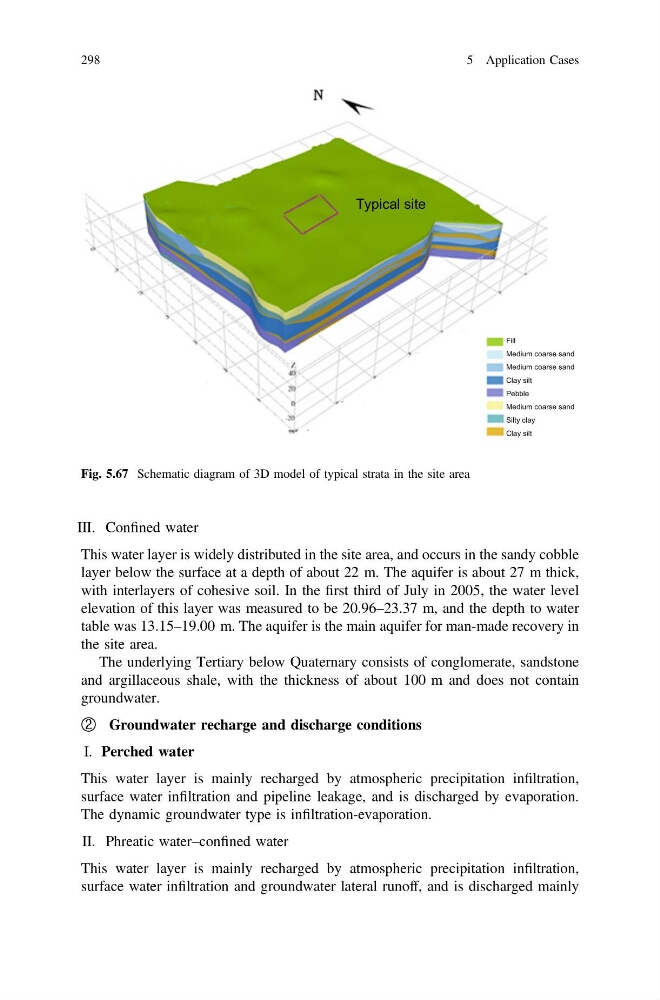
Fig. 5.67 Schematic diagram of 3D model of typical strata in the site area
III. Confined water
This water layer is widely distributed in the site area, and occurs in the sandy cobble
layer below the surface at a depth of about 22 m. The aquifer is about 27 m thick,
with interlayers of cohesive soil. In the first third of July in 2005, the water level
elevation of this layer was measured to be 20.96–23.37 m, and the depth to water
table was 13.15–19.00 m. The aquifer is the main aquifer for man-made recovery in
the site area.
The underlying Tertiary below Quaternary consists of conglomerate, sandstone
and argillaceous shale, with the thickness of about 100 m and does not contain
groundwater.
② Groundwater recharge and discharge conditions
I. Perched water
This water layer is mainly recharged by atmospheric precipitation infiltration,
surface water infiltration and pipeline leakage, and is discharged by evaporation.
The dynamic groundwater type is infiltration-evaporation.
II. Phreatic water–confined water
This water layer is mainly recharged by atmospheric precipitation infiltration,
surface water infiltration and groundwater lateral runoff, and is discharged mainly
298
5 Application Cases
Fill
Medium coarse sand
Medium coarse sand
Clay silt
Pebble
Medium coarse sand
Silty clay
Clay silt
Fig. 5.67 Schematic diagram of 3D model of typical strata in the site area
III. Confined water
This water layer is widely distributed in the site area, and occurs in the sandy cobble
layer below the surface at a depth of about 22 m. The aquifer is about 27 m thick,
with interlayers of cohesive soil. In the first third of July in 2005, the water level
elevation of this layer was measured to be 20.96–23.37 m, and the depth to water
table was 13.15–19.00 m. The aquifer is the main aquifer for man-made recovery in
the site area.
The underlying Tertiary below Quaternary consists of conglomerate, sandstone
and argillaceous shale, with the thickness of about 100 m and does not contain
groundwater.
② Groundwater recharge and discharge conditions
I. Perched water
This water layer is mainly recharged by atmospheric precipitation infiltration,
surface water infiltration and pipeline leakage, and is discharged by evaporation.
The dynamic groundwater type is infiltration-evaporation.
II. Phreatic water–confined water
This water layer is mainly recharged by atmospheric precipitation infiltration,
surface water infiltration and groundwater lateral runoff, and is discharged mainly
298
5 Application Cases