

(d) Analysis of the causes of groundwater contamination
• Pollution sources
Through the investigation, fissures were found in the lower bedrock of the landfill,
and the fissure water table was shallow, making it easy for pollutants to enter the
fissure aquifer. TDS, Na
+ and Cl
− exceed the limits at ZK2 (without seepage
control measures) and in the landfill leachate, though this does happen to the
background values at BJ7 and to observed values in other monitoring sites.
Generally, the sudden increase in Na
+ and Cl contents of groundwater is caused by
anthropogenic factors. Therefore, it is preliminarily considered that the fissure water
in ZK2 bedrock is polluted by landfill leachate.
The ammonium salt, nitrite and total phosphorus in the landfill leachate far
exceed the limits, as found at ZK2, ZK6 and leachate outlet, but the background
values remain below the limits. It is inferred that landfill leachate accounts for the
ammonium, nitrite and total phosphorus pollution of ZK2 fissure water. The sources
for nitrogen pollution of ZK6 fissure water may be wastewater or fertilizers, considering the monitoring site sits in the cotton field farest from the landfill and has
sewers around it.
In the natural state, Fe, Mn, Al and Ni exist at a low level in the fissure water,
and a sharp increase in the content may be caused by external man-made pollution.
According to the test results, low background values for Fe, Mn, Al and Ni were
identified at BJ7, but excessive contents were detected in the borehole soil surface,
sewers and monitoring wells. More specifically, the Fe, Mn, Al and Ni concentrations in the landfill leachate far exceed the limits. The Al and Ni concentrations at
ZK2 exceed the limits, which implies the fissure water around ZK2 is subject to Al
and Ni pollution from landfill leachate. Fewer indicators exceed the limits at ZK3,
owning to concrete-based seepage control for sewers.
The distribution of heavy metals in the water environment is affected by many
factors such as soil properties, hydrogeological conditions, oxidation characteristics, saline-alkali conditions, and wastewater content. Especially, the Fe and Mn
contents in the groundwater are greatly affected by the parent soil and pH.
Generally, they gradually increase with the decrease of the pH value. At ZK6 where
the groundwater is saline, the Fe and Mn concentrations increase beyond the limits.
If there is serious Fe and Mn pollution in the landfill leachate, ZK2 would also
suffer such pollution according to the preceding analysis, but it does not. The
available data is not enough to explain this anomaly, so it is impossible to confirm
the source of Fe and Mn pollution of fissure water, though industrial wastewater can
be excluded.
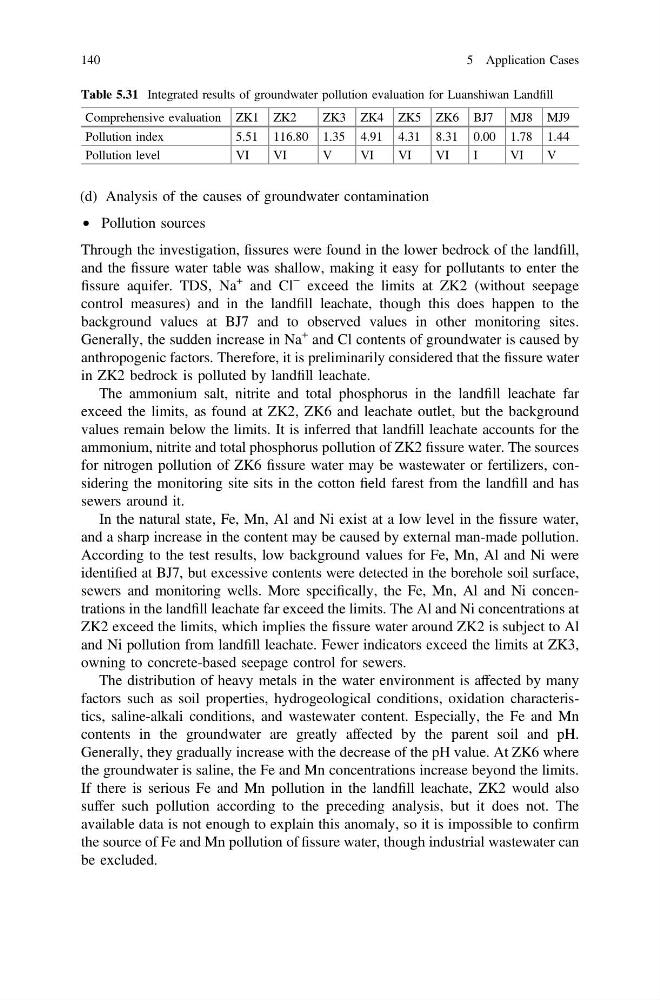
Table 5.31 Integrated results of groundwater pollution evaluation for Luanshiwan Landfill
Comprehensive evaluation ZK1 ZK2
ZK3 ZK4 ZK5 ZK6 BJ7 MJ8 MJ9
Pollution index
5.51 116.80 1.35 4.91 4.31 8.31 0.00 1.78 1.44
Pollution level
VI
VI
V
VI
VI
VI
I
VI
V
140
5 Application Cases
• Pollution sources
Through the investigation, fissures were found in the lower bedrock of the landfill,
and the fissure water table was shallow, making it easy for pollutants to enter the
fissure aquifer. TDS, Na
+ and Cl
− exceed the limits at ZK2 (without seepage
control measures) and in the landfill leachate, though this does happen to the
background values at BJ7 and to observed values in other monitoring sites.
Generally, the sudden increase in Na
+ and Cl contents of groundwater is caused by
anthropogenic factors. Therefore, it is preliminarily considered that the fissure water
in ZK2 bedrock is polluted by landfill leachate.
The ammonium salt, nitrite and total phosphorus in the landfill leachate far
exceed the limits, as found at ZK2, ZK6 and leachate outlet, but the background
values remain below the limits. It is inferred that landfill leachate accounts for the
ammonium, nitrite and total phosphorus pollution of ZK2 fissure water. The sources
for nitrogen pollution of ZK6 fissure water may be wastewater or fertilizers, considering the monitoring site sits in the cotton field farest from the landfill and has
sewers around it.
In the natural state, Fe, Mn, Al and Ni exist at a low level in the fissure water,
and a sharp increase in the content may be caused by external man-made pollution.
According to the test results, low background values for Fe, Mn, Al and Ni were
identified at BJ7, but excessive contents were detected in the borehole soil surface,
sewers and monitoring wells. More specifically, the Fe, Mn, Al and Ni concentrations in the landfill leachate far exceed the limits. The Al and Ni concentrations at
ZK2 exceed the limits, which implies the fissure water around ZK2 is subject to Al
and Ni pollution from landfill leachate. Fewer indicators exceed the limits at ZK3,
owning to concrete-based seepage control for sewers.
The distribution of heavy metals in the water environment is affected by many
factors such as soil properties, hydrogeological conditions, oxidation characteristics, saline-alkali conditions, and wastewater content. Especially, the Fe and Mn
contents in the groundwater are greatly affected by the parent soil and pH.
Generally, they gradually increase with the decrease of the pH value. At ZK6 where
the groundwater is saline, the Fe and Mn concentrations increase beyond the limits.
If there is serious Fe and Mn pollution in the landfill leachate, ZK2 would also
suffer such pollution according to the preceding analysis, but it does not. The
available data is not enough to explain this anomaly, so it is impossible to confirm
the source of Fe and Mn pollution of fissure water, though industrial wastewater can
be excluded.
Table 5.31 Integrated results of groundwater pollution evaluation for Luanshiwan Landfill
Comprehensive evaluation ZK1 ZK2
ZK3 ZK4 ZK5 ZK6 BJ7 MJ8 MJ9
Pollution index
5.51 116.80 1.35 4.91 4.31 8.31 0.00 1.78 1.44
Pollution level
VI
VI
V
VI
VI
VI
I
VI
V
140
5 Application Cases