

36 Additive Manufacturing for Circular Manufacturing: Trends …
525
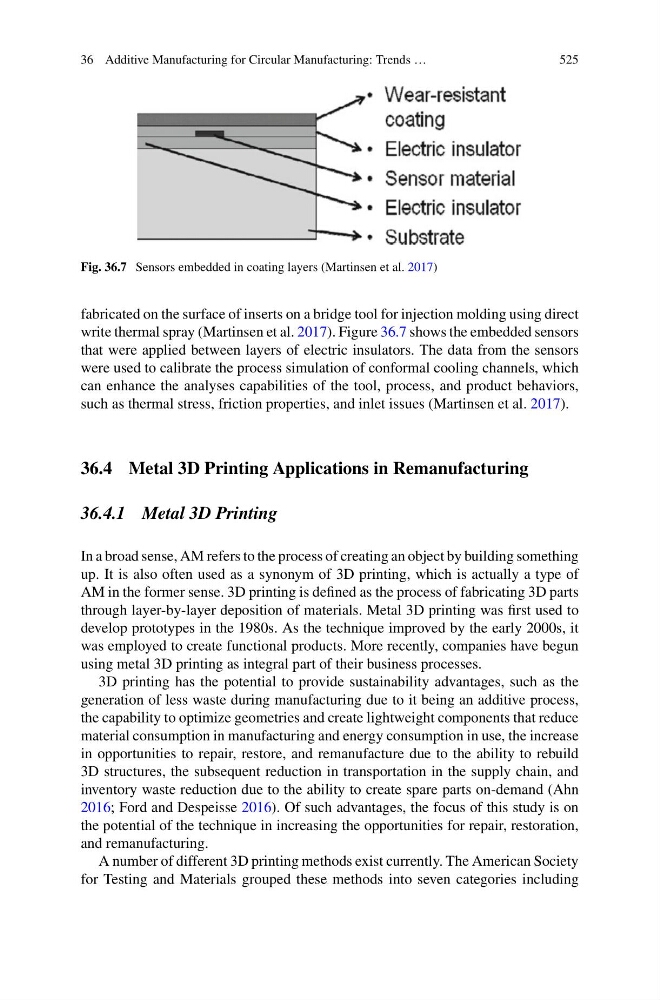
Fig. 36.7 Sensors embedded in coating layers (Martinsen et al. 2017)
fabricated on the surface of inserts on a bridge tool for injection molding using direct
write thermal spray (Martinsen et al. 2017). Figure 36.7 shows the embedded sensors
that were applied between layers of electric insulators. The data from the sensors
were used to calibrate the process simulation of conformal cooling channels, which
can enhance the analyses capabilities of the tool, process, and product behaviors,
such as thermal stress, friction properties, and inlet issues (Martinsen et al. 2017).
36.4 Metal 3D Printing Applications in Remanufacturing
36.4.1 Metal 3D Printing
In a broad sense, AM refers to the process of creating an object by building something
up. It is also often used as a synonym of 3D printing, which is actually a type of
AM in the former sense. 3D printing is defined as the process of fabricating 3D parts
through layer-by-layer deposition of materials. Metal 3D printing was first used to
develop prototypes in the 1980s. As the technique improved by the early 2000s, it
was employed to create functional products. More recently, companies have begun
using metal 3D printing as integral part of their business processes.
3D printing has the potential to provide sustainability advantages, such as the
generation of less waste during manufacturing due to it being an additive process,
the capability to optimize geometries and create lightweight components that reduce
material consumption in manufacturing and energy consumption in use, the increase
in opportunities to repair, restore, and remanufacture due to the ability to rebuild
3D structures, the subsequent reduction in transportation in the supply chain, and
inventory waste reduction due to the ability to create spare parts on-demand (Ahn
2016; Ford and Despeisse 2016). Of such advantages, the focus of this study is on
the potential of the technique in increasing the opportunities for repair, restoration,
and remanufacturing.
A number of different 3D printing methods exist currently. The American Society
for Testing and Materials grouped these methods into seven categories including
525
Fig. 36.7 Sensors embedded in coating layers (Martinsen et al. 2017)
fabricated on the surface of inserts on a bridge tool for injection molding using direct
write thermal spray (Martinsen et al. 2017). Figure 36.7 shows the embedded sensors
that were applied between layers of electric insulators. The data from the sensors
were used to calibrate the process simulation of conformal cooling channels, which
can enhance the analyses capabilities of the tool, process, and product behaviors,
such as thermal stress, friction properties, and inlet issues (Martinsen et al. 2017).
36.4 Metal 3D Printing Applications in Remanufacturing
36.4.1 Metal 3D Printing
In a broad sense, AM refers to the process of creating an object by building something
up. It is also often used as a synonym of 3D printing, which is actually a type of
AM in the former sense. 3D printing is defined as the process of fabricating 3D parts
through layer-by-layer deposition of materials. Metal 3D printing was first used to
develop prototypes in the 1980s. As the technique improved by the early 2000s, it
was employed to create functional products. More recently, companies have begun
using metal 3D printing as integral part of their business processes.
3D printing has the potential to provide sustainability advantages, such as the
generation of less waste during manufacturing due to it being an additive process,
the capability to optimize geometries and create lightweight components that reduce
material consumption in manufacturing and energy consumption in use, the increase
in opportunities to repair, restore, and remanufacture due to the ability to rebuild
3D structures, the subsequent reduction in transportation in the supply chain, and
inventory waste reduction due to the ability to create spare parts on-demand (Ahn
2016; Ford and Despeisse 2016). Of such advantages, the focus of this study is on
the potential of the technique in increasing the opportunities for repair, restoration,
and remanufacturing.
A number of different 3D printing methods exist currently. The American Society
for Testing and Materials grouped these methods into seven categories including