

24
K. Watanabe et al.
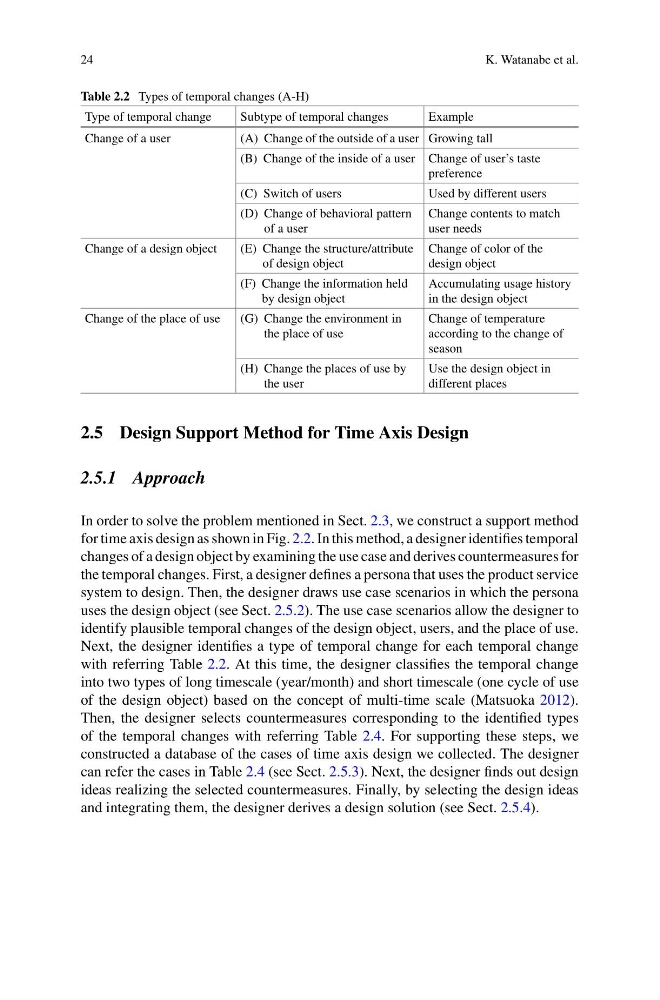
Table 2.2 Types of temporal changes (A-H)
Type of temporal change
Subtype of temporal changes
Example
Change of a user
(A) Change of the outside of a user Growing tall
(B) Change of the inside of a user Change of user’s taste
preference
(C) Switch of users
Used by different users
(D) Change of behavioral pattern
of a user
Change contents to match
user needs
Change of a design object
(E) Change the structure/attribute
of design object
Change of color of the
design object
(F) Change the information held
by design object
Accumulating usage history
in the design object
Change of the place of use
(G) Change the environment in
the place of use
Change of temperature
according to the change of
season
(H) Change the places of use by
the user
Use the design object in
different places
2.5 Design Support Method for Time Axis Design
2.5.1 Approach
In order to solve the problem mentioned in Sect. 2.3, we construct a support method
for time axis design as shown in Fig. 2.2. In this method, a designer identifies temporal
changes of a design object by examining the use case and derives countermeasures for
the temporal changes. First, a designer defines a persona that uses the product service
system to design. Then, the designer draws use case scenarios in which the persona
uses the design object (see Sect. 2.5.2). The use case scenarios allow the designer to
identify plausible temporal changes of the design object, users, and the place of use.
Next, the designer identifies a type of temporal change for each temporal change
with referring Table 2.2. At this time, the designer classifies the temporal change
into two types of long timescale (year/month) and short timescale (one cycle of use
of the design object) based on the concept of multi-time scale (Matsuoka 2012).
Then, the designer selects countermeasures corresponding to the identified types
of the temporal changes with referring Table 2.4. For supporting these steps, we
constructed a database of the cases of time axis design we collected. The designer
can refer the cases in Table 2.4 (see Sect. 2.5.3). Next, the designer finds out design
ideas realizing the selected countermeasures. Finally, by selecting the design ideas
and integrating them, the designer derives a design solution (see Sect. 2.5.4).
K. Watanabe et al.
Table 2.2 Types of temporal changes (A-H)
Type of temporal change
Subtype of temporal changes
Example
Change of a user
(A) Change of the outside of a user Growing tall
(B) Change of the inside of a user Change of user’s taste
preference
(C) Switch of users
Used by different users
(D) Change of behavioral pattern
of a user
Change contents to match
user needs
Change of a design object
(E) Change the structure/attribute
of design object
Change of color of the
design object
(F) Change the information held
by design object
Accumulating usage history
in the design object
Change of the place of use
(G) Change the environment in
the place of use
Change of temperature
according to the change of
season
(H) Change the places of use by
the user
Use the design object in
different places
2.5 Design Support Method for Time Axis Design
2.5.1 Approach
In order to solve the problem mentioned in Sect. 2.3, we construct a support method
for time axis design as shown in Fig. 2.2. In this method, a designer identifies temporal
changes of a design object by examining the use case and derives countermeasures for
the temporal changes. First, a designer defines a persona that uses the product service
system to design. Then, the designer draws use case scenarios in which the persona
uses the design object (see Sect. 2.5.2). The use case scenarios allow the designer to
identify plausible temporal changes of the design object, users, and the place of use.
Next, the designer identifies a type of temporal change for each temporal change
with referring Table 2.2. At this time, the designer classifies the temporal change
into two types of long timescale (year/month) and short timescale (one cycle of use
of the design object) based on the concept of multi-time scale (Matsuoka 2012).
Then, the designer selects countermeasures corresponding to the identified types
of the temporal changes with referring Table 2.4. For supporting these steps, we
constructed a database of the cases of time axis design we collected. The designer
can refer the cases in Table 2.4 (see Sect. 2.5.3). Next, the designer finds out design
ideas realizing the selected countermeasures. Finally, by selecting the design ideas
and integrating them, the designer derives a design solution (see Sect. 2.5.4).