

156
M. Matsumoto et al.
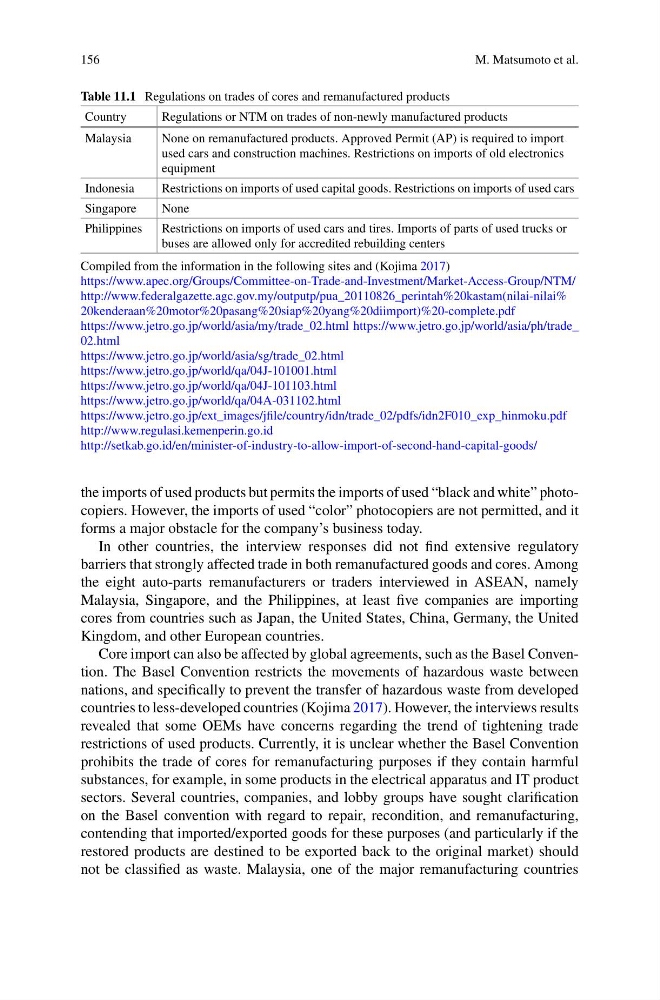
Table 11.1 Regulations on trades of cores and remanufactured products
Country
Regulations or NTM on trades of non-newly manufactured products
Malaysia
None on remanufactured products. Approved Permit (AP) is required to import
used cars and construction machines. Restrictions on imports of old electronics
equipment
Indonesia
Restrictions on imports of used capital goods. Restrictions on imports of used cars
Singapore
None
Philippines
Restrictions on imports of used cars and tires. Imports of parts of used trucks or
buses are allowed only for accredited rebuilding centers
Compiled from the information in the following sites and (Kojima 2017)
https://www.apec.org/Groups/Committee-on-Trade-and-Investment/Market-Access-Group/NTM/
http://www.federalgazette.agc.gov.my/outputp/pua_20110826_perintah%20kastam(nilai-nilai%
20kenderaan%20motor%20pasang%20siap%20yang%20diimport)%20-complete.pdf
https://www.jetro.go.jp/world/asia/my/trade_02.html https://www.jetro.go.jp/world/asia/ph/trade_
02.html
https://www.jetro.go.jp/world/asia/sg/trade_02.html
https://www.jetro.go.jp/world/qa/04J-101001.html
https://www.jetro.go.jp/world/qa/04J-101103.html
https://www.jetro.go.jp/world/qa/04A-031102.html
https://www.jetro.go.jp/ext_images/jfile/country/idn/trade_02/pdfs/idn2F010_exp_hinmoku.pdf
http://www.regulasi.kemenperin.go.id
http://setkab.go.id/en/minister-of-industry-to-allow-import-of-second-hand-capital-goods/
the imports of used products but permits the imports of used “black and white” photocopiers. However, the imports of used “color” photocopiers are not permitted, and it
forms a major obstacle for the company’s business today.
In other countries, the interview responses did not find extensive regulatory
barriers that strongly affected trade in both remanufactured goods and cores. Among
the eight auto-parts remanufacturers or traders interviewed in ASEAN, namely
Malaysia, Singapore, and the Philippines, at least five companies are importing
cores from countries such as Japan, the United States, China, Germany, the United
Kingdom, and other European countries.
Core import can also be affected by global agreements, such as the Basel Convention. The Basel Convention restricts the movements of hazardous waste between
nations, and specifically to prevent the transfer of hazardous waste from developed
countries to less-developed countries (Kojima 2017). However, the interviews results
revealed that some OEMs have concerns regarding the trend of tightening trade
restrictions of used products. Currently, it is unclear whether the Basel Convention
prohibits the trade of cores for remanufacturing purposes if they contain harmful
substances, for example, in some products in the electrical apparatus and IT product
sectors. Several countries, companies, and lobby groups have sought clarification
on the Basel convention with regard to repair, recondition, and remanufacturing,
contending that imported/exported goods for these purposes (and particularly if the
restored products are destined to be exported back to the original market) should
not be classified as waste. Malaysia, one of the major remanufacturing countries
M. Matsumoto et al.
Table 11.1 Regulations on trades of cores and remanufactured products
Country
Regulations or NTM on trades of non-newly manufactured products
Malaysia
None on remanufactured products. Approved Permit (AP) is required to import
used cars and construction machines. Restrictions on imports of old electronics
equipment
Indonesia
Restrictions on imports of used capital goods. Restrictions on imports of used cars
Singapore
None
Philippines
Restrictions on imports of used cars and tires. Imports of parts of used trucks or
buses are allowed only for accredited rebuilding centers
Compiled from the information in the following sites and (Kojima 2017)
https://www.apec.org/Groups/Committee-on-Trade-and-Investment/Market-Access-Group/NTM/
http://www.federalgazette.agc.gov.my/outputp/pua_20110826_perintah%20kastam(nilai-nilai%
20kenderaan%20motor%20pasang%20siap%20yang%20diimport)%20-complete.pdf
https://www.jetro.go.jp/world/asia/my/trade_02.html https://www.jetro.go.jp/world/asia/ph/trade_
02.html
https://www.jetro.go.jp/world/asia/sg/trade_02.html
https://www.jetro.go.jp/world/qa/04J-101001.html
https://www.jetro.go.jp/world/qa/04J-101103.html
https://www.jetro.go.jp/world/qa/04A-031102.html
https://www.jetro.go.jp/ext_images/jfile/country/idn/trade_02/pdfs/idn2F010_exp_hinmoku.pdf
http://www.regulasi.kemenperin.go.id
http://setkab.go.id/en/minister-of-industry-to-allow-import-of-second-hand-capital-goods/
the imports of used products but permits the imports of used “black and white” photocopiers. However, the imports of used “color” photocopiers are not permitted, and it
forms a major obstacle for the company’s business today.
In other countries, the interview responses did not find extensive regulatory
barriers that strongly affected trade in both remanufactured goods and cores. Among
the eight auto-parts remanufacturers or traders interviewed in ASEAN, namely
Malaysia, Singapore, and the Philippines, at least five companies are importing
cores from countries such as Japan, the United States, China, Germany, the United
Kingdom, and other European countries.
Core import can also be affected by global agreements, such as the Basel Convention. The Basel Convention restricts the movements of hazardous waste between
nations, and specifically to prevent the transfer of hazardous waste from developed
countries to less-developed countries (Kojima 2017). However, the interviews results
revealed that some OEMs have concerns regarding the trend of tightening trade
restrictions of used products. Currently, it is unclear whether the Basel Convention
prohibits the trade of cores for remanufacturing purposes if they contain harmful
substances, for example, in some products in the electrical apparatus and IT product
sectors. Several countries, companies, and lobby groups have sought clarification
on the Basel convention with regard to repair, recondition, and remanufacturing,
contending that imported/exported goods for these purposes (and particularly if the
restored products are destined to be exported back to the original market) should
not be classified as waste. Malaysia, one of the major remanufacturing countries