

8 Designing for Vehicle Recyclability from the Perspectives of Material …
109
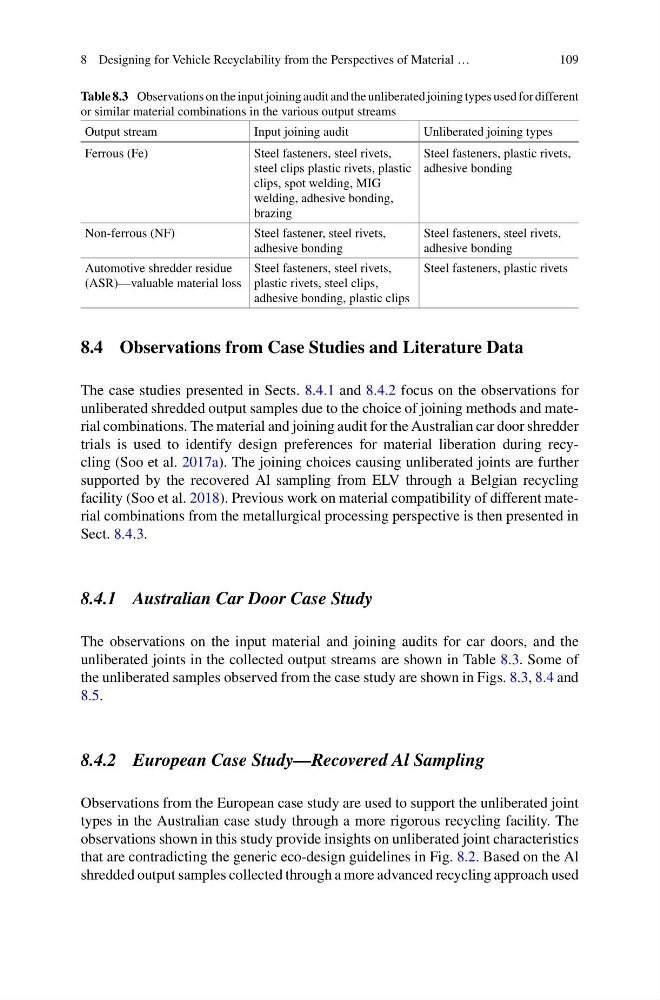
Table 8.3 Observations on the input joining audit and the unliberated joining types used for different
or similar material combinations in the various output streams
Output stream
Input joining audit
Unliberated joining types
Ferrous (Fe)
Steel fasteners, steel rivets,
steel clips plastic rivets, plastic
clips, spot welding, MIG
welding, adhesive bonding,
brazing
Steel fasteners, plastic rivets,
adhesive bonding
Non-ferrous (NF)
Steel fastener, steel rivets,
adhesive bonding
Steel fasteners, steel rivets,
adhesive bonding
Automotive shredder residue
(ASR)—valuable material loss
Steel fasteners, steel rivets,
plastic rivets, steel clips,
adhesive bonding, plastic clips
Steel fasteners, plastic rivets
8.4 Observations from Case Studies and Literature Data
The case studies presented in Sects. 8.4.1 and 8.4.2 focus on the observations for
unliberated shredded output samples due to the choice of joining methods and material combinations. The material and joining audit for the Australian car door shredder
trials is used to identify design preferences for material liberation during recycling (Soo et al. 2017a). The joining choices causing unliberated joints are further
supported by the recovered Al sampling from ELV through a Belgian recycling
facility (Soo et al. 2018). Previous work on material compatibility of different material combinations from the metallurgical processing perspective is then presented in
Sect. 8.4.3.
8.4.1 Australian Car Door Case Study
The observations on the input material and joining audits for car doors, and the
unliberated joints in the collected output streams are shown in Table 8.3. Some of
the unliberated samples observed from the case study are shown in Figs. 8.3, 8.4 and
8.5.
8.4.2 European Case Study—Recovered Al Sampling
Observations from the European case study are used to support the unliberated joint
types in the Australian case study through a more rigorous recycling facility. The
observations shown in this study provide insights on unliberated joint characteristics
that are contradicting the generic eco-design guidelines in Fig. 8.2. Based on the Al
shredded output samples collected through a more advanced recycling approach used
109
Table 8.3 Observations on the input joining audit and the unliberated joining types used for different
or similar material combinations in the various output streams
Output stream
Input joining audit
Unliberated joining types
Ferrous (Fe)
Steel fasteners, steel rivets,
steel clips plastic rivets, plastic
clips, spot welding, MIG
welding, adhesive bonding,
brazing
Steel fasteners, plastic rivets,
adhesive bonding
Non-ferrous (NF)
Steel fastener, steel rivets,
adhesive bonding
Steel fasteners, steel rivets,
adhesive bonding
Automotive shredder residue
(ASR)—valuable material loss
Steel fasteners, steel rivets,
plastic rivets, steel clips,
adhesive bonding, plastic clips
Steel fasteners, plastic rivets
8.4 Observations from Case Studies and Literature Data
The case studies presented in Sects. 8.4.1 and 8.4.2 focus on the observations for
unliberated shredded output samples due to the choice of joining methods and material combinations. The material and joining audit for the Australian car door shredder
trials is used to identify design preferences for material liberation during recycling (Soo et al. 2017a). The joining choices causing unliberated joints are further
supported by the recovered Al sampling from ELV through a Belgian recycling
facility (Soo et al. 2018). Previous work on material compatibility of different material combinations from the metallurgical processing perspective is then presented in
Sect. 8.4.3.
8.4.1 Australian Car Door Case Study
The observations on the input material and joining audits for car doors, and the
unliberated joints in the collected output streams are shown in Table 8.3. Some of
the unliberated samples observed from the case study are shown in Figs. 8.3, 8.4 and
8.5.
8.4.2 European Case Study—Recovered Al Sampling
Observations from the European case study are used to support the unliberated joint
types in the Australian case study through a more rigorous recycling facility. The
observations shown in this study provide insights on unliberated joint characteristics
that are contradicting the generic eco-design guidelines in Fig. 8.2. Based on the Al
shredded output samples collected through a more advanced recycling approach used