

77
questionnaires, along with photos of edible mushrooms in Malaysia. Any specimen
available during the survey was collected and brought to the laboratory for further
identification. The morphological aspects of the collected mushrooms, such as
shape, colour, cap, gills and stipe, were described by referring to a local guide for
fungi, such as those by Lee et al. (2012), Pegler (1997), Zainuddin et al. (2010) and
Thi et al. (2012).
Results and Discussion
A total of 20 respondents, comprising 12 men and eight women with experience of
collecting wild mushrooms and/or using them for food and/or medicinal purposes
between age 30 and 70, were chosen in this study. Knowledge-wise, the women
were likely better in identifying mushrooms compared with the men. The women of
this community were often observed foraging in the nearby forest for edible
resources, including wild plants, seasonal fruits and vegetables, including mushrooms and ferns. They would spend hours in the forest and return to prepare meals
for the family. On the other hand, men normally explored deeper into the forest for
days to collect herbs, agarwood (gaharu and chandan) and wild mushrooms, if they
came across the fruiting bodies.
From this study, we were able to document 11 species of wild mushrooms
belonging to 10 genera. A total of nine species of wild mushrooms are consumed as
food, namely Auricularia auricula-judae, Clavulina sp., Lentinus sp., Schizophyllum
commune, Termitomyces heimii, Termitomyce microcarpus, Panus giganteus,
Hygrocybe conica and Cookeina sp. Three species were utilised as medicine,
namely Cookeina sp., Pycnoporus sp. and Lignosus rhinocerus. Cookeina sp. was
the only species utilised as both food and medicine. Most of the species recorded
were under the phylum Basidiomycota and only one species (Cookeina sp.) was
under the phylum Ascomycota. Studies by Wasser (2002) found that Basidiomycetes
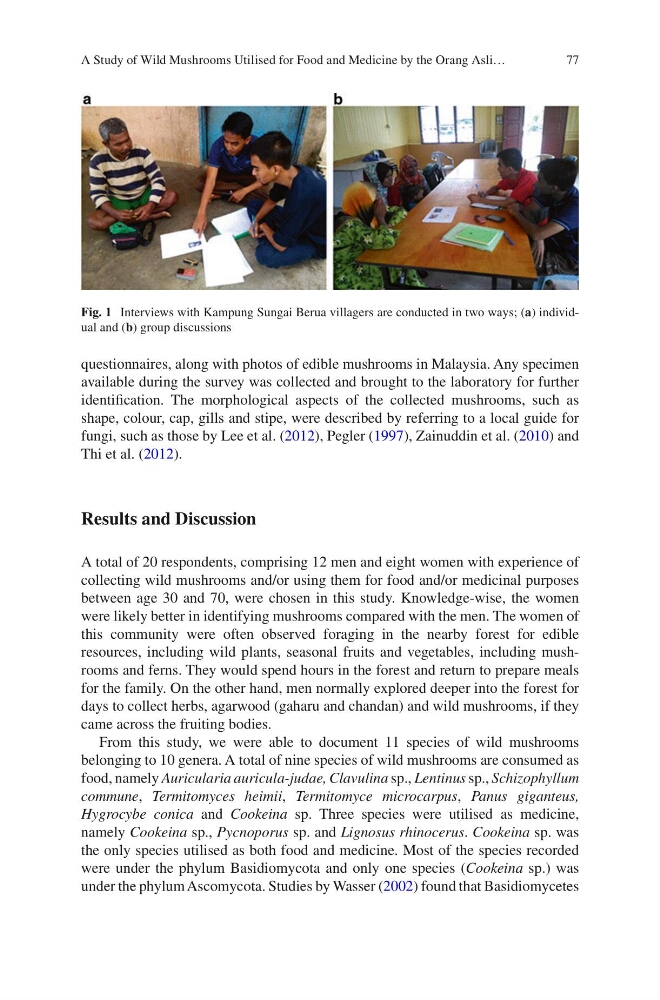
Fig. 1 Interviews with Kampung Sungai Berua villagers are conducted in two ways; (a) individual and (b) group discussions
A Study of Wild Mushrooms Utilised for Food and Medicine by the Orang Asli…
questionnaires, along with photos of edible mushrooms in Malaysia. Any specimen
available during the survey was collected and brought to the laboratory for further
identification. The morphological aspects of the collected mushrooms, such as
shape, colour, cap, gills and stipe, were described by referring to a local guide for
fungi, such as those by Lee et al. (2012), Pegler (1997), Zainuddin et al. (2010) and
Thi et al. (2012).
Results and Discussion
A total of 20 respondents, comprising 12 men and eight women with experience of
collecting wild mushrooms and/or using them for food and/or medicinal purposes
between age 30 and 70, were chosen in this study. Knowledge-wise, the women
were likely better in identifying mushrooms compared with the men. The women of
this community were often observed foraging in the nearby forest for edible
resources, including wild plants, seasonal fruits and vegetables, including mushrooms and ferns. They would spend hours in the forest and return to prepare meals
for the family. On the other hand, men normally explored deeper into the forest for
days to collect herbs, agarwood (gaharu and chandan) and wild mushrooms, if they
came across the fruiting bodies.
From this study, we were able to document 11 species of wild mushrooms
belonging to 10 genera. A total of nine species of wild mushrooms are consumed as
food, namely Auricularia auricula-judae, Clavulina sp., Lentinus sp., Schizophyllum
commune, Termitomyces heimii, Termitomyce microcarpus, Panus giganteus,
Hygrocybe conica and Cookeina sp. Three species were utilised as medicine,
namely Cookeina sp., Pycnoporus sp. and Lignosus rhinocerus. Cookeina sp. was
the only species utilised as both food and medicine. Most of the species recorded
were under the phylum Basidiomycota and only one species (Cookeina sp.) was
under the phylum Ascomycota. Studies by Wasser (2002) found that Basidiomycetes
Fig. 1 Interviews with Kampung Sungai Berua villagers are conducted in two ways; (a) individual and (b) group discussions
A Study of Wild Mushrooms Utilised for Food and Medicine by the Orang Asli…