

54
experiences and environment (Yeap 2000; Holloway 1997). Marshall and Rossman
(1989) also stated that qualitative methods are capable of depicting and clarifying
information in detail and profundity.
This inquest was planned as a case contextual investigation regarding cases that
included observing individuals or units as afamily, in class, school, social network
and occasions (Merriam 1998; Burn 1995; Yin 2014). The design of this research
was aimed as acquiring in-depth understanding about the respondents, focusing on
the process rather than the output, and accentuating new findings and not verification of the theory or outcome (Merriam 1998). This approach also reflected the real
life of respondents, which depicted a detailed overview on how they interacted in
life (Patton 1990). Case data included interviews details, observations, records and
statements, which could be obtained from any source. Fieldwork was conducted
from August 2016 to July 2017 in the Semoq Beri village of Kampung Sungai Berua
in Hulu Terengganu, Terengganu state. The ATLAS.ti software Version 7 was used
for qualitative analysis of data gathered from fieldwork (Lewins and Silver 2007).
Results
Socio-economic survey found that the Orang Asli in Kampung Sungai Berua earned
their income through the sale of forest products like rattan and agarwood, as well as
receiving dividends from oil palm plantations for the use of their land (Ramle 2014).
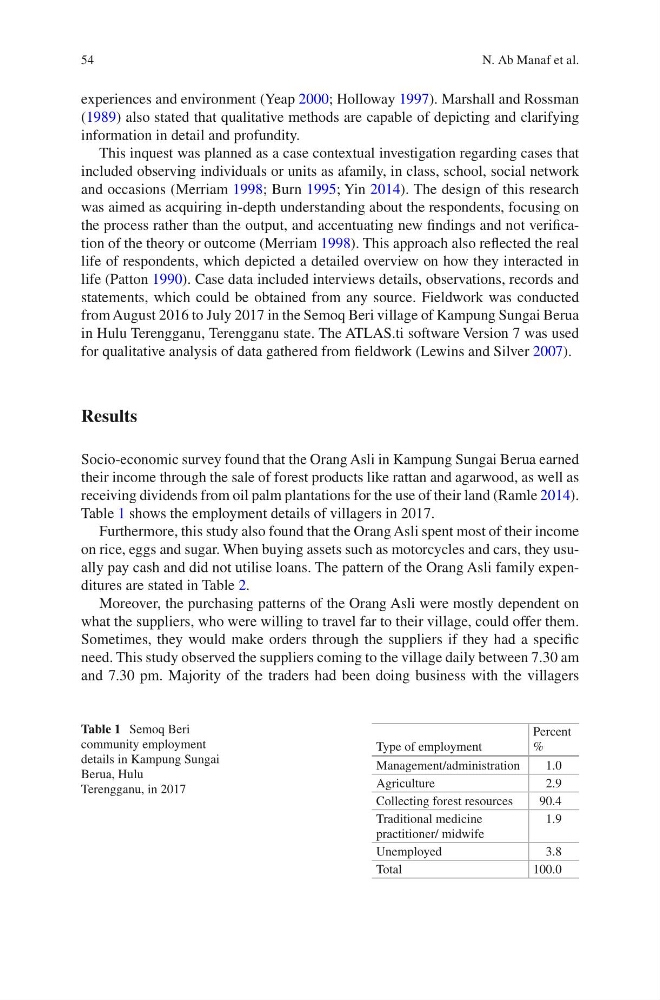
Table 1 shows the employment details of villagers in 2017.
Furthermore, this study also found that the Orang Asli spent most of their income
on rice, eggs and sugar. When buying assets such as motorcycles and cars, they usually pay cash and did not utilise loans. The pattern of the Orang Asli family expenditures are stated in Table 2.
Moreover, the purchasing patterns of the Orang Asli were mostly dependent on
what the suppliers, who were willing to travel far to their village, could offer them.
Sometimes, they would make orders through the suppliers if they had a specific
need. This study observed the suppliers coming to the village daily between 7.30 am
and 7.30 pm. Majority of the traders had been doing business with the villagers
Table 1 Semoq Beri
community employment
details in Kampung Sungai
Berua, Hulu
Terengganu, in 2017
Type of employment
Percent
%
Management/administration
1.0
Agriculture
2.9
Collecting forest resources
90.4
Traditional medicine
practitioner/ midwife
1.9
Unemployed
3.8
Total
100.0
N. Ab Manaf et al.
experiences and environment (Yeap 2000; Holloway 1997). Marshall and Rossman
(1989) also stated that qualitative methods are capable of depicting and clarifying
information in detail and profundity.
This inquest was planned as a case contextual investigation regarding cases that
included observing individuals or units as afamily, in class, school, social network
and occasions (Merriam 1998; Burn 1995; Yin 2014). The design of this research
was aimed as acquiring in-depth understanding about the respondents, focusing on
the process rather than the output, and accentuating new findings and not verification of the theory or outcome (Merriam 1998). This approach also reflected the real
life of respondents, which depicted a detailed overview on how they interacted in
life (Patton 1990). Case data included interviews details, observations, records and
statements, which could be obtained from any source. Fieldwork was conducted
from August 2016 to July 2017 in the Semoq Beri village of Kampung Sungai Berua
in Hulu Terengganu, Terengganu state. The ATLAS.ti software Version 7 was used
for qualitative analysis of data gathered from fieldwork (Lewins and Silver 2007).
Results
Socio-economic survey found that the Orang Asli in Kampung Sungai Berua earned
their income through the sale of forest products like rattan and agarwood, as well as
receiving dividends from oil palm plantations for the use of their land (Ramle 2014).
Table 1 shows the employment details of villagers in 2017.
Furthermore, this study also found that the Orang Asli spent most of their income
on rice, eggs and sugar. When buying assets such as motorcycles and cars, they usually pay cash and did not utilise loans. The pattern of the Orang Asli family expenditures are stated in Table 2.
Moreover, the purchasing patterns of the Orang Asli were mostly dependent on
what the suppliers, who were willing to travel far to their village, could offer them.
Sometimes, they would make orders through the suppliers if they had a specific
need. This study observed the suppliers coming to the village daily between 7.30 am
and 7.30 pm. Majority of the traders had been doing business with the villagers
Table 1 Semoq Beri
community employment
details in Kampung Sungai
Berua, Hulu
Terengganu, in 2017
Type of employment
Percent
%
Management/administration
1.0
Agriculture
2.9
Collecting forest resources
90.4
Traditional medicine
practitioner/ midwife
1.9
Unemployed
3.8
Total
100.0
N. Ab Manaf et al.