

161
Asli population of 4.7 million, of which the majority were Senoi (62%), followed
by Proto-Malays (33%) and the Semang (5%) (Leary 1995).
The Semang consists of the Jahai, Bateq, Kensiu, Kintak, Lanoh and Mendriq
sub-tribes (see Table 1 and Fig. 1). Their social structure still reflects their nomadic
way of life, with a leader heading a small number of community members. The
Senoi includes the Temiar, Semai, Semoq Beri, Mah Beri, Che Wong and Jah Hut
sub-tribes. They have a loose form of leadership, where a headman is in charge of a
few kin groups. The Proto-Malays comprise the Temuan, Jakun, Semelai, Temoq,
Orang Kanaq, Orang Seletar and Orang Kuala sub-tribes. Their social organisation
is more complex, with village elders owing allegiance to a headman who, in turn, is
placed under a chief who owes allegiance to an even higher chief. The tripartite division of the Orang Asli reflects their spatial distribution, with the Semang mostly
living in the north and northeast of Peninsular Malaysia, whereas the Senoi may be
found in the main range, while the Proto-Malays are in the central and southern
parts of the peninsula (Fig. 1).
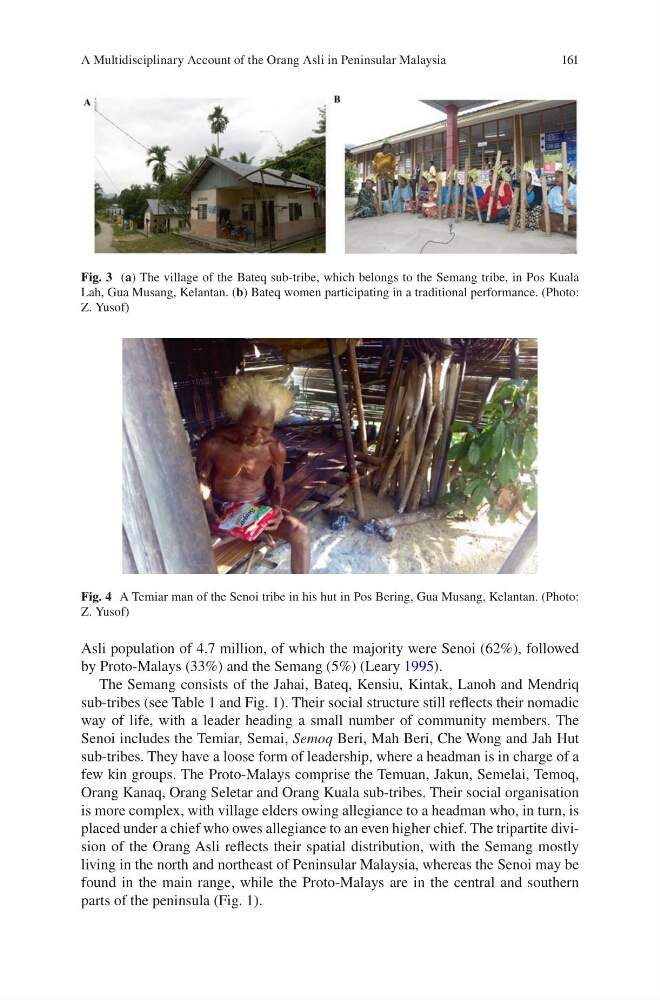
Fig. 3 (a) The village of the Bateq sub-tribe, which belongs to the Semang tribe, in Pos Kuala
Lah, Gua Musang, Kelantan. (b) Bateq women participating in a traditional performance. (Photo:
Z. Yusof)
Fig. 4 A Temiar man of the Senoi tribe in his hut in Pos Bering, Gua Musang, Kelantan. (Photo:
Z. Yusof)
A Multidisciplinary Account of the Orang Asli in Peninsular Malaysia
Asli population of 4.7 million, of which the majority were Senoi (62%), followed
by Proto-Malays (33%) and the Semang (5%) (Leary 1995).
The Semang consists of the Jahai, Bateq, Kensiu, Kintak, Lanoh and Mendriq
sub-tribes (see Table 1 and Fig. 1). Their social structure still reflects their nomadic
way of life, with a leader heading a small number of community members. The
Senoi includes the Temiar, Semai, Semoq Beri, Mah Beri, Che Wong and Jah Hut
sub-tribes. They have a loose form of leadership, where a headman is in charge of a
few kin groups. The Proto-Malays comprise the Temuan, Jakun, Semelai, Temoq,
Orang Kanaq, Orang Seletar and Orang Kuala sub-tribes. Their social organisation
is more complex, with village elders owing allegiance to a headman who, in turn, is
placed under a chief who owes allegiance to an even higher chief. The tripartite division of the Orang Asli reflects their spatial distribution, with the Semang mostly
living in the north and northeast of Peninsular Malaysia, whereas the Senoi may be
found in the main range, while the Proto-Malays are in the central and southern
parts of the peninsula (Fig. 1).
Fig. 3 (a) The village of the Bateq sub-tribe, which belongs to the Semang tribe, in Pos Kuala
Lah, Gua Musang, Kelantan. (b) Bateq women participating in a traditional performance. (Photo:
Z. Yusof)
Fig. 4 A Temiar man of the Senoi tribe in his hut in Pos Bering, Gua Musang, Kelantan. (Photo:
Z. Yusof)
A Multidisciplinary Account of the Orang Asli in Peninsular Malaysia