

147
(Anon 2011; Yeng 2010). As noted, one of the main reasons that drove the Orang
Asli to get involved in poaching was the good money paid by buyers, which could
alleviate the burden of supporting their families (Azrina et al. 2011). Several studies
had found a positive relationship between illegal harvesting of natural resources and
poverty (Mainka and Trivedi 2002). For instance, in Palawan province in the
Philippines, poverty was cited as a likely reason for hunting endangered species to
sell at high prices among the rural communities there (Shively 1997).
To our knowledge, continuous hunting of protected wildlife might undermine
viable populations and the overall survival of targeted species. As wildlife is one of
the important components of the tropical forest ecosystem, it would be crucial to
conserve and safeguard Malaysia’s heritage for the future generation. Much progress had been made, with laws strictly enforced to prevent the extinction of animals.
In Peninsular Malaysia, wildlife was protected under the Wildlife Conservation Act
(2010), while Sabah and Sarawak had their own Wildlife Conservation Enactment
(1997) and Wild Life Protection Ordinance (1998), respectively.
On the Orang Asli’s right to hunt protected wildlife, the law forbade them from
trading or selling animals or parts listed in the Sixth Schedule. Nevertheless, our
study documented the hunting of pangolins by the orang Asli. Previous studies had
addressed the involvement of the Orang Asli in poaching and trading of several species of animals, including the pangolin (Azrina et al. 2011). Historically, contact
between the Orang Asli and outsiders had been established in the fifteenth century
through economic activities (Gianno and Bayr 2009). Basically, Orang Asli were
paid a nominal sum by commercial outfitters seeking wildlife products. The demand
for wildlife products had increased over time. For example, pangolins, turtles, porcupines and pythons had lucrative value in traditional Chinese medicine (Brooks
et al. 2010; Clements et al. 2010). Today, the huge market had encouraged the Orang
Asli to hunt threatened or endangered species even though they knew about the
wildlife protection laws. Based on personal communication, more than 50% of the
respondents in this study were aware about which animal they could and could not
0
2
4
6
8
10
12
14
16
18
20
2010
2011
2012
2013
2014
2015
Foreigners captured
Years
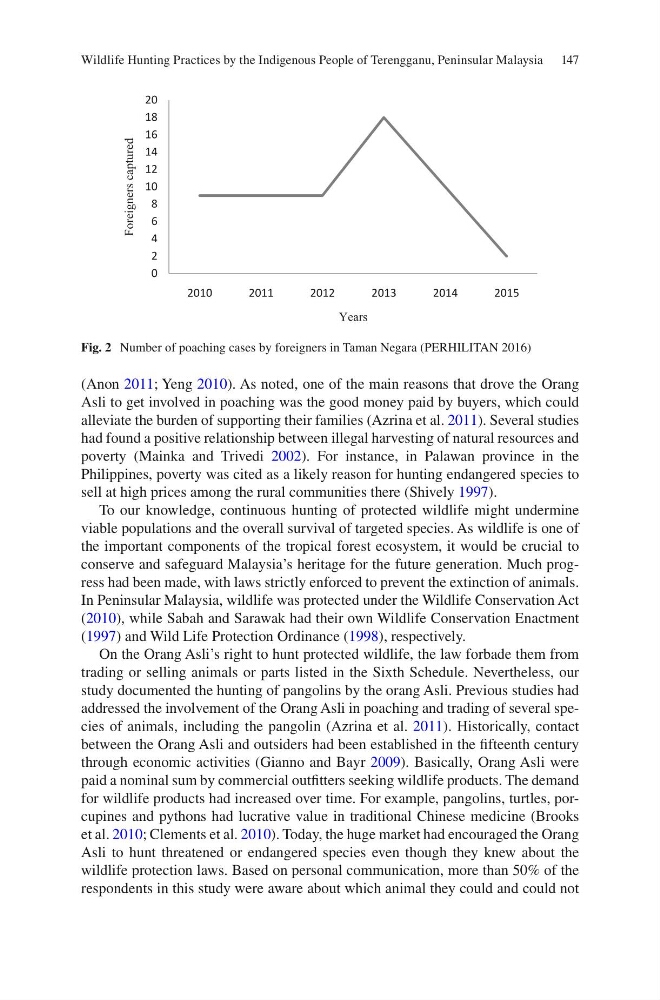
Fig. 2 Number of poaching cases by foreigners in Taman Negara (PERHILITAN 2016)
Wildlife Hunting Practices by the Indigenous People of Terengganu, Peninsular Malaysia
(Anon 2011; Yeng 2010). As noted, one of the main reasons that drove the Orang
Asli to get involved in poaching was the good money paid by buyers, which could
alleviate the burden of supporting their families (Azrina et al. 2011). Several studies
had found a positive relationship between illegal harvesting of natural resources and
poverty (Mainka and Trivedi 2002). For instance, in Palawan province in the
Philippines, poverty was cited as a likely reason for hunting endangered species to
sell at high prices among the rural communities there (Shively 1997).
To our knowledge, continuous hunting of protected wildlife might undermine
viable populations and the overall survival of targeted species. As wildlife is one of
the important components of the tropical forest ecosystem, it would be crucial to
conserve and safeguard Malaysia’s heritage for the future generation. Much progress had been made, with laws strictly enforced to prevent the extinction of animals.
In Peninsular Malaysia, wildlife was protected under the Wildlife Conservation Act
(2010), while Sabah and Sarawak had their own Wildlife Conservation Enactment
(1997) and Wild Life Protection Ordinance (1998), respectively.
On the Orang Asli’s right to hunt protected wildlife, the law forbade them from
trading or selling animals or parts listed in the Sixth Schedule. Nevertheless, our
study documented the hunting of pangolins by the orang Asli. Previous studies had
addressed the involvement of the Orang Asli in poaching and trading of several species of animals, including the pangolin (Azrina et al. 2011). Historically, contact
between the Orang Asli and outsiders had been established in the fifteenth century
through economic activities (Gianno and Bayr 2009). Basically, Orang Asli were
paid a nominal sum by commercial outfitters seeking wildlife products. The demand
for wildlife products had increased over time. For example, pangolins, turtles, porcupines and pythons had lucrative value in traditional Chinese medicine (Brooks
et al. 2010; Clements et al. 2010). Today, the huge market had encouraged the Orang
Asli to hunt threatened or endangered species even though they knew about the
wildlife protection laws. Based on personal communication, more than 50% of the
respondents in this study were aware about which animal they could and could not
0
2
4
6
8
10
12
14
16
18
20
2010
2011
2012
2013
2014
2015
Foreigners captured
Years
Fig. 2 Number of poaching cases by foreigners in Taman Negara (PERHILITAN 2016)
Wildlife Hunting Practices by the Indigenous People of Terengganu, Peninsular Malaysia