

145
The respondents reported hunting at least 11 of the 42 mammals sighted in the
forest reserve (26%). According to the interviews, the Semoq Beri basically caught
the animals using snares (89%) and blowpipes (73%). For instance, bigger animals
such as wild boars, sambar deers and barking deers were hunted using blowpipes,
but sometimes, they were also caught in snares. For birds, the Orang Asli mainly
used traps to hunt them. Most of the birds were eaten while a few species, such as
the blue-rumped parrot (Psittinus cyanurus) and common hill myna (Gracula religiosa), were kept as pets because of their aesthetic features. Other species, such as
turtles and tortoises, were captured using bare hands. These species are used for
food, trading and, in some cases, for traditional medicine (e.g. red-eared slider).
According to some interview respondents, the Orang Asli communities hunted
wildlife based on traits of the particular animals. For instance, they will go out and
hunt nocturnal animals at night. They preferred to hunt during the rainy season
because it was easier to track the animals’ footprints on the wet ground.
The hunting practices of the Orang Asli was highly related to their culture and
belief. For instance, the certain communities did not hunt snakes because of cultural
restrictions or taboos that prohibited its consumption (Endicott 2010). With a large
number of the Orang Asli adopting Islam as their religion, they had also forgone the
consumption of wild pigs or animals that were not considered halal. But although
the Orang Asli communities in Kampung Sungai Berua had converted to Islam,
some of them still hunted wild boars to sell for subsistence.
The Orang Asli practices were strongly related to their belief in spirits that
guided their lives, and those practices could actually allow them to hunt wildlife in
a sustainable manner. For instance, the Semoq Beri communities strongly believed
in their Semoq Hala (Ramle et al. 2014a), which were spirits that they obeyed. In
relation to that, their concept of the forest and its significance, particularly to the
Semoq Beri in Terengganu, had been documented (Ramle et al. 2014b). The Semoq
Beri community considered themselves responsible for safeguarding the forests
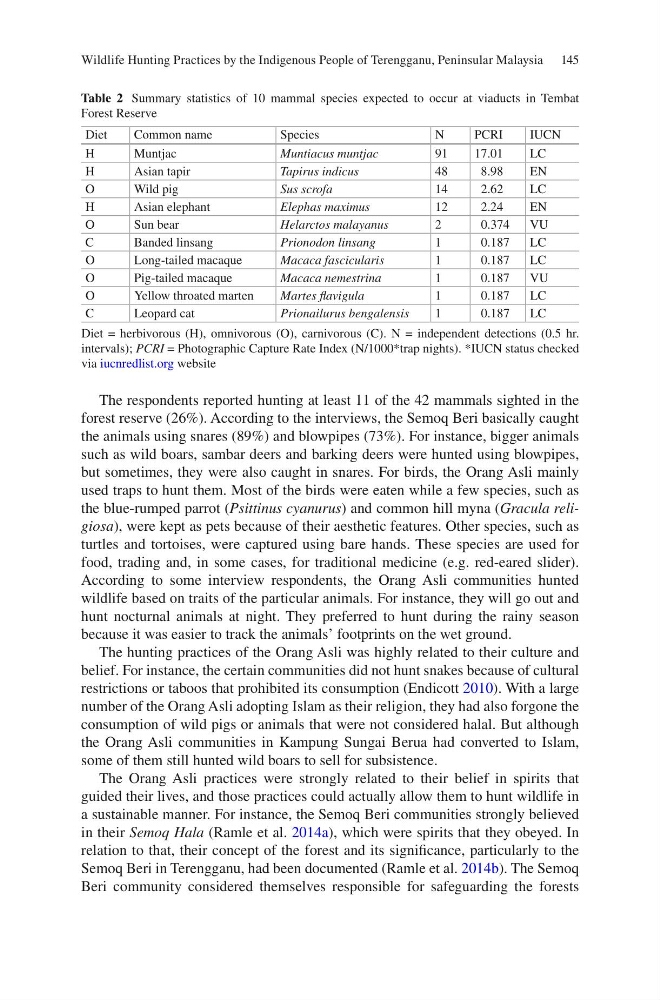
Table 2 Summary statistics of 10 mammal species expected to occur at viaducts in Tembat
Forest Reserve
Diet
Common name
Species
N
PCRI
IUCN
H
Muntjac
Muntiacus muntjac
91
17.01
LC
H
Asian tapir
Tapirus indicus
48
8.98
EN
O
Wild pig
Sus scrofa
14
2.62
LC
H
Asian elephant
Elephas maximus
12
2.24
EN
O
Sun bear
Helarctos malayanus
2
0.374
VU
C
Banded linsang
Prionodon linsang
1
0.187
LC
O
Long-tailed macaque
Macaca fascicularis
1
0.187
LC
O
Pig-tailed macaque
Macaca nemestrina
1
0.187
VU
O
Yellow throated marten
Martes flavigula
1
0.187
LC
C
Leopard cat
Prionailurus bengalensis
1
0.187
LC
Diet = herbivorous (H), omnivorous (O), carnivorous (C). N = independent detections (0.5 hr.
intervals); PCRI = Photographic Capture Rate Index (N/1000*trap nights). *IUCN status checked
via iucnredlist.org website
Wildlife Hunting Practices by the Indigenous People of Terengganu, Peninsular Malaysia
The respondents reported hunting at least 11 of the 42 mammals sighted in the
forest reserve (26%). According to the interviews, the Semoq Beri basically caught
the animals using snares (89%) and blowpipes (73%). For instance, bigger animals
such as wild boars, sambar deers and barking deers were hunted using blowpipes,
but sometimes, they were also caught in snares. For birds, the Orang Asli mainly
used traps to hunt them. Most of the birds were eaten while a few species, such as
the blue-rumped parrot (Psittinus cyanurus) and common hill myna (Gracula religiosa), were kept as pets because of their aesthetic features. Other species, such as
turtles and tortoises, were captured using bare hands. These species are used for
food, trading and, in some cases, for traditional medicine (e.g. red-eared slider).
According to some interview respondents, the Orang Asli communities hunted
wildlife based on traits of the particular animals. For instance, they will go out and
hunt nocturnal animals at night. They preferred to hunt during the rainy season
because it was easier to track the animals’ footprints on the wet ground.
The hunting practices of the Orang Asli was highly related to their culture and
belief. For instance, the certain communities did not hunt snakes because of cultural
restrictions or taboos that prohibited its consumption (Endicott 2010). With a large
number of the Orang Asli adopting Islam as their religion, they had also forgone the
consumption of wild pigs or animals that were not considered halal. But although
the Orang Asli communities in Kampung Sungai Berua had converted to Islam,
some of them still hunted wild boars to sell for subsistence.
The Orang Asli practices were strongly related to their belief in spirits that
guided their lives, and those practices could actually allow them to hunt wildlife in
a sustainable manner. For instance, the Semoq Beri communities strongly believed
in their Semoq Hala (Ramle et al. 2014a), which were spirits that they obeyed. In
relation to that, their concept of the forest and its significance, particularly to the
Semoq Beri in Terengganu, had been documented (Ramle et al. 2014b). The Semoq
Beri community considered themselves responsible for safeguarding the forests
Table 2 Summary statistics of 10 mammal species expected to occur at viaducts in Tembat
Forest Reserve
Diet
Common name
Species
N
PCRI
IUCN
H
Muntjac
Muntiacus muntjac
91
17.01
LC
H
Asian tapir
Tapirus indicus
48
8.98
EN
O
Wild pig
Sus scrofa
14
2.62
LC
H
Asian elephant
Elephas maximus
12
2.24
EN
O
Sun bear
Helarctos malayanus
2
0.374
VU
C
Banded linsang
Prionodon linsang
1
0.187
LC
O
Long-tailed macaque
Macaca fascicularis
1
0.187
LC
O
Pig-tailed macaque
Macaca nemestrina
1
0.187
VU
O
Yellow throated marten
Martes flavigula
1
0.187
LC
C
Leopard cat
Prionailurus bengalensis
1
0.187
LC
Diet = herbivorous (H), omnivorous (O), carnivorous (C). N = independent detections (0.5 hr.
intervals); PCRI = Photographic Capture Rate Index (N/1000*trap nights). *IUCN status checked
via iucnredlist.org website
Wildlife Hunting Practices by the Indigenous People of Terengganu, Peninsular Malaysia