

104
of their life (Howell et al. 2010). Therefore, the survival of wildlife species should
also be taken into consideration to maintain their heritage and existence. Conservation
efforts were needed to maintain wildlife populations and its habitat so that the livelihood of the Orang Asli would not be compromised. As addressed by Benneth, by
considering resource sustainability, the balance between short-term economic needs
and long- term developmental and conservation needs could be evaluated.
Conclusion
This study has provided information on the wildlife utilised by the Orang Asli in
Kampung Sungai Berua in Hulu Terengganu, Terengganu. Several wildlife species
were identified as important to the Orang Asli for food, medicine, source of income
and as pets. The Orang Asli had great traditional knowledge regarding the flora and
fauna within the forests. The knowledge is practiced until now, and it has become
their “bible” to ensure their livelihood and maintain their identity. The Orang Asli
communities are hunter-gatherers and collectors of many types of forest resources.
In the richness of the tropical forests with high biodiversity, the relationship between
the wildlife and Orang Asli should be explored, as the social and economic wellbeing of the Orang Asli highly depends on good resource management. In addition,
the sustainable management of the wildlife used by the Orang Asli must be considered. Therefore, future research should address the factors and resolve issues affecting wildlife utilisation by the Orang Asli.
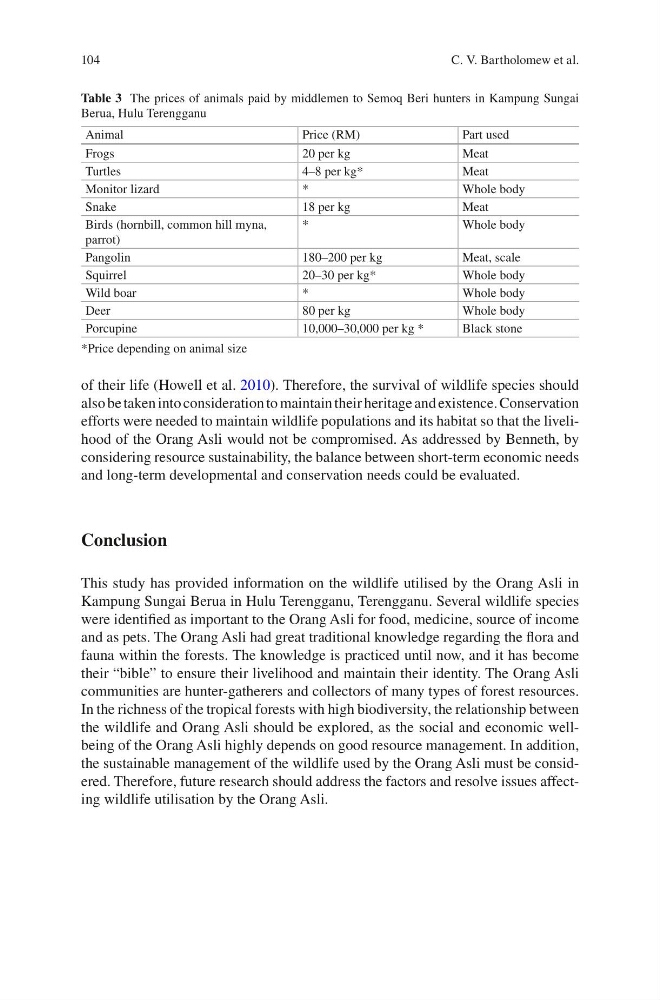
Table 3 The prices of animals paid by middlemen to Semoq Beri hunters in Kampung Sungai
Berua, Hulu Terengganu
Animal
Price (RM)
Part used
Frogs
20 per kg
Meat
Turtles
4–8 per kg*
Meat
Monitor lizard
*
Whole body
Snake
18 per kg
Meat
Birds (hornbill, common hill myna,
parrot)
*
Whole body
Pangolin
180–200 per kg
Meat, scale
Squirrel
20–30 per kg*
Whole body
Wild boar
*
Whole body
Deer
80 per kg
Whole body
Porcupine
10,000–30,000 per kg *
Black stone
*Price depending on animal size
C. V. Bartholomew et al.
of their life (Howell et al. 2010). Therefore, the survival of wildlife species should
also be taken into consideration to maintain their heritage and existence. Conservation
efforts were needed to maintain wildlife populations and its habitat so that the livelihood of the Orang Asli would not be compromised. As addressed by Benneth, by
considering resource sustainability, the balance between short-term economic needs
and long- term developmental and conservation needs could be evaluated.
Conclusion
This study has provided information on the wildlife utilised by the Orang Asli in
Kampung Sungai Berua in Hulu Terengganu, Terengganu. Several wildlife species
were identified as important to the Orang Asli for food, medicine, source of income
and as pets. The Orang Asli had great traditional knowledge regarding the flora and
fauna within the forests. The knowledge is practiced until now, and it has become
their “bible” to ensure their livelihood and maintain their identity. The Orang Asli
communities are hunter-gatherers and collectors of many types of forest resources.
In the richness of the tropical forests with high biodiversity, the relationship between
the wildlife and Orang Asli should be explored, as the social and economic wellbeing of the Orang Asli highly depends on good resource management. In addition,
the sustainable management of the wildlife used by the Orang Asli must be considered. Therefore, future research should address the factors and resolve issues affecting wildlife utilisation by the Orang Asli.
Table 3 The prices of animals paid by middlemen to Semoq Beri hunters in Kampung Sungai
Berua, Hulu Terengganu
Animal
Price (RM)
Part used
Frogs
20 per kg
Meat
Turtles
4–8 per kg*
Meat
Monitor lizard
*
Whole body
Snake
18 per kg
Meat
Birds (hornbill, common hill myna,
parrot)
*
Whole body
Pangolin
180–200 per kg
Meat, scale
Squirrel
20–30 per kg*
Whole body
Wild boar
*
Whole body
Deer
80 per kg
Whole body
Porcupine
10,000–30,000 per kg *
Black stone
*Price depending on animal size
C. V. Bartholomew et al.