

621
HACCP may be mandatory in some sectors of the industry and may be just recommended for others. Development, implementation and maintaining a HACCP
system is industry’s responsibility because food manufacturers have the most control over the products they manufacture, so they have the greatest impact on the
safety of their products (WHO 2008).
27.5.2 Strategies for Controlling Hazards
Several strategies have been developed for identification and control of hazards. A
successful HACCP program or system requires concerted efforts in many sectors of
the manufacturing process such as quality control (QC) procedures, sanitation and
hygiene programs and good manufacturing practices (GMPs) (Keener 2001).
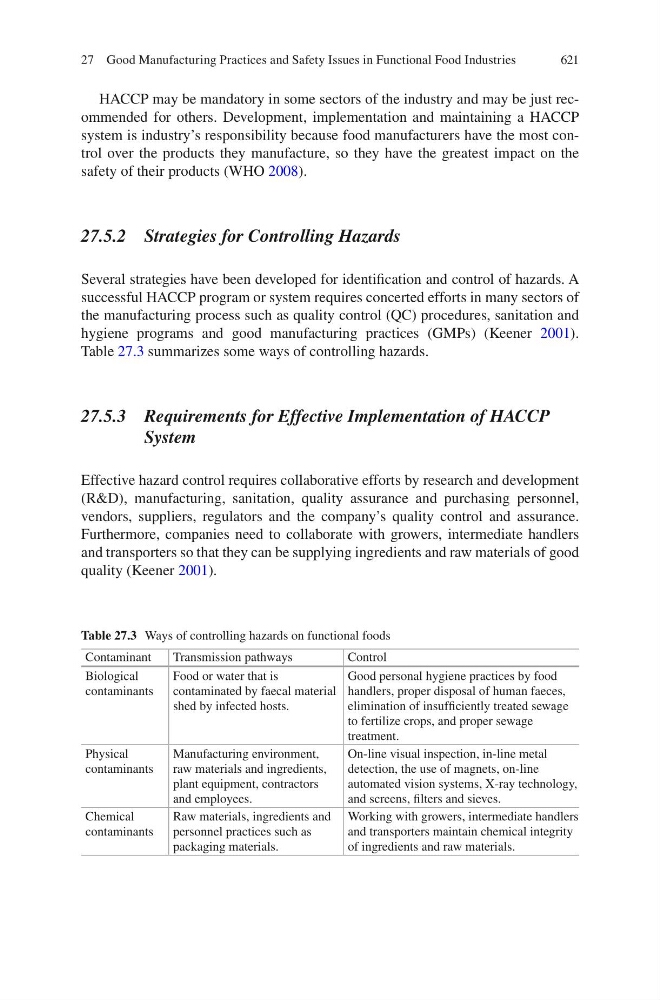
Table 27.3 summarizes some ways of controlling hazards.
27.5.3 Requirements for Effective Implementation of HACCP
System
Effective hazard control requires collaborative efforts by research and development
(R&D), manufacturing, sanitation, quality assurance and purchasing personnel,
vendors, suppliers, regulators and the company’s quality control and assurance.
Furthermore, companies need to collaborate with growers, intermediate handlers
and transporters so that they can be supplying ingredients and raw materials of good
quality (Keener 2001).
Table 27.3 Ways of controlling hazards on functional foods
Contaminant
Transmission pathways
Control
Biological
contaminants
Food or water that is
contaminated by faecal material
shed by infected hosts.
Good personal hygiene practices by food
handlers, proper disposal of human faeces,
elimination of insufficiently treated sewage
to fertilize crops, and proper sewage
treatment.
Physical
contaminants
Manufacturing environment,
raw materials and ingredients,
plant equipment, contractors
and employees.
On-line visual inspection, in-line metal
detection, the use of magnets, on-line
automated vision systems, X-ray technology,
and screens, filters and sieves.
Chemical
contaminants
Raw materials, ingredients and
personnel practices such as
packaging materials.
Working with growers, intermediate handlers
and transporters maintain chemical integrity
of ingredients and raw materials.
27 Good Manufacturing Practices and Safety Issues in Functional Food Industries