

545
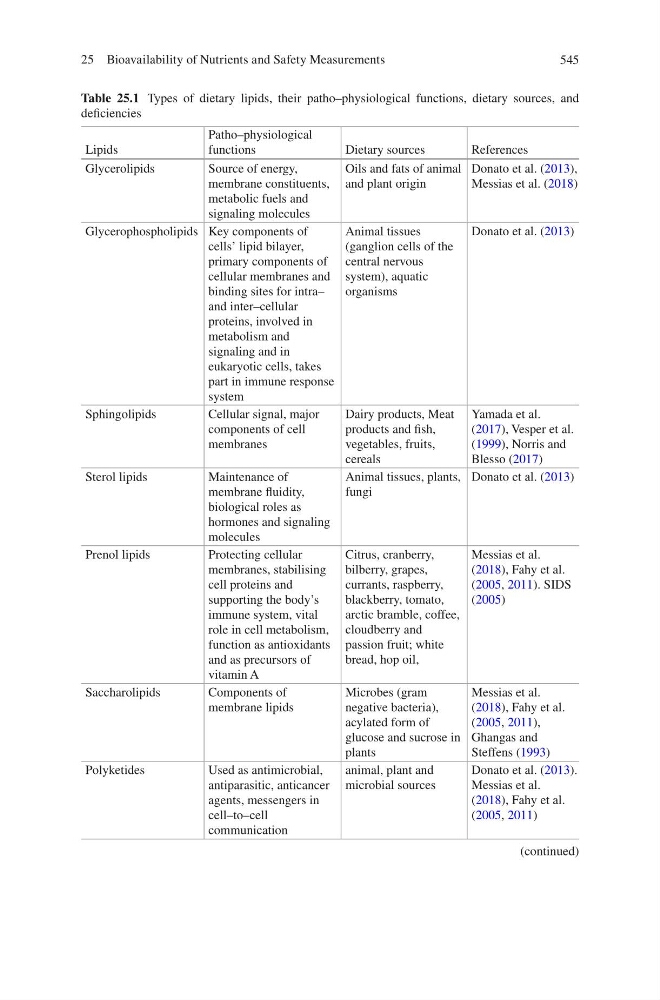
Table 25.1 Types of dietary lipids, their patho–physiological functions, dietary sources, and
deficiencies
Lipids
Patho–physiological
functions
Dietary sources
References
Glycerolipids
Source of energy,
membrane constituents,
metabolic fuels and
signaling molecules
Oils and fats of animal
and plant origin
Donato et al. (2013),
Messias et al. (2018)
Glycerophospholipids Key components of
cells’ lipid bilayer,
primary components of
cellular membranes and
binding sites for intra–
and inter–cellular
proteins, involved in
metabolism and
signaling and in
eukaryotic cells, takes
part in immune response
system
Animal tissues
(ganglion cells of the
central nervous
system), aquatic
organisms
Donato et al. (2013)
Sphingolipids
Cellular signal, major
components of cell
membranes
Dairy products, Meat
products and fish,
vegetables, fruits,
cereals
Yamada et al.
(2017), Vesper et al.
(1999), Norris and
Blesso (2017)
Sterol lipids
Maintenance of
membrane fluidity,
biological roles as
hormones and signaling
molecules
Animal tissues, plants,
fungi
Donato et al. (2013)
Prenol lipids
Protecting cellular
membranes, stabilising
cell proteins and
supporting the body’s
immune system, vital
role in cell metabolism,
function as antioxidants
and as precursors of
vitamin A
Citrus, cranberry,
bilberry, grapes,
currants, raspberry,
blackberry, tomato,
arctic bramble, coffee,
cloudberry and
passion fruit; white
bread, hop oil,
Messias et al.
(2018), Fahy et al.
(2005, 2011). SIDS
(2005)
Saccharolipids
Components of
membrane lipids
Microbes (gram
negative bacteria),
acylated form of
glucose and sucrose in
plants
Messias et al.
(2018), Fahy et al.
(2005, 2011),
Ghangas and
Steffens (1993)
Polyketides
Used as antimicrobial,
antiparasitic, anticancer
agents, messengers in
cell–to–cell
communication
animal, plant and
microbial sources
Donato et al. (2013).
Messias et al.
(2018), Fahy et al.
(2005, 2011)
(continued)
25 Bioavailability of Nutrients and Safety Measurements
Table 25.1 Types of dietary lipids, their patho–physiological functions, dietary sources, and
deficiencies
Lipids
Patho–physiological
functions
Dietary sources
References
Glycerolipids
Source of energy,
membrane constituents,
metabolic fuels and
signaling molecules
Oils and fats of animal
and plant origin
Donato et al. (2013),
Messias et al. (2018)
Glycerophospholipids Key components of
cells’ lipid bilayer,
primary components of
cellular membranes and
binding sites for intra–
and inter–cellular
proteins, involved in
metabolism and
signaling and in
eukaryotic cells, takes
part in immune response
system
Animal tissues
(ganglion cells of the
central nervous
system), aquatic
organisms
Donato et al. (2013)
Sphingolipids
Cellular signal, major
components of cell
membranes
Dairy products, Meat
products and fish,
vegetables, fruits,
cereals
Yamada et al.
(2017), Vesper et al.
(1999), Norris and
Blesso (2017)
Sterol lipids
Maintenance of
membrane fluidity,
biological roles as
hormones and signaling
molecules
Animal tissues, plants,
fungi
Donato et al. (2013)
Prenol lipids
Protecting cellular
membranes, stabilising
cell proteins and
supporting the body’s
immune system, vital
role in cell metabolism,
function as antioxidants
and as precursors of
vitamin A
Citrus, cranberry,
bilberry, grapes,
currants, raspberry,
blackberry, tomato,
arctic bramble, coffee,
cloudberry and
passion fruit; white
bread, hop oil,
Messias et al.
(2018), Fahy et al.
(2005, 2011). SIDS
(2005)
Saccharolipids
Components of
membrane lipids
Microbes (gram
negative bacteria),
acylated form of
glucose and sucrose in
plants
Messias et al.
(2018), Fahy et al.
(2005, 2011),
Ghangas and
Steffens (1993)
Polyketides
Used as antimicrobial,
antiparasitic, anticancer
agents, messengers in
cell–to–cell
communication
animal, plant and
microbial sources
Donato et al. (2013).
Messias et al.
(2018), Fahy et al.
(2005, 2011)
(continued)
25 Bioavailability of Nutrients and Safety Measurements