

422
blood pressure with a corresponding increase of NO level in the plasma (Paran et al.
2009). In a similar study, lycopene pre-treated with human umbilical vein endothelial cell (HUVECs) reduced the formation ROS mediated by TNF-α. It also suppresses monocyte adhesion molecule expression (Di Tomo et al. 2012). Many other
researchers have shown the activities of lycopene as an inhibitor of inflammation
and ROS as well as in the amelioration of inflammatory mediated atherosclerotic
processes (Wolak and Paran 2013). Amongst these is a work conducted on healthy
male volunteers with lycopene supplementation. In this work, lycopene supplementation improves the function of endothelial system in these individuals with a corresponding reduction in sVCAM-1, hsCRP, and sICAM-1. Also, the atherosclerotic
risk factors such as systolic blood pressure and lipid profile of the treated group
improved (Kim et al. 2011). In another study done on young, healthy lean women
and men with a mean age of 27 ± 8 years and mean body mass index of 22 ± 2 who
were placed on high-fat meals on two occasions, high fat diet has been documented
to cause postprandial oxidative stress. On one occasion, a processed tomato product
(having high lycopene concentration) was included in the high fat diet while on the
second occasion, processed tomato products were not included in the diet. There
was an elevated postprandial concentration of lipid in both meals but the tomato
meal resulted in a marked attenuation in the level LDL oxidation as well as the
Carotenoids
Anticancer
Anti-diabetic
&
Anti-obesity
Anti-HIV
Antiinflammatory
Anti-oxidant
&
Anti-aging
Cardioprotective
Hepatoprotective
Neuroprotective
Pro-vitamin
A
Osteoprotective
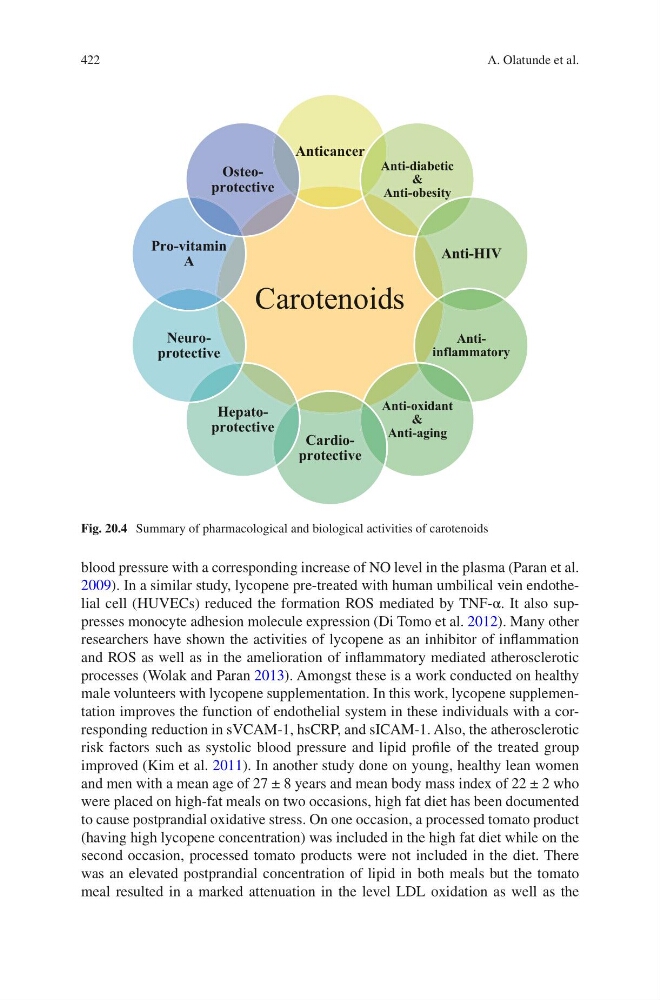
Fig. 20.4 Summary of pharmacological and biological activities of carotenoids
A. Olatunde et al.
blood pressure with a corresponding increase of NO level in the plasma (Paran et al.
2009). In a similar study, lycopene pre-treated with human umbilical vein endothelial cell (HUVECs) reduced the formation ROS mediated by TNF-α. It also suppresses monocyte adhesion molecule expression (Di Tomo et al. 2012). Many other
researchers have shown the activities of lycopene as an inhibitor of inflammation
and ROS as well as in the amelioration of inflammatory mediated atherosclerotic
processes (Wolak and Paran 2013). Amongst these is a work conducted on healthy
male volunteers with lycopene supplementation. In this work, lycopene supplementation improves the function of endothelial system in these individuals with a corresponding reduction in sVCAM-1, hsCRP, and sICAM-1. Also, the atherosclerotic
risk factors such as systolic blood pressure and lipid profile of the treated group
improved (Kim et al. 2011). In another study done on young, healthy lean women
and men with a mean age of 27 ± 8 years and mean body mass index of 22 ± 2 who
were placed on high-fat meals on two occasions, high fat diet has been documented
to cause postprandial oxidative stress. On one occasion, a processed tomato product
(having high lycopene concentration) was included in the high fat diet while on the
second occasion, processed tomato products were not included in the diet. There
was an elevated postprandial concentration of lipid in both meals but the tomato
meal resulted in a marked attenuation in the level LDL oxidation as well as the
Carotenoids
Anticancer
Anti-diabetic
&
Anti-obesity
Anti-HIV
Antiinflammatory
Anti-oxidant
&
Anti-aging
Cardioprotective
Hepatoprotective
Neuroprotective
Pro-vitamin
A
Osteoprotective
Fig. 20.4 Summary of pharmacological and biological activities of carotenoids
A. Olatunde et al.