

207
References
Abubakar M, Abdullah W, Sulaiman S, Suen A (2012) A review of molecular mechanisms of the
anti-leukemic effects of phenolic compounds in honey. Int J Mol Sci 13(11):15054–15073
Afroz R, Tanvir EM, Little JP (2016) Honey-derived flavonoids: natural products for the prevention of atherosclerosis and cardiovascular diseases. Clin Exp Pharmacol 6:208. https://doi.
org/10.4172/2161-1459.1000208
Ahmed S, Othman NH (2013) Honey as a potential natural anticancer agent: a review of its mechanisms. Evid Based Complement Alternat Med 2013:1–7
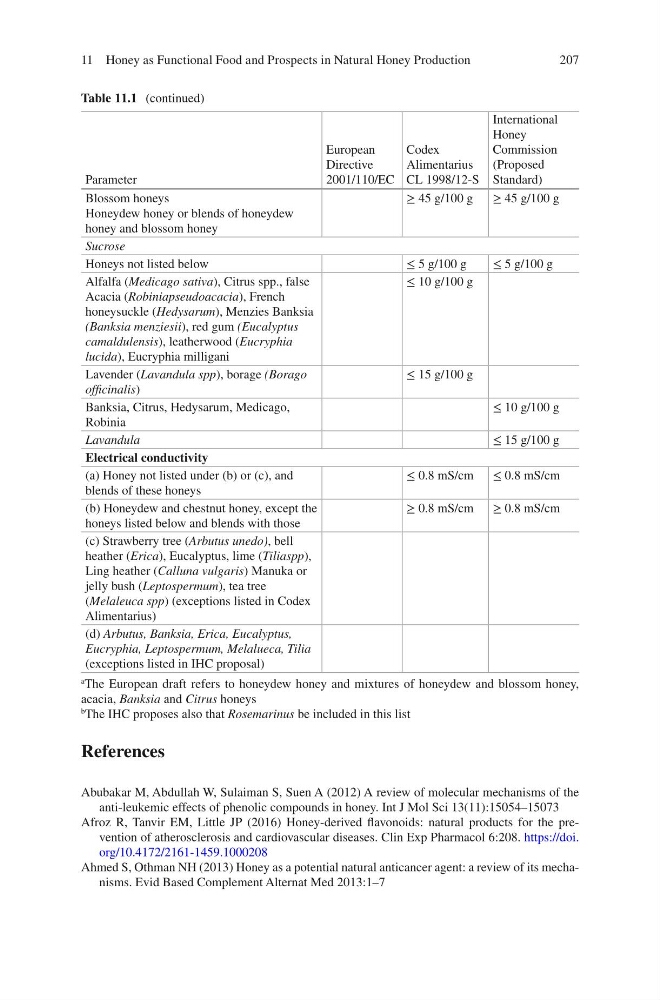
Table 11.1 (continued)
Parameter
European
Directive
2001/110/EC
Codex
Alimentarius
CL 1998/12-S
International
Honey
Commission
(Proposed
Standard)
Blossom honeys
Honeydew honey or blends of honeydew
honey and blossom honey
≥ 45 g/100 g
≥ 45 g/100 g
Sucrose
Honeys not listed below
≤ 5 g/100 g
≤ 5 g/100 g
Alfalfa (Medicago sativa), Citrus spp., false
Acacia (Robiniapseudoacacia), French
honeysuckle (Hedysarum), Menzies Banksia
(Banksia menziesii), red gum (Eucalyptus
camaldulensis), leatherwood (Eucryphia
lucida), Eucryphia milligani
≤ 10 g/100 g
Lavender (Lavandula spp), borage (Borago
officinalis)
≤ 15 g/100 g
Banksia, Citrus, Hedysarum, Medicago,
Robinia
≤ 10 g/100 g
Lavandula
≤ 15 g/100 g
Electrical conductivity
(a) Honey not listed under (b) or (c), and
blends of these honeys
≤ 0.8 mS/cm ≤ 0.8 mS/cm
(b) Honeydew and chestnut honey, except the
honeys listed below and blends with those
≥ 0.8 mS/cm ≥ 0.8 mS/cm
(c) Strawberry tree (Arbutus unedo), bell
heather (Erica), Eucalyptus, lime (Tiliaspp),
Ling heather (Calluna vulgaris) Manuka or
jelly bush (Leptospermum), tea tree
(Melaleuca spp) (exceptions listed in Codex
Alimentarius)
(d) Arbutus, Banksia, Erica, Eucalyptus,
Eucryphia, Leptospermum, Melalueca, Tilia
(exceptions listed in IHC proposal)
a The European draft refers to honeydew honey and mixtures of honeydew and blossom honey,
acacia, Banksia and Citrus honeys
b
The IHC proposes also that Rosemarinus be included in this list
11 Honey as Functional Food and Prospects in Natural Honey Production
References
Abubakar M, Abdullah W, Sulaiman S, Suen A (2012) A review of molecular mechanisms of the
anti-leukemic effects of phenolic compounds in honey. Int J Mol Sci 13(11):15054–15073
Afroz R, Tanvir EM, Little JP (2016) Honey-derived flavonoids: natural products for the prevention of atherosclerosis and cardiovascular diseases. Clin Exp Pharmacol 6:208. https://doi.
org/10.4172/2161-1459.1000208
Ahmed S, Othman NH (2013) Honey as a potential natural anticancer agent: a review of its mechanisms. Evid Based Complement Alternat Med 2013:1–7
Table 11.1 (continued)
Parameter
European
Directive
2001/110/EC
Codex
Alimentarius
CL 1998/12-S
International
Honey
Commission
(Proposed
Standard)
Blossom honeys
Honeydew honey or blends of honeydew
honey and blossom honey
≥ 45 g/100 g
≥ 45 g/100 g
Sucrose
Honeys not listed below
≤ 5 g/100 g
≤ 5 g/100 g
Alfalfa (Medicago sativa), Citrus spp., false
Acacia (Robiniapseudoacacia), French
honeysuckle (Hedysarum), Menzies Banksia
(Banksia menziesii), red gum (Eucalyptus
camaldulensis), leatherwood (Eucryphia
lucida), Eucryphia milligani
≤ 10 g/100 g
Lavender (Lavandula spp), borage (Borago
officinalis)
≤ 15 g/100 g
Banksia, Citrus, Hedysarum, Medicago,
Robinia
≤ 10 g/100 g
Lavandula
≤ 15 g/100 g
Electrical conductivity
(a) Honey not listed under (b) or (c), and
blends of these honeys
≤ 0.8 mS/cm ≤ 0.8 mS/cm
(b) Honeydew and chestnut honey, except the
honeys listed below and blends with those
≥ 0.8 mS/cm ≥ 0.8 mS/cm
(c) Strawberry tree (Arbutus unedo), bell
heather (Erica), Eucalyptus, lime (Tiliaspp),
Ling heather (Calluna vulgaris) Manuka or
jelly bush (Leptospermum), tea tree
(Melaleuca spp) (exceptions listed in Codex
Alimentarius)
(d) Arbutus, Banksia, Erica, Eucalyptus,
Eucryphia, Leptospermum, Melalueca, Tilia
(exceptions listed in IHC proposal)
a The European draft refers to honeydew honey and mixtures of honeydew and blossom honey,
acacia, Banksia and Citrus honeys
b
The IHC proposes also that Rosemarinus be included in this list
11 Honey as Functional Food and Prospects in Natural Honey Production