

by peoples for clean, secure, sustainable energy. As natural fossil resources become
increasingly scarce, these choices lead to reliance on renewable fuels (Allen and
Hammond 2019).
12.3 Need for a Strategic Technological Approach Towards Low
and Zero-Carbon Growth
Strategies to achieve a low-carbon energy mix vary in each country or region
depending on the particular needs. However, three key areas where systemic changes
must focus are: (a) reducing energy demand through efficiencies and lifestyle
changes; (c) shifting to new technologies; and (c) promoting carbon capture and
storage. According to Dodd (2008), energy planning at a town and city-scale needs
another strategic approach, supported by robust planning policies and complementary facilitating mechanisms.
Energy strategies must be driven by a collective purpose to reduce CO 2 emissions
and enhance the energy security of societies. They should be based on a clear and
rational relationship between (1) the benefits of low-carbon energy production
technologies; (2) Access to renewable resources in the local environment; (3) The
forms and grades of energy required for various end-uses; (4) Parameters for costeffective and efficient deployment; (5) The scale and type of development
opportunities (Dodd 2008).
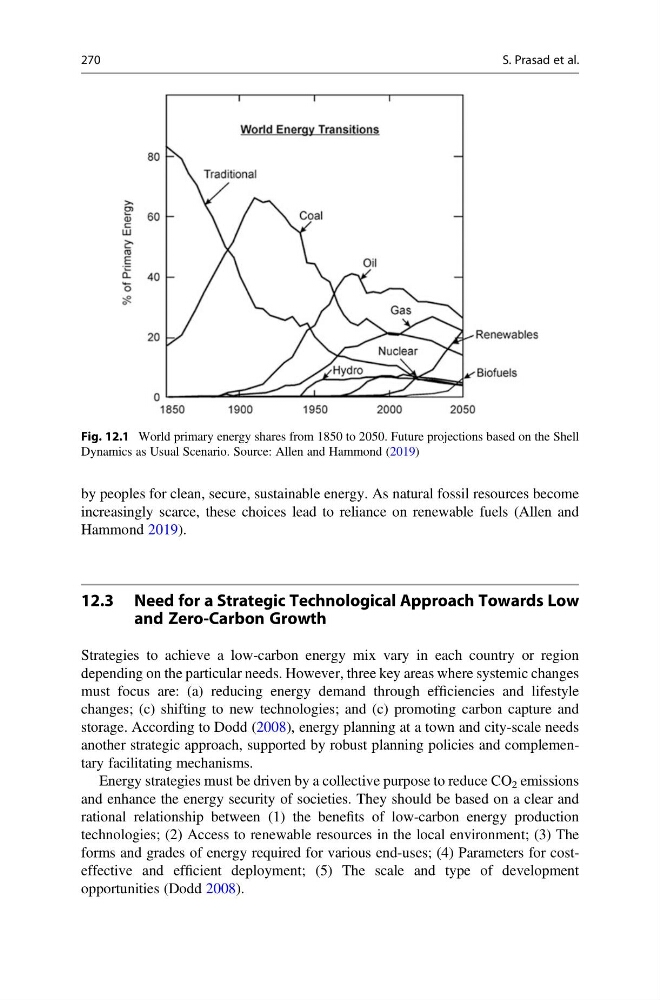
Fig. 12.1 World primary energy shares from 1850 to 2050. Future projections based on the Shell
Dynamics as Usual Scenario. Source: Allen and Hammond (2019)
270
S. Prasad et al.
increasingly scarce, these choices lead to reliance on renewable fuels (Allen and
Hammond 2019).
12.3 Need for a Strategic Technological Approach Towards Low
and Zero-Carbon Growth
Strategies to achieve a low-carbon energy mix vary in each country or region
depending on the particular needs. However, three key areas where systemic changes
must focus are: (a) reducing energy demand through efficiencies and lifestyle
changes; (c) shifting to new technologies; and (c) promoting carbon capture and
storage. According to Dodd (2008), energy planning at a town and city-scale needs
another strategic approach, supported by robust planning policies and complementary facilitating mechanisms.
Energy strategies must be driven by a collective purpose to reduce CO 2 emissions
and enhance the energy security of societies. They should be based on a clear and
rational relationship between (1) the benefits of low-carbon energy production
technologies; (2) Access to renewable resources in the local environment; (3) The
forms and grades of energy required for various end-uses; (4) Parameters for costeffective and efficient deployment; (5) The scale and type of development
opportunities (Dodd 2008).
Fig. 12.1 World primary energy shares from 1850 to 2050. Future projections based on the Shell
Dynamics as Usual Scenario. Source: Allen and Hammond (2019)
270
S. Prasad et al.