

11.6.3 Disadvantages of Fungi-Based Biopesticides
• Ideal environmental conditions: Fungi are highly sensitive to environmental
conditions. Humidity over 80% and above is required for spore germination
and penetration on the surface of arthropods cuticle.
• Temperature and exposure to UV radiation affect the survival of fungi.
• Production and stabilization of fragile conidia or durable resting phase are
difficult.
• It is costlier than other microbial methods.
11.7 Entomopathogenic Nematodes (EPN) as Biopesticides
Entomopathogenic nematodes are soil-dwelling, soft-bodied, un-segmented
roundworms that are naturally present in water film near soil particles. Nematodes
are obligate or sometimes facultative parasites that locate the host insects in response
to carbon dioxide, vibration and other chemical indications. Commercially two
families, namely Steinernematidae and Heterorhabditidae, have been effectively
identified and used as bionematicides in pest control programs (Kachhawa 2017).
S. carpocapsae, S. thermophilum, H. bacteriophora, H. indica products are
registered and sold in India.
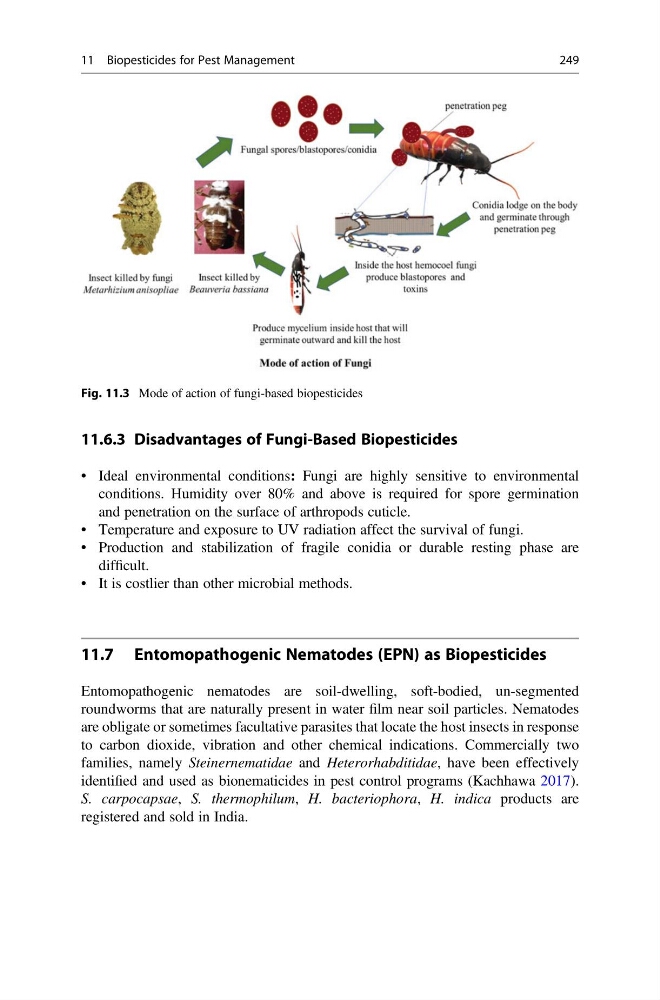
Fig. 11.3 Mode of action of fungi-based biopesticides
11 Biopesticides for Pest Management
249
• Ideal environmental conditions: Fungi are highly sensitive to environmental
conditions. Humidity over 80% and above is required for spore germination
and penetration on the surface of arthropods cuticle.
• Temperature and exposure to UV radiation affect the survival of fungi.
• Production and stabilization of fragile conidia or durable resting phase are
difficult.
• It is costlier than other microbial methods.
11.7 Entomopathogenic Nematodes (EPN) as Biopesticides
Entomopathogenic nematodes are soil-dwelling, soft-bodied, un-segmented
roundworms that are naturally present in water film near soil particles. Nematodes
are obligate or sometimes facultative parasites that locate the host insects in response
to carbon dioxide, vibration and other chemical indications. Commercially two
families, namely Steinernematidae and Heterorhabditidae, have been effectively
identified and used as bionematicides in pest control programs (Kachhawa 2017).
S. carpocapsae, S. thermophilum, H. bacteriophora, H. indica products are
registered and sold in India.
Fig. 11.3 Mode of action of fungi-based biopesticides
11 Biopesticides for Pest Management
249