

In contrast to Cry proteins, Cyt toxins are inserted directly into the lipid membrane of insects. Recent evidence shows that Cyt synergizes or suppresses resistance
to mosquitocidal-Cry proteins by functioning as a membrane bound receptor for Cry
toxin. Both Cry and Cyt toxins are pore-forming toxins (Aronson and Shai 2001;
Bravo et al. 2007).
11.4.2 Advantages of Bacterial Biopesticides
• Safe to use: Bacterial biopesticides are safe to wildlife, humans and other
organisms.
• Specific: The bacterial biopesticides are specific against their target organisms.
They do not affect the beneficial insects.
• Compatible with other methods: Most of the bacterial insecticides are compatible
with synthetic chemical biopesticides.
• Non-hazardous: It leaves no residues. So it can be applied even during the
harvesting stage of the crop.
• Natural establishment: Bacterial biopesticides are self-perpetuating. Hence it is
effective even during the subsequent crop growth seasons.
11.4.3 Disadvantages of Microbial Insecticides
• Microbial insecticides are toxic to only a specific species or group of insects. It
may control only specific pests and the others will survive and continue to cause
damage.
• When predators and parasitoids are used in pest management programs use of
synthetic pesticides may harm the beneficial organisms. The selection of appropriate chemical pesticides is essential.
• The effectiveness of microbial insecticides is affected by factors like ultraviolet
radiation, heat, etc. Hence, it should be applied in the morning hours only.
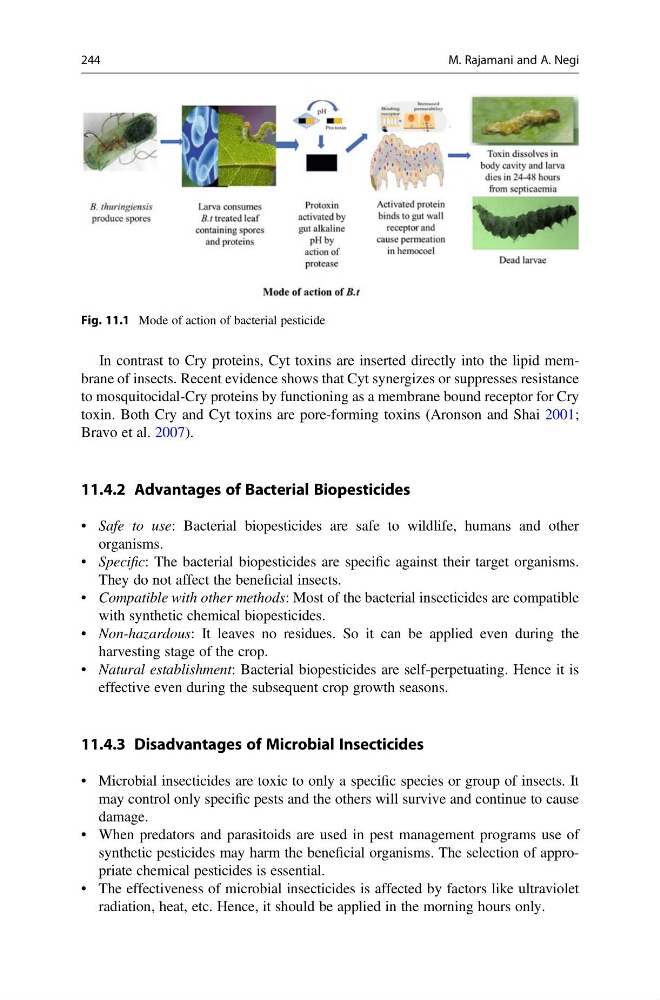
Fig. 11.1 Mode of action of bacterial pesticide
244
M. Rajamani and A. Negi
to mosquitocidal-Cry proteins by functioning as a membrane bound receptor for Cry
toxin. Both Cry and Cyt toxins are pore-forming toxins (Aronson and Shai 2001;
Bravo et al. 2007).
11.4.2 Advantages of Bacterial Biopesticides
• Safe to use: Bacterial biopesticides are safe to wildlife, humans and other
organisms.
• Specific: The bacterial biopesticides are specific against their target organisms.
They do not affect the beneficial insects.
• Compatible with other methods: Most of the bacterial insecticides are compatible
with synthetic chemical biopesticides.
• Non-hazardous: It leaves no residues. So it can be applied even during the
harvesting stage of the crop.
• Natural establishment: Bacterial biopesticides are self-perpetuating. Hence it is
effective even during the subsequent crop growth seasons.
11.4.3 Disadvantages of Microbial Insecticides
• Microbial insecticides are toxic to only a specific species or group of insects. It
may control only specific pests and the others will survive and continue to cause
damage.
• When predators and parasitoids are used in pest management programs use of
synthetic pesticides may harm the beneficial organisms. The selection of appropriate chemical pesticides is essential.
• The effectiveness of microbial insecticides is affected by factors like ultraviolet
radiation, heat, etc. Hence, it should be applied in the morning hours only.
Fig. 11.1 Mode of action of bacterial pesticide
244
M. Rajamani and A. Negi